

The grid is the transition: Why Asean’s next energy challenge is coordination
Policymakers must shift their focus from building ‘hardware’ to codifying regional institutional ‘software’
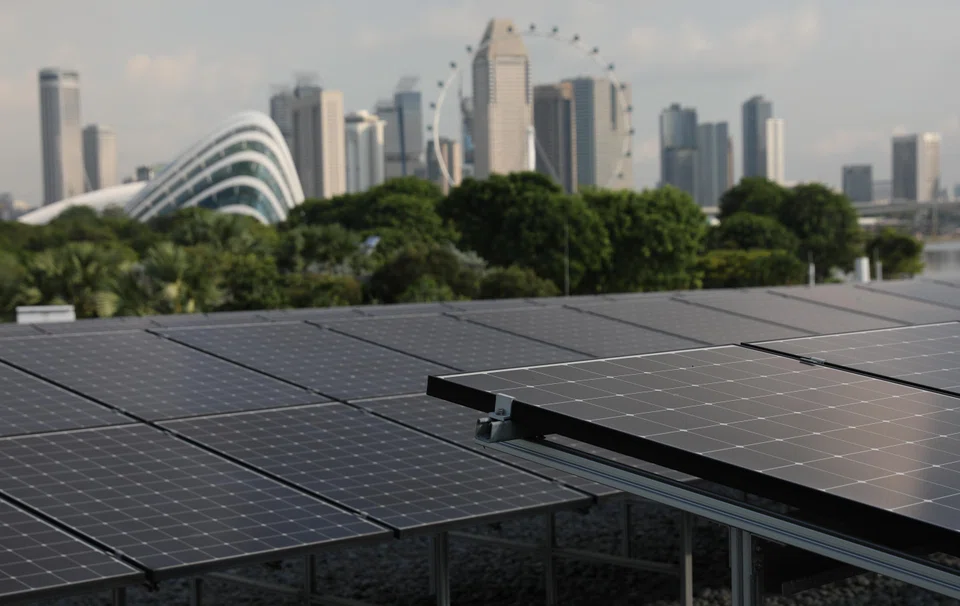
THE economic case for connecting South-east Asia’s power grids has been made, and made well.
Trillions of dollars in cumulative gross domestic product gains, millions of new jobs, renewables’ share climbing towards half the region’s power mix – these data now circulate freely in the region’s energy debate, cited in conference speeches and investment prospectuses alike.
Less discussed is what it would actually take to realise them. Asean is not short of ambition or capital.
The harder question underneath the headline figures is: How do more than a dozen sovereign grid operators actually agree to share power in real time, across borders, with most of them built for self-sufficiency rather than interdependence?
That is the less glamorous, more consequential story.
South-east Asia’s resources and demand are mismatched by geography, with hydropower in the Mekong basin, wind off Vietnam’s coast, geothermal steam beneath Indonesia and the Philippines, solar potential nearly everywhere – and demand growing fastest in the region’s dense, energy-poor city-states and megacities.
Connected well, surplus hydropower upstream can cool homes hundreds of kilometres downstream; midday solar in one country can offset an evening peak in another; a calm day in one wind corridor can be balanced by a gustier one elsewhere.
Unconnected, it is wasted potential behind a border that no cable crosses, and the alternative is costly: importing liquefied natural gas at a premium, or building redundant peaking power plants that sit idle most of the year just to cover the hours with no sunlight or when rivers run low.
Realising the value from power interconnection depends on standards, data-sharing and institutions, which the region’s import-reliant economies have the most direct stake in seeing through.
From ambition to implementation
The South-east Asian region has moved past hypothesis. A number of the priority bilateral interconnections identified under the Asean Interconnection Masterplan Study are now operational, delivering a growing base of cross-border transmission capacity, concentrated in the Greater Mekong sub-region.
The Lao PDR-Thailand-Malaysia-Singapore Power Integration Project, launched in 2022 as the region’s first multilateral electricity trade, has since doubled its capacity to a maximum of 200 megawatts, with power sourced from both Lao PDR and Malaysia.
Yet, the distance still to travel is sobering: Realising the full Asean Power Grid (APG) vision requires an estimated US$800 billion in investment by 2045, according to the World Bank.
The International Energy Agency (IEA) projects renewables could rise from under 30 per cent of Asean’s power mix to more than 70 per cent by 2050 with stronger interconnection – a ceiling that drops sharply without it.
The IEA has been blunt that the obstacles are political and institutional far more than engineering problems. Building a transmission line is a construction project; building a grid that sovereign operators can jointly run is institution-building, on three fronts.
The first is technical standards. Grid codes, frequency tolerances and protection schemes still differ across systems, and every unresolved difference becomes friction at the border. A cable can be built in two years; a shared rulebook every regulator will actually enforce takes longer, and needs to start now.
The second is data and operational coordination. Cross-border flows are still scheduled through ad hoc bilateral arrangements, not pooled, real-time dispatch.
Getting further will mean linking up the computer systems that control the grid, so operators in one country can see what’s happening in another one in real time, and creating some kind of body that can watch the whole network at once – not just one border-crossing.
The third, and hardest, is institutional. Asean still lacks a bloc-wide framework for coordinating power-system operations, regulation and enforcement across borders. Much of the current architecture is built around bilateral and multilateral arrangements.
The Asean Centre for Energy and Heads of Asean Power Utilities/Authorities (Hapua) have done the quiet work of building relationships between utilities.
The next challenge is strengthening the institutional mechanisms needed to coordinate an increasingly interconnected regional grid, drawing lessons from similar arrangements in other regions, including Europe.
Rewiring the region: recommendations for Asean leaders
To turn the APG from a patchwork of bilateral links into a dynamic multilateral market, policymakers must shift their focus from building “hardware” to codifying regional institutional “software”.
Grid integration relies on binding operational mechanisms. Building on the consensus around the enhanced APG memorandum of understanding, Asean can strengthen the existing bodies mandated to advance the grid, alongside a newly launched institution:
- Accelerate APG Consultative Committee’s work on common rules: Alongside the Hapua, the Asean Power Grid Consultative Committee (APGCC) is tasked with advancing the APG. Its ongoing work – to strengthen cooperation on transmission charge methodologies and cross-border Renewable Energy Certificates – deserves greater priority and momentum. A common approach to wheeling charges would create a clear and predictable framework, reducing uncertainty for developers and enhancing the bankability of projects.
- Use the new Asean School of Regulation (ASR) to build investment bankability: Launched at the Asean Ministers on Energy Meeting on Oct 7, 2026, the Asean School of Regulation can help regulators converge on national market designs. By fostering shared regulatory practices on tariff frameworks, economic rules and the recognition of cross-border Renewable Energy Certificates, the ASR can complement the APGCC’s work and help reduce the regulatory friction that deters large-scale private investment.
As the Asean Plan of Action for Energy Cooperation 2026-2030 rolls out, the stakes are high. The 9th Asean Energy Outlook confirms that integration, not isolation, is essential for regional security.
Left unbridged, regulatory divisions will keep South-east Asia’s renewable potential locked behind borders. Bridged, they let the grid be what it already is: not a supporting piece of the transition, but the transition itself.
The writer is a senior research fellow at the Energy Studies Institute, National University of Singapore. At the upcoming Singapore International Energy Week (SIEW) she will speak at the SIEW Thinktank Roundtable.
This essay is part of New Global Order, a series which explores how the changing world landscape is reshaping business, politics and beyond.
TRENDING NOW

Far East Organization’s The Serra Residences sells less than a quarter of units released at average S$3,460 psf
Singapore to use ‘every legal and regulatory lever’ against companies linked to haze: Shanmugam

Could stablecoins be the future of money?
The middle power moment arrives in South-east Asia – but not for Asean

