

If Europe goes to war, the fallout will be felt in East Asia
The continent appears to be preparing for a possible conflict with Russia by 2030
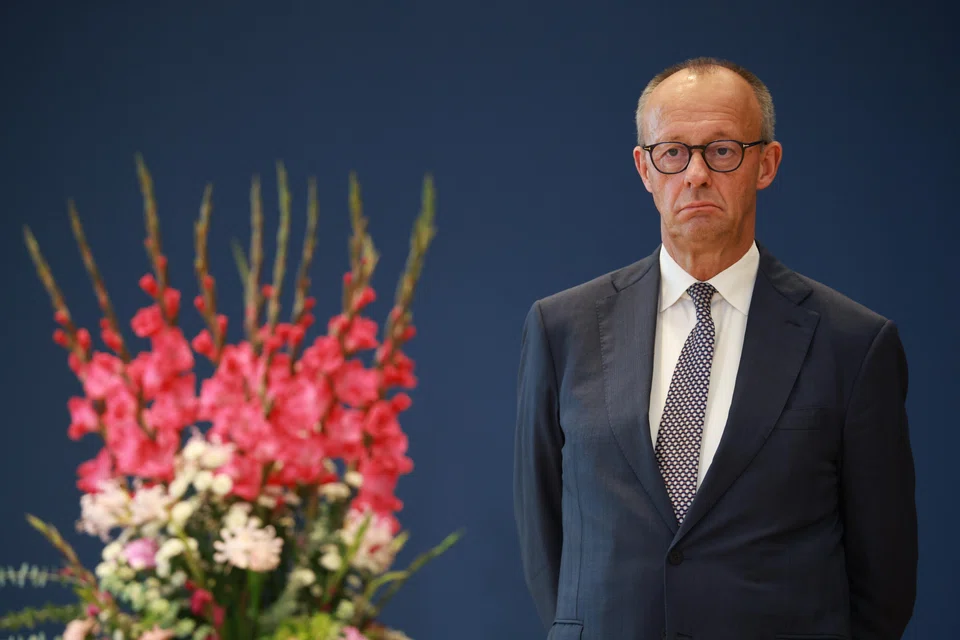

TO HEAR it said, Europe is getting ready for war with Russia by 2030. Germany has launched what has been widely described as its biggest rearmament programme since World War II.
In September, German Chancellor Friedrich Merz said that Europe is facing “the most decisive moments – perhaps weeks or months – in defending the freedom and peace of (the) continent”.
That is not a new sentiment. German Defence Minister Boris Pistorius insisted in 2024 that the Bundeswehr must be “war-ready” by 2029. French and British leaders say similar things.
Their common assumption seems to be that Ukraine is a lost cause. Therefore, Europe should be ready for when Russia completes rebuilding its military capabilities following this war.
But European leaders are also careful to indicate that the 2030 date reflects the time needed to prepare against potential Russian aggression, rather than a European decision to go to war with Russia.
Their stance seems to confirm what Iuliia Mendel, a former press secretary to Ukrainian President Volodymyr Zelensky, wrote in the weekly British magazine The Spectator in September: “The war in Ukraine has lost any plausible theory of victory.
“At this point, it only lines the pockets of a corrupt and narrow circle of elites while the country itself perishes.”
If the current pace of European rearmament is sustained, the gravest risk ahead for the world would be either party going nuclear. Nato forces have already held military exercises near Russia’s Kaliningrad exclave, which is located between Poland and Lithuania.
There is always a danger of miscalculation in these situations. Russia holds roughly 1,800 tactical nuclear weapons, estimated the Bulletin of the Atomic Scientists, which are designed precisely to offset Nato’s conventional armed superiority.
Moreover, Moscow’s 2024 nuclear doctrine lowered the threshold for nuclear use, authorising it in response to conventional war that threatens Russia’s “sovereignty or territorial integrity”.
The cost to the world
Yet, even if it was a conventional war, the economic consequences would be grim. A full-scale war between Russia and Nato would cost the world US$1.5 trillion in just the first year, based on an analysis by Bloomberg Economics.
Worse, a European war would not stay in Europe. Nato’s secretary-general Mark Rutte a few weeks ago warned that the security of the Indo-Pacific and Europe is “more and more interconnected”.
That is, if the Nato partners become preoccupied with their own conflict, the balance of power in East Asia will tilt. Taiwan’s situation would get even more precarious. And who is then likely to have control of shipping lanes in the South China Sea?
A European war with Russia would also deepen the Moscow-Beijing-Pyongyang axis, and very likely accelerate nuclear proliferation across Asia.
Record majorities in South Korea already favour the country building its own nuclear weapons. Even in Japan – where public support remains low – mainstream politicians are openly talking about the role of nuclear weapons in the country.
None of this is to assert a moral equivalence between what the Europeans are doing and the Russian invasion of Ukraine.
But Europeans should remind themselves that preparing for war is not the same as preventing it. If they constantly talk themselves into expecting war, they may actually get one.
TRENDING NOW

Once staunchly pro-China, Malaysian Chinese businesses are now distancing themselves from Beijing

Britain’s mansion tax shows the difficulty of targeting wealth

Three hats, one goal: How Ng Kian Swan runs sustainability at NUHS

COE review: The gap between luxury and mass-market cars isn’t the only one worth bridging

