The Iran war is coming for your Diet Coke
The disruption in aluminium exports is hitting beverage manufacturing and power grid build-outs
GEOPOLITICS is currently making it harder for India’s 1.4 billion people to cool off in the punishing summer heat. Things are about to get a whole lot worse.
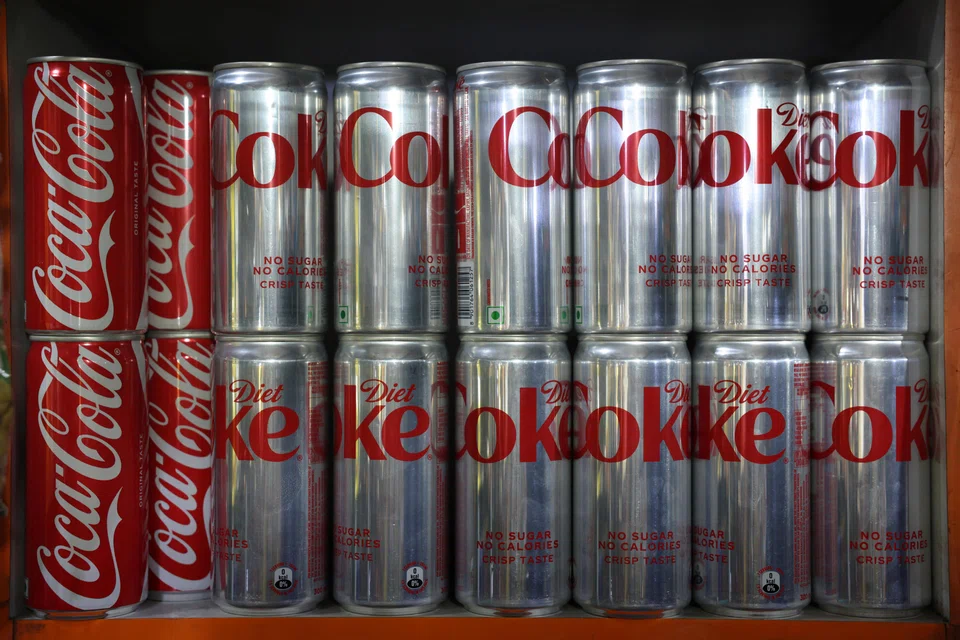
The problem right now is with Diet Coke. The closure of the Strait of Hormuz has disrupted exports of aluminium from smelters in the Persian Gulf, which account for about a fifth of supplies outside China.
That has hit beverage manufacturers in India, where the soda is available only in metal cans, in turn sparking a burst of end-times hedonism.
With the mercury nearing 49 deg Celsius, restaurants and bars have hosted “Diet Coke parties” where entrants pay up to US$16 a ticket to get access to jalapeno-spiked cola cocktails, T-shirt painting and raffles with scarce cans of the drink as prizes.
Beneath all the hilarity, there is a serious issue. The most concerted global effort to insulate households and businesses from the chaos spiralling out of war in the Middle East is a mass drive for clean electrical energy.
Generation from wind and solar overtook gas for the first time last month, noted Ember, a transition-focused think tank.
Chinese exports of solar panels, electric vehicles and batteries have jumped 31 per cent, 75 per cent and 45 per cent, respectively, in value so far this year as consumers around the world sought out power products that do not depend on oil and gas.
Almost every one of those electrical devices, however, depends on the same aluminium that is disappearing from the refrigerators of Indian supermarkets and neighbourhood stores.
It is common to think of copper as the archetypal electrical metal, but there is a decent argument that it is aluminium instead.
While copper wires are preferred inside electrical devices because of their higher conductivity, aluminium is cheaper. That means it is used more for long-distance transmission cables, and increasingly even for complex pieces of infrastructure such as transformers and switchgear.
Global power networks consume about twice as much aluminium as copper, indicated Thunder Said Energy, a consultancy.
That is the place where the energy transition is most at risk. The shift to clean power could be put in jeopardy because of the slow build-out of grids, said Fatih Birol, the executive director of the International Energy Agency.
Some 1,700 gigawatts of clean generation is currently completed but stuck in queues waiting for a connection, he added last year. That useless capacity is equivalent to about a third of all the renewables installed to date.
Clearing that backlog depends on access to aluminium. High-voltage transmission lines can easily cost more than US$500,000 per mile (US$310,000 per kilometre) on conducting wire, making up more than 10 per cent of the expense of a new project and 80 per cent of some upgrades.
Grid managers are already struggling with the headlong expansion of power-hungry artificial intelligence, with US$653 billion expected to be spent on data centres this year alone. Rising costs for aluminium make all of that worse.
Primary metal traded on the London Metal Exchange has already increased by half over the past year, to around US$3,637 a tonne. Conditions in the aluminium market are the most bullish in 50 years and the metal could rise a further 50 per cent next year, Citigroup said recently.
Such forecasts do not look excessive. Even with an opening of the strait, the Gulf’s aluminium production will not return to normal quickly.
Emirates Global Aluminium PJSC, the largest producer in the region, sustained hits from drones and missiles that appear to have frozen some of the thousands of electrolytic cells where molten metal is smelted.
That is a disastrous situation, requiring parts of the production line to be rebuilt almost from scratch. The company expects a restart to take up to 12 months.
Normally, China’s amply supplied metal sector could be expected to come to the rescue. That is less likely this time, though. The country produces about 60 per cent of the world’s aluminium but consumes almost everything it makes.
China has its own renewables and grid build-out to worry about, and is also in the middle of moving millions of tonnes of smelting capacity to renewable-powered locations deep inland. That limits its ability to rebalance the world market through an export surge.
Even Indonesia, which had been expected to loosen the market by adding a Gulf-sized 7.6 million tonnes of smelting capacity over the next few years, is looking more dicey now.
The government announced plans this week for sovereign wealth fund Danantara to take control of palm oil, coal and nickel exports. Such policies could put off the foreign investment needed to support the new plants.
President Prabowo Subianto’s more nationalistic stance could also reserve metal for use in domestic manufacturing, starving the global market.
All of that will put sand in the gears of the energy transition, just when we need it to be speeding up.
If you want to survive the brutal heat of the coming few summers, do not get too dependent on steady grid power for your air conditioner. A cooling can of Diet Coke might be the better way – if you could just get your hands on one. BLOOMBERG