THINKING ALOUD

Is it time to scrap COE categories for cars? 

Let the COE system control population and rely on other, better instruments to manage access to mass market vehicles 

Summarise
Derryn Wong
Published Tue, May 5, 2026 · 07:00 AM
    • Electric vehicles and the changed dynamics of mainstream and luxury car segments mean Certificates of Entitlement should not be used to classify cars.
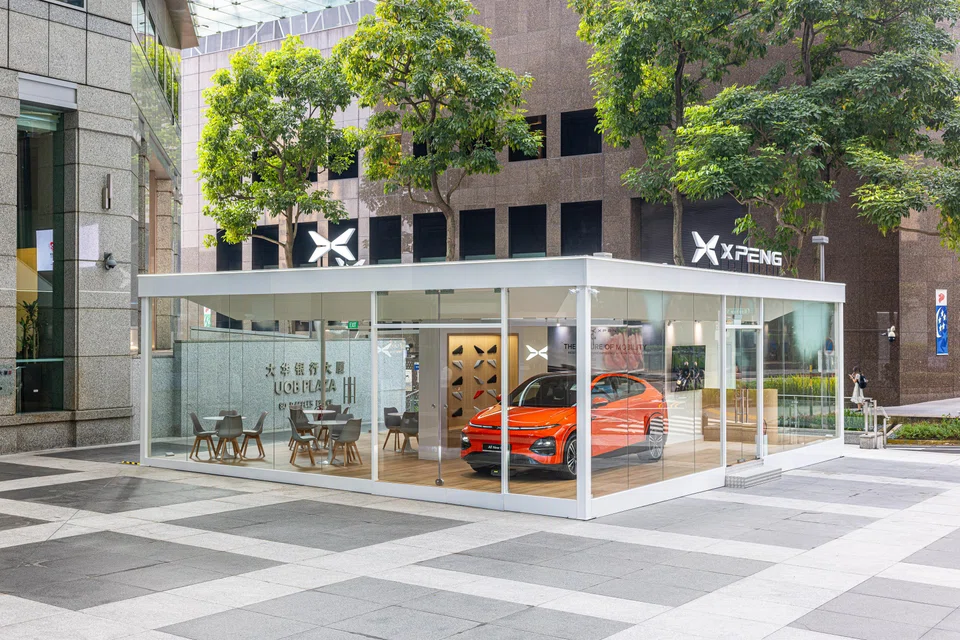
    • Electric vehicles and the changed dynamics of mainstream and luxury car segments mean Certificates of Entitlement should not be used to classify cars. PHOTO: XPENG SINGAPORE

    [SINGAPORE] On Mar 4, Acting Minister for Transport Jeffrey Siow announced that a review of the Certificate of Entitlement (COE) system is now taking place.

    MPs raised the issue of the mainstream car COE premium being higher than that of the luxury category in February, largely due to huge demand for Category A cars, especially electric vehicles tuned to suit the category guidelines.

    Addressing Parliament, Siow said that there is “probably still some merit to having some distinction” between mainstream and luxury cars.

    Yet, the COE was made to control the car population and that should remain its key purpose.

    Why not get rid of COE categories for cars altogether and let better instruments manage the distinction between mainstream and luxury cars?

    Pigeon, meet hole

    A mainstream car, by the COE Category A definition, is one that has an engine capacity of up to 1,600 cubic centimetres, or maximum 97 kilowatts (kW) of power. For EVs, this must be less than 110 kilowatts.

    The crux of the problem is that a car cannot be judged as mainstream on power or engine capacity alone. There is no one cut-off point for luxury – it is a spectrum spanning basic utility to high-end prestige, and it is a situation made murkier because of the above rules.

    Since the mid-2000s for example, relatively efficient turbocharged engines meant cars with even small capacities could make more than 97 kW easily.

    Singapore caught on in 2013 and introduced the power limit to Category A.

    Then, carmakers began to tune their engines to meet that limit, so a significant cohort of Category A has been taken up by luxury cars and remains so.

    For example, Category A currently has 11 models from BMW and Mercedes-Benz, including some of their most popular models here, with prices ranging from S$200,000 to S$300,000 with COE.

    In 2022, EVs were given a Category A power cap of 110 kilowatts, ostensibly to support their adoption.

    2026 proves they never needed it: While tuning engines to meet power limits was a years-long process with legacy carmakers, China’s automakers can do it in months, seemingly with a few strokes of a keyboard.

    This has led to models that look the same and have the same features, but differ in terms of power output and COE category.

    Many of these models, like Tesla’s offerings as well, occupy a new “premium tech car” segment, which are not quite luxury cars – but certainly not mass market ones either.

    One purpose

    The solution is to return the COE to its original purpose of population control alone. Every vehicle that meets the criteria of being a car should fall into a single category.

    The solution to making less expensive mass-market cars more accessible already exists: the Additional Registration Fee loads more tax on more expensive cars.

    Meanwhile, the Vehicular Emissions Scheme addresses pollution, while road tax makes powerful cars pay more.

    In the future with ERP 2.0, vehicle choice can be further shaped according to whatever metric is deemed mainstream, or most desirable.

    Keep in mind, when the COE system began in 1990 almost none of these tools existed. Finally, returning COE to a single purpose could also make it fairer: No matter what your purpose – private hire car, company car, personal – you would simply be bidding on cars, neither mainstream nor luxury baggage involved.