Knowing how to use AI is no longer enough. We need to build with it
Commercialisation, not being conversant, is the real metric
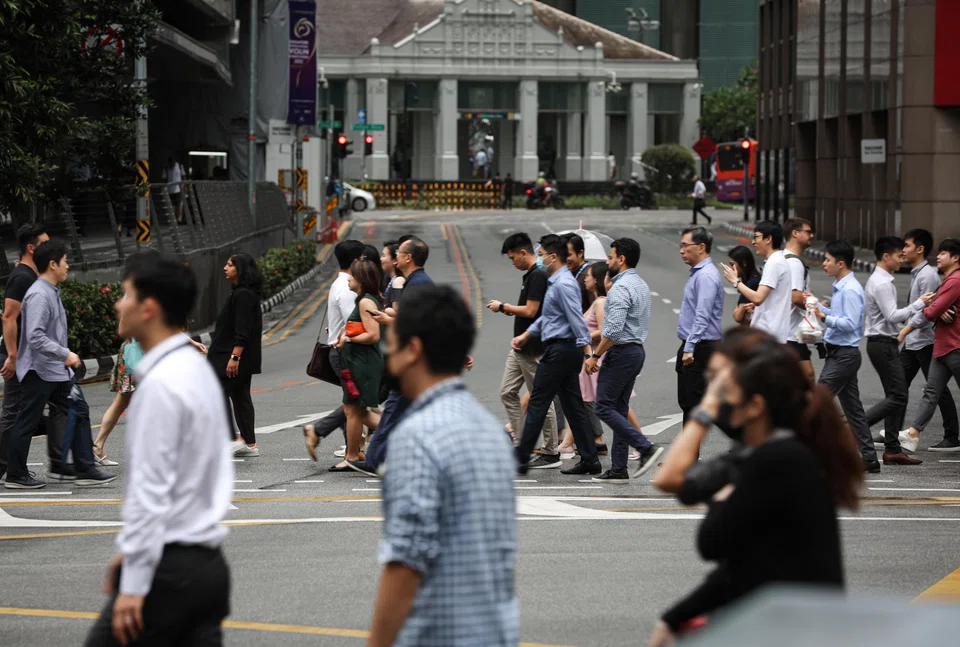
THE debate about artificial intelligence and jobs in Singapore has settled into a familiar groove: Will AI take our jobs? How many? Which ones?
The standard answer is reassuring, sensible and characteristically Singaporean: We will reskill, upskill and equip the workforce with AI literacy, so that no one is left behind.
That answer is not wrong, but it is incomplete.
In the World Intellectual Property Organization’s Global Innovation Index 2025, which evaluates global economies on their innovation performance, Singapore ranks first in the world for innovation inputs, including talent, institutions and research.
But it only ranks ninth for innovation outputs, such as patents filed, high-tech exports and the global brand value of home-grown companies.
We prepare the ground superbly, but harvest less than the investment warrants. AI will widen that gap if we only learn to operate the tools; it will narrow it if we use them to build.

Today’s AI literacy programmes teach people to prompt, use co-pilots and fold these mechanisms into daily work. This is useful.
However, the technology is moving in the opposite direction from these programmes. As AI capabilities grow, the skill of operating the tool collapses in value.
When anyone can ask a model to draft, summarise, code or analyse, “knowing how to use AI” stops being a differentiator. It becomes table stakes, like knowing how to use a search engine.
What AI does not commoditise is judgment: knowing the problems that are worth solving, framing them well and gauging whether the answer the machine returns is any good.
Nor does it commoditise the skills that no model has, such as understanding a customer, earning trust and leading a team.
So, a literacy-first strategy, pursued on its own, risks a subtle miscalibration. We may end up with a workforce fluent in operating tools that will shortly operate themselves, and underinvested in higher-order judgment that stays stubbornly human.
The national capability worth building is not principally AI literacy. It is problem literacy: the ability to find real challenges, create useful products and turn them into companies.
Building is not learnt from a course. Since Kenneth Arrow’s 1962 work on the concept of “learning by doing”, we have known that capability comes from producing, not from instruction about production.

You become a builder by building: prototyping, shipping, failing, learning and trying again.
This is especially true of learning to harness AI, because such systems are probabilistic, uneven and fast-improving. Capability comes through continual evaluation and iteration, not through a certificate.
AI also lowers the cost of not just building, but doing so for the world.
Translation, market research, customer support, legal and technical groundwork can now be done by small teams with tools that previously only large companies could afford. A lean team, once tied to its home market by resource constraints, can now serve customers across borders.
This matters, because AI changes where value is likely to sit. General intelligence and raw reasoning capability are becoming cheaper and more widely available; it is increasingly hard to tell one frontier model from one another.
Specific intelligence, built around particular customers, workflows, data, institutions, languages and domains, is likely where more durable value is.
We do not need to win the frontier race to build valuable AI products and companies. Indeed, we should use frontier models aggressively.
But they will not automatically be optimised for every market, domain, institution, workflow or language. Someone still has to do the hard translation work: turning general capability into products that fit actual customers, regulations, data environments and operating realities.
The confidence to move beyond adoption
This is not abstract.
PatSnap, founded in Singapore, assembled a proprietary corpus of more than 190 million patents and trained its own domain-specific AI on it, compressing research and development as well as patent searches that once took weeks into minutes for customers worldwide.
Tookitaki, also founded in the Republic, uses federated learning to let banks in Asia pool anonymised money-laundering patterns without exposing customer data, so that each bank’s detection models can improve from the network’s collective intelligence.
Both solve hard, regulated and information-dense problems. Their advantage does not lie in generic AI capability, but proprietary data, trust and workflows.
There should be many more such companies.
Singapore has credible starting points in finance, compliance, maritime, healthcare, logistics and assurance. These are markets in which buyers care about reliability, regulation and cross-border trust. Room also exists for unusual bets, which a global hub can place cheaply.
We are already putting serious resources behind AI, from encouraging enterprise use to worker training. These moves are important and should be welcomed. However, they mostly create the conditions for adoption.

The harder question is whether we can turn those conditions into products, revenue and exports.
Other governments have already moved past adoption. The Gulf is building at state scale. South Korea is racing on compute. Vietnam is pulling in global partners, while building local AI capability.
In China, more than 20 cities now subsidise one-person AI companies, with Shanghai’s Pudong district covering up to 300,000 yuan (US$44,188) of a solo founder’s computing costs.
The routes differ, but the bet is the same: Create the companies of the future.
The harder shift for Singapore is not technical. It is psychological.
For much of our history, the sensible strategy was not to build everything ourselves. We were small, open and resource-constrained, so we became excellent at connecting flows. That model worked, because value moved through hubs.
But a sensible strategy can harden into a limiting mindset: be careful, and do not overreach. Let larger markets take the product risk. Focus on being the trusted place, where others scale.
That instinct is understandable, and it has served us well.
But if we carry it unchanged into the AI era, we will underbuild precisely when the cost of building has fallen and the cost of not building has risen.
Our biggest hurdle is not talent, capital or market size. It is confidence.
Israel and Sweden show that small home markets need not prevent global companies. Our challenge is to believe that teams here can do the same: Create products for the world, not merely adopt, regulate or host products built elsewhere.

That is why building should sit at the centre of Singapore’s AI strategy. Not building for its own sake, and not as a nationalist reflex, but because building is the way capability is formed.
We cannot learn the shape of a technology only by adopting, regulating or buying it. We learn by trying to make things that customers use, pay for and depend on.
A blueprint for building
First, fund product teams, not only training seats. Support promising local startups and small and medium-sized enterprises, and co-invest alongside private capital, rather than picking winners from a committee.
If we want more builders, they need to learn by building: solving real problems, testing ideas with real customers, and developing the product and commercial judgment that only comes from that feedback loop.
Failure should be budgeted for, not treated as a scandal. That is the cost of learning to build, not a verdict against it.
Second, make commercialisation the metric, that is, paying customers, not pilots relabelled as products or companies set up to absorb grants. If we measure course attendance, we will get course attendance. If we measure arm’s-length revenue, we may get global companies.
Third, make distribution part of the national effort. Building the product is half the job, selling it is the other half.
Market access, regional compliance mapping, reference customers and trust marks should be treated as economic infrastructure.
None of this is easy.
We have a small home market, thin late-stage capital, and a system better at producing high-quality operators and professionals than founder-builders of global technology companies. But those constraints argue for the strategy, not against it.
We excel at preparing our people for the global economy. The next phase should involve helping more of them shape it: from employability to entrepreneurship, from adoption to creation and from pilots to products.
The test is not how many of us can use AI. It is how successfully we can use AI to build businesses with a presence across the world. By that measure, we have barely begun.
Brian Lim is the co-founder and CEO of Wisma AI. Leslie Teo is senior director, AI products at AI Singapore and a member of the United Nations Independent International Scientific Panel on AI.
The commentary is based on the writers’ experiences, observations and argument. AI tools were used for the development of ideas and editing. The writers remain fully accountable for the commentary’s accuracy, originality and final form.