The line between public servants and private property
A recent report suggests civil servants disproportionately bought homes near MRT stations that were planned but not publicly announced

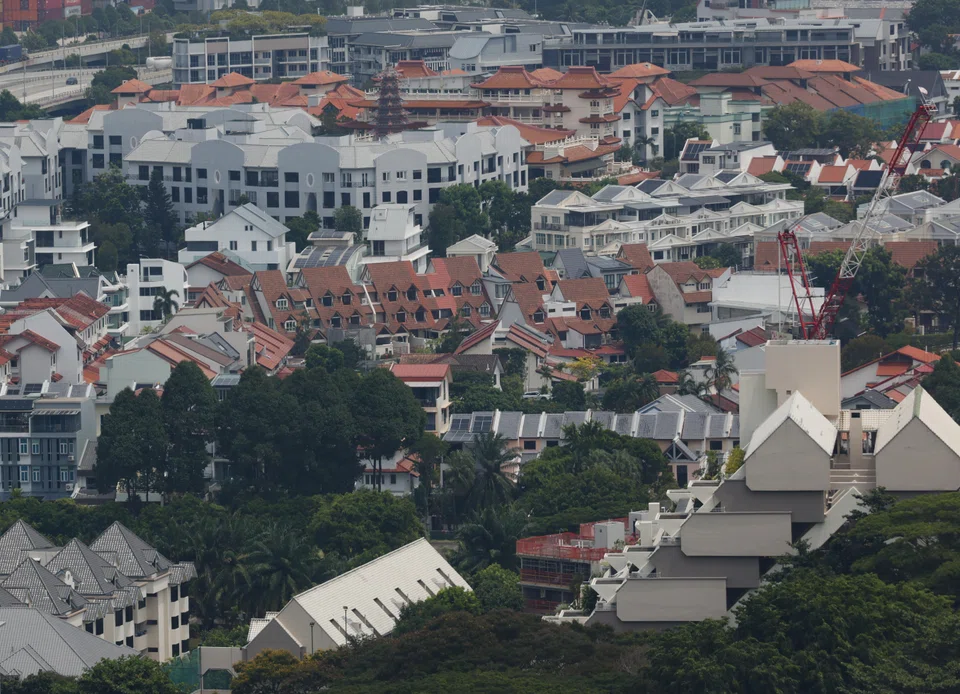
[SINGAPORE] Recently, a working paper published by the US-based National Bureau of Economic Research (NBER) reported a statistical association between civil servants working in agencies connected to rail planning and their purchase of private property near planned MRT stations, before the station locations were publicly announced.
According to the non-profit organisation’s research, civil servants in Singapore disproportionately bought homes near MRT stations that were planned but not publicly announced.
The paper found this behaviour concentrated one to two years before public announcements, and cited an estimated 113 property purchases totalling S$138 million. The pattern was observed for MRT station announcements in or before 2011.
The public holds the civil service in high regard. And the housing market can arouse strong emotions among many people. Also, securing an edge in a transparent property market could potentially translate into sizeable gains. Thus, unsurprisingly, the paper’s findings caused a stir.
On Oct 6, Coordinating Minister for Public Services and Minister-in-charge of the Public Service Chan Chun Sing told Parliament that eight public officers were referred to the police following a government review of property purchases near locations subsequently announced as MRT stations.
The eight were among 191 officers whose property transactions were reviewed by the Public Service Division (PSD), with further checks still ongoing.
Chan, who is also the minister for defence, emphasised that a referral does not mean that wrongdoing has been established. He said the police will look into the facts independently and due process will be followed.
While the NBER paper identified the period of concern as 2007 to 2011, PSD extended its review to 2014.
Sensitive information
Depending on their job scope, civil servants can be privy to sensitive non-public information which may substantially affect private housing prices.
Where an MRT station or a sought-after primary school is located could significantly affect home prices. Plans to develop a major business hub can transform a particular location’s appeal.
Conversely, the siting of a disamenity in a particular location could dampen housing prices in the location.
Beyond infrastructure developments, government policies on borrowing, primary one school admission, taxes and public housing among others may have a major impact on the private housing market.
Ultimately, just as tough rules govern how directors and executives of listed companies handle material inside information, what matters is that civil servants handle any sensitive non-public information such as that pertaining to the housing market with great care.
As it stands, safeguards include controlling access to sensitive information on a need-to-know basis, and declaration and approval requirements governing officers’ personal interests and transactions.
Expression of confidence
Certainly, public officers acting should not use non-public information for personal gain. That’s a definite no-no.
But taking a step back, don’t their actions demonstrate a confidence in Singapore’s property market and by extension the long-term future of Singapore?
Think about it. If civil servants lack faith in a country’s future, they would channel their funds into foreign currencies and buy overseas assets including foreign homes.
The civil servant may be convinced that channelling a large portion of his earnings and savings to buy a private home here represents a solid investment because Singapore’s fiscal prudence and stability support a strong local currency, the Republic’s economy continued growth will create good jobs and raise household income, and the government’s infrastructure plans will become reality in a timely manner.
Indeed, when major government plans and policies are unveiled, people who understand the implications of such plans and policies might rationally act on such information faster and with greater conviction.
When a listed company’s top management or controlling shareholders buy shares in it, using public information, investors may perceive such actions as a vote of confidence by said parties in a company’s prospects.
Meanwhile, the private property market has been delivering solid returns.
Over a 10-year period to the third quarter of 2026, based on the flash estimate for Q3, the Urban Redevelopment Authority’s overall private housing index rose by a compounded annual growth rate of about 4.9 per cent.
While Housing & Development Board (HDB) flats can be good investments too, ownership of such flats is subject to tight restrictions.
A civil servant therefore might also see savvy investing in private residential property here as a way to build a nest egg for retirement. And his household may purchase multiple properties in a tax-efficient way. For one thing, buying a home can help hedge against inflation.
A civil servant should be free to choose to have exposure to Singapore private residential property so long as any property-related decisions he made were based on public information.
What is imperative is that public servants uphold high standards of integrity, so the public retains its strong trust in civil servants.
Beyond considering whether civil servants are privy to confidential information, another pertinent factor is whether the sales process is above board too. For example, when buying a new condo unit, civil servants should not enter a developer’s priority queue to choose a unit.
If some civil servants are excited by how this little red dot will improve as a place for living, working and playing and plough money into buying property here, that can be seen as a form of backhanded compliment of Singapore.
Go ahead, I say, as long as they do not use non-public information to make personal gains.