

8 public officers referred to police over property buys near unannounced MRT stations: Chan Chun Sing
They are among 191 individuals with transactions reviewed by PSD; checks are still ongoing

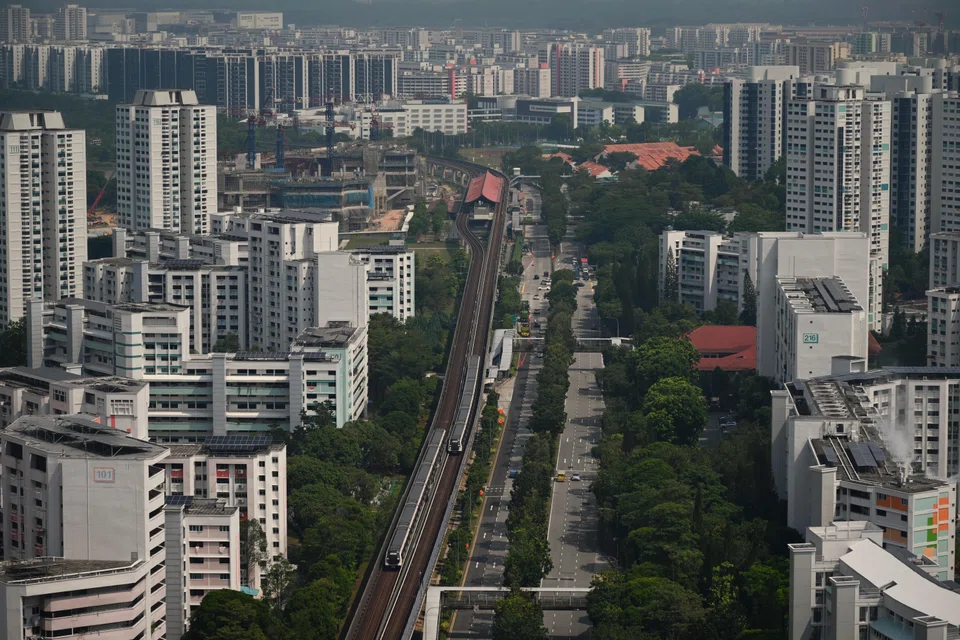
[SINGAPORE] Eight public officers have been referred to the police following a government review of property purchases near locations subsequently announced as MRT stations, Coordinating Minister for Public Services and Minister-in-charge of the Public Service Chan Chun Sing said in Parliament on Tuesday (Oct 6).
The eight were among 191 officers whose property transactions were reviewed by the Public Service Division (PSD), with further checks still ongoing.
Their cases warranted further examination either because of the specific circumstances surrounding the purchases, or because there was insufficient information to exclude them from further review, said Chan, who is also the minister for defence.
“Let me emphasise that a referral does not mean that wrongdoing has been established,” he added. “The police will look into the facts independently and due process will be followed.”
He was responding to questions from nine Members of Parliament on the government’s review of claims that civil servants disproportionately bought properties near planned but unannounced MRT stations, and whether existing safeguards against the misuse of non-public information are adequate and should be strengthened.
The questions followed the publication of a working paper in September by the US-based National Bureau of Economic Research (NBER), which reported a statistical association between civil servants working in agencies connected to rail planning and purchases of private property near planned MRT stations before their locations were publicly announced.
The researchers found that the pattern was concentrated among mid-level civil servants and in the one to two years before station locations were announced. They estimated that civil servants made 113 such purchases worth about S$138 million.
The pattern was observed for MRT station announcements made in or before 2011.
While the NBER paper identified the period of concern as 2007 to 2011, PSD extended its review to 2014 “as a matter of prudence”, as the locations of many new MRT stations continued to be announced in the years after 2011, Chan said.
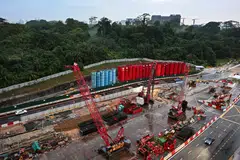
Using government records, PSD identified officers who worked in agencies involved in rail planning and made property purchases between 2007 and 2014 close to locations that were subsequently announced as MRT stations.
For each transaction, PSD examined available records, including the officer’s role at the time, whether the officer had access to relevant non-public information, the timing and circumstances of the transaction.
Responding to questions about safeguards against misuse of non-public government information, Chan said: “Public officers must never use information obtained through their official duties to advance their own private interests or those of others.”
He added that depending on the circumstances, unauthorised use or disclosure of official information may also constitute an offence under the law.
Safeguards in place
Existing safeguards include controlling access to sensitive information on a need-to-know basis, and declaration and approval requirements governing officers’ personal interests and transactions.
“The public service regularly reviews its rules and has strengthened them over time,” said Chan. “We will consider what the present review tells us about their effectiveness and whether there are gaps to address.”
He added: “Any further measures should be proportionate to the risks and practical to implement, while allowing legitimate personal transactions to proceed with appropriate oversight.
“Even with strong safeguards, no system can eliminate the possibility of wrongdoing entirely. We must therefore continue to reduce the opportunities for abuse, maintain effective means of detection and act firmly where evidence of wrongdoing emerges.”
On whether checks should extend to other infrastructure projects and property deals, including schools and land-use decisions, Chan said that PSD has not undertaken such a general review, and officers with access to non-public information should not be assumed to have misused it.
He added that PSD would complete its review “as soon as possible”, and if there were relevant findings, they would be published in full.
On safeguards against the misuse of sensitive government information for investments beyond property, and whether the government would increase the frequency and intensity of checks rather than take a “reactive stance”, Chan said that the same rules applied to property, financial and other transactions.
“Be it property or any other transactions that pertain or may involve sensitive information, we take them all in the same spirit, which is that no officers should use any non-public information for their personal gain.”
Asked whether owning multiple properties should be considered a red flag, and whether limits should be placed on the number of properties public officers can own, Chan said: “We have to be fair to the public officers... They have legitimate housing needs. They have legitimate needs to make investments and manage their own finances.”
He added that having more than one property is not necessarily a red flag, rather the key question was whether they had misused non-public information.
Separately, asked whether property declaration requirements should be extended to public officers’ parents and financially independent children, Chan said that there was a need to strike a balance over what officers were required to declare.
Current requirements cover public officers, their spouses and financially dependent children. But regardless of whether a person was an immediate or extended family member, using non-public information for personal gain was “still wrong”, he added.
Decoding Asia newsletter: your guide to navigating Asia in a new global order. Sign up here to get Decoding Asia newsletter. Delivered to your inbox. Free.
Copyright SPH Media. All rights reserved.
TRENDING NOW

Government to bring forward raising of retirement age, give employers more financial support to create flexi-load jobs

If Europe goes to war, the fallout will be felt in East Asia

Indonesia stocks suffer worst plunge in nearly 30 years as MSCI proposes standalone status

Vietnam’s northern provinces, not Hanoi or Ho Chi Minh City, are powering near 10% GDP growth

