

A managed rivalry between US and China serves the world well
History shows that when great powers act together, another country’s sovereignty may be affected
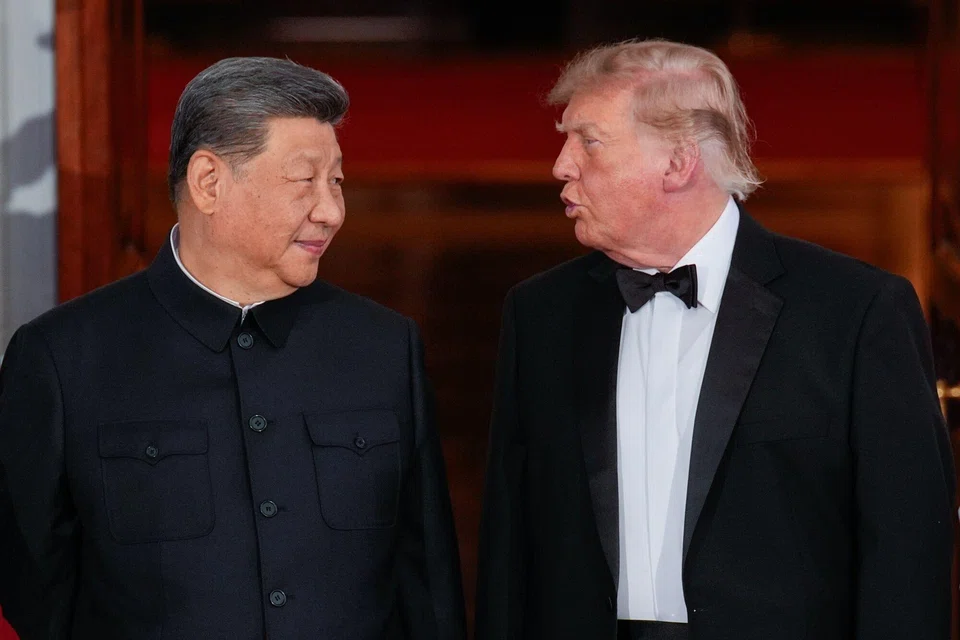

STRIP away the hoopla from a meeting of equally powerful world leaders and what is revealed is usually a carefully managed relationship. So it was with the summit in Washington last week between US President Donald Trump and Chinese President Xi Jinping.
The summit’s only concrete deliverable was the two-month extension of the trade truce concluded in Busan in October 2025, stretching the pause in their tariff war from its Nov 10 expiration this year to Jan 10, 2027.
On agriculture and rare-earth agreements, progress appears uneven.
China is roughly halfway through its 25-million-tonne annual soybean commitment but lagging on US$17 billion in other agricultural purchases from the US.
For the US, the biggest issue remains unrestricted trade in rare-earth products from China. But rare-earth product shipments from Beijing to Washington actually fell to 512 tonnes in August – down 21 per cent from July – with American firms waiting six months or more for export licences.
Then there was an agreement (of sorts) on artificial intelligence. At their meeting in New York prior to Trump’s meeting with Xi, US Treasury Secretary Scott Bessent and Chinese Vice-Premier He Lifeng signed off on a “US-China AI dialogue” with a planned follow-up meeting in Shenzhen in about two months.
There is now a “notification mechanism” – effectively a hotline – for AI emergencies with national security implications. Given the apocalyptic prognostications about AI going rogue, it was modest in ambition and optics.
And there were also the two issues that each side currently holds most dear: Taiwan and Iran.
Beijing wanted Trump to declare that Washington actively “opposes” Taiwanese independence. Such a statement would be to show that the Trump administration is acting on the issue “with prudence”, by Chinese reckoning.
But that would have been a step beyond Washington’s longstanding formulation that it merely “does not support” Taiwan’s independence. To have acceded to Xi’s stance would have been decried as capitulation by China hawks.
Even so, Trump still holds a US$13 billion arms package for Taipei in abeyance, calling it a “negotiating chip” despite pressure from Congress and, no doubt, the arms manufacturers.
At the same time, the Trump administration needs China to help isolate Iran economically and reopen the Strait of Hormuz. But Beijing has made it clear it will not be using its financial leverage over Teheran to force it to make a deal with the US on Washington’s terms.
Dangers of superpower collusion
Take a step back and look at the broader picture: A wary, unresolved rivalry between the superpowers is perhaps about as much as can be expected in these unsettled times. But such a state of affairs is not detrimental for the rest.
History is replete with examples of what happens when great powers act in collusion.
For example, the Molotov-Ribbentrop Pact liquidated Poland with a signature in 1939. British wartime leader Winston Churchill’s secret “percentages agreement” with the Soviet Union’s Joseph Stalin divided the Balkans on a half-sheet of paper in 1944.
Consider a Group of Two system – a Washington-Beijing condominium – managing the world’s affairs. How would that have decided the fate of Taiwan or the competing claims in the South China Sea?
To be clear, none of this is an argument for conflict. When rivalry goes kinetic – a war that closes the Strait of Hormuz – the rest pay the bills.
On the other hand, a state of carefully managed rivalry between the US and China superpowers allows the rest of the world to exercise a degree of agency and, indeed, what has been termed “omnidirectional hedging”. And that is surely a good thing.
TRENDING NOW

Once staunchly pro-China, Malaysian Chinese businesses are now distancing themselves from Beijing

Looking beyond looming CEO succession, should UOB potentially pursue a transformative merger?

Could stablecoins be the future of money?

Grab CEO’s wife Chloe Tong on life with Anthony Tan and finding her purpose

