

Neither the US nor Iran is blinking in their economic brinkmanship
Washington wants to cripple Teheran’s economy, but it could have unintended consequences
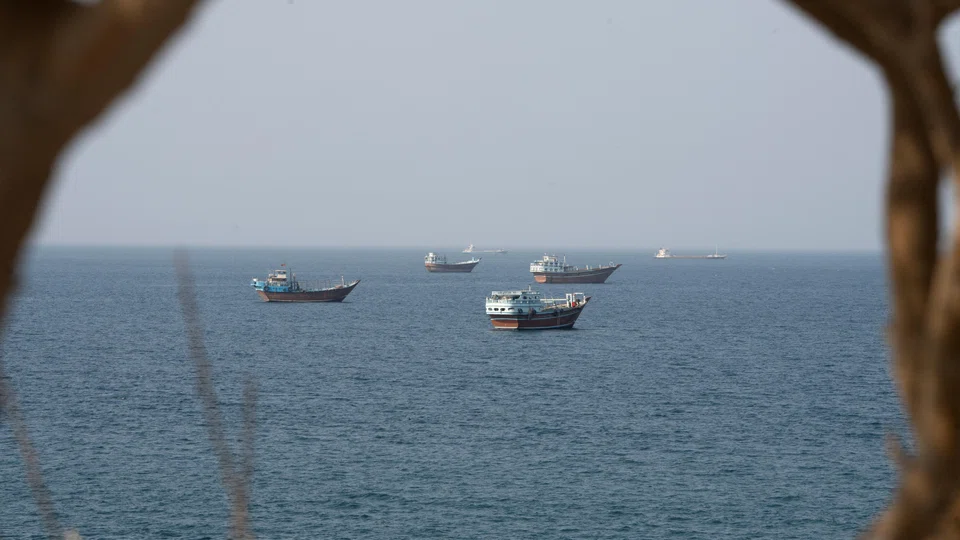
SIX months into the Iran war, the missiles have been fired and gone quiet in stretches, and the Strait of Hormuz has opened and closed and opened again.
A ceasefire memorandum signed in June collapsed mere weeks later, and has since expired without signs of renewal, though talks between the US and Iran are reportedly still taking place.
But the fight that never pauses is the one being waged in ledgers, oil manifests and currency markets. Call it what it is: a game of chicken, and the weapon of choice on both sides is the other side’s economy.
Two economies staring each other down
The basic shape of the stand-off is simple enough to sketch, even if the details are a tangle of sanctions lists and shadow fleets.
When the US and Israel struck Iran in late February, killing former Iran supreme leader Ali Khamenei and other senior officials, Teheran tried to answer with the one lever it has always held: its grip on roughly a fifth of the world’s seaborne oil traffic, the Strait of Hormuz.
Iran mined the strait, harassed shipping through it and effectively closed it for long stretches of the past five months, hoping to make the war costly enough for outsiders that pressure builds on Washington to back off.
The US responded with the tool it has spent nearly a decade refining: economic strangulation. Washington imposed a naval blockade on the strait, which has cost Iran US$435 million in lost oil revenue daily, according to estimates.
The blockade comes on top of roughly 2,200 sanctions on Iran – targeting everything from tanker fleets to currency exchanges used to launder oil proceeds – that US President Donald Trump has slapped on the country since 2018.
Despite these measures, neither side has swerved.
Iran’s ledger is bleeding
By any conventional measure, Iran’s economy is in serious trouble. Inflation spiked 62 per cent year on year in June. Estimates of the share of Iranians living below the poverty line run as high as half the population, and fewer than four in 10 working-age adults have a job.
Given these bleak statistics, it’s not hard to see why Trump administration officials now claim Iran is nearing bankruptcy with few cards left to play.
Teheran isn’t simply attempting to withstand the pressure, though. It’s hunting for workarounds and leaning harder on China, which remains its largest trading partner and biggest oil customer.
Iran is also running a shadow fleet of tankers to keep barrels moving despite the blockade, and is now moving to join the Brics-affiliated New Development Bank in an attempt to build financial channels that bypass the US dollar system entirely.
It’s the economic equivalent of trying to reroute blood flow around a blocked artery.
Washington’s bet has a price tag, too
Here’s the part that complicates the simple story of American leverage: squeezing Iran isn’t free for Washington or its allies.
The blockade and the on-again, off-again closure of Hormuz have kept a choke point for roughly a fifth of global oil supply in a state of chronic disruption, and that shows up in energy prices everywhere.
The UK, the Group of Seven’s fastest-growing economy at the moment, is, by the International Monetary Fund’s reckoning, among the rich world’s most exposed to the fallout.
The pressure campaign is now reportedly shifting from military blockade towards financial isolation, with US Treasury Secretary Scott Bessent promising measures on a scale not previously attempted.
Trump has floated 25 per cent tariffs on any country buying Iranian oil or gas, a threat that lands most heavily on China, meaning the campaign designed to isolate Iran risks dragging Washington into a parallel economic confrontation with Beijing.
That’s the trouble with a chicken game fought with economies. Global shipping insurers, European energy consumers and Asian refiners are all riding along, and none of them get a vote on when someone swerves.
Who will blink first?
The administration’s public position is that the arithmetic favours the US decisively, that a regime this economically hollowed out cannot sustain a long war and will eventually be forced to the table on American terms.
There’s a real case for that view: more than four decades of sanctions on infrastructure, a currency in free fall and a population already primed for unrest by 2025’s protests over food and fuel shortages are not conditions conducive to holding out indefinitely.
But there’s a counter-case worth taking seriously: The US may already be near the ceiling of what economic pressure alone can achieve.
Iran has weathered severe sanctions for the better part of a decade without regime collapse and has an alternative buyer in China willing to absorb discounted oil. It has repeatedly shown it will accept extraordinary domestic pain rather than concede on core issues, nuclear capability chief among them.
A regime that has survived this long on a wartime economy may simply have a higher pain threshold than Washington’s models assume.
The stakes of getting it wrong
What makes this particular game of chicken so dangerous isn’t just that both sides believe they can outlast the other; it’s also that the instruments being used – a live naval blockade in a strait carrying a fifth of the world’s oil – don’t stay contained to a bilateral stand-off.
Every week the strait stays disrupted is a week of elevated energy prices rippling through economies that had no say in starting the fight.
Every new sanctions package aimed at forcing Teheran’s hand also nudges Iran further into China’s economic orbit and further out of any US-centred financial system, a shift that could prove far stickier than the war itself.
Right now, neither side shows any sign of backing off.
Whether Washington’s bet pays off or whether it instead produces a more entrenched, more Beijing-aligned Iran with a damaged but not broken economy may be the question that matters most for the region’s next decade.
TRENDING NOW

Once staunchly pro-China, Malaysian Chinese businesses are now distancing themselves from Beijing
The middle power moment arrives in South-east Asia – but not for Asean

DBS, OCBC, UOB face rate hike reality check

Vietnam’s northern provinces, not Hanoi or Ho Chi Minh City, are powering near 10% GDP growth

