
THE BOTTOM LINE

Pakistan is defying some long-held investing myths

Islamabad’s unlikely role as a broker of peace in the Gulf has put it back on institutional investors’ radar
Summarise
    • The energy shock from the Strait of Hormuz's closure has not led to a collapse of Pakistan's public finances. There is no currency crisis, either.
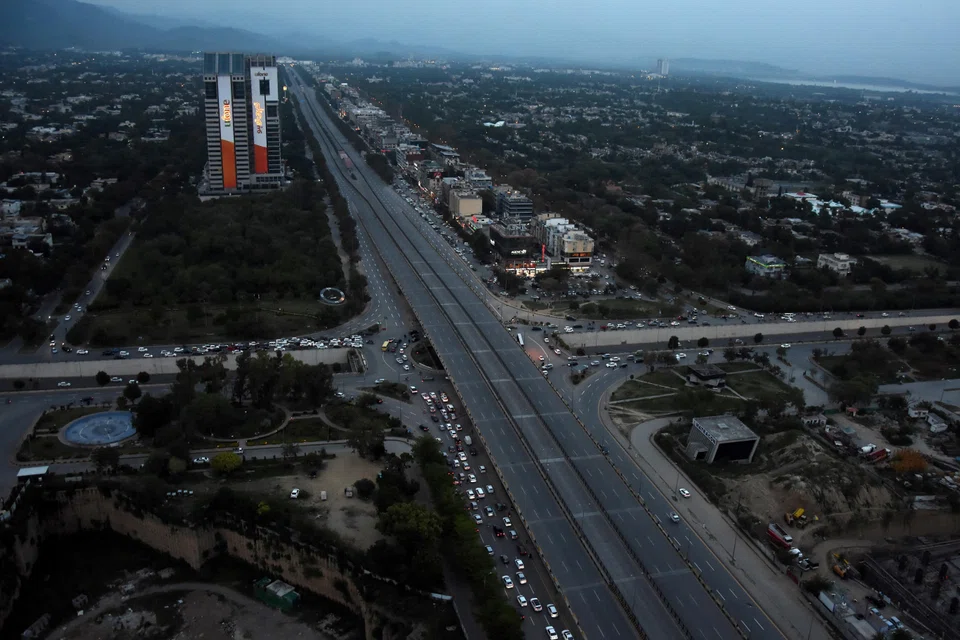
    • The energy shock from the Strait of Hormuz's closure has not led to a collapse of Pakistan's public finances. There is no currency crisis, either. PHOTO: REUTERS
    Published Wed, May 27, 2026 · 07:00 AM

    AS THE Iran war drags on, emerging markets powerhouses are reeling from the closure of the Strait of Hormuz, one of the oil trade’s most important routes.

    Turkey’s foreign reserves are depleting at record pace, India is considering all options as the rupee plunges to record lows and Indonesia delivered a jumbo interest rate hike to defend its currency.

    If these heavyweights are struggling, what chances are there for smaller nations?

    Pakistan is doing remarkably well considering the circumstances. In mid-April, the government re-entered the global bond market after being shut out for almost four years, raising US$750 million and 50 per cent more than it had asked for.

    Bond yields over US Treasuries temporarily widened to about five percentage points in March, but have largely gone back to pre-war levels. The local rupee has been stable at around 280 per US dollar, and the benchmark KSE-100 Index is down only 1.3 per cent for the year. 

    Unexpected resilience

    The resilience goes against global investors’ conventional wisdom. In times of turbulence, developing countries with twin deficits, namely in current accounts and fiscal budget, are vulnerable to hot money flows and can easily tip into distress.

    Pakistan, which has received an extraordinary 25 bailouts from the International Monetary Fund (IMF), fits the bill perfectly.

    As an energy importer, it relies heavily on Gulf states, which supply more than 80 per cent of its fuel imports.

    Remittances from citizens working in the region account for about 5 per cent of gross domestic product; that money flow can halve if the Middle East slumps into an economic downturn. 

    Because of the war, its current account deficit could increase by 1.5 percentage points for the year ending June 2027, pushing the country back into the red, according to the IMF. This would imply an estimated US$12 billion financing gap till June 2028.

    As it stands, the country does not even have enough foreign-exchange reserves to cover three months of imports. So why are global investors so relaxed about Pakistan?

    Cooperating with the IMF helps. Pakistan has been on a US$7 billion loan deal since 2024.

    During a recent IMF staff visit, Islamabad reaffirmed its commitment to a 2 per cent fiscal surplus over the next year. Earlier in May, the organisation approved the disbursal of US$1.3 billion in loans. 

    Unlikely role as broker of peace

    But more importantly, Pakistan’s unlikely role as a broker of peace in the Gulf has put it back on institutional investors’ radar. 

    Being a friend to Islamabad during its times of need has become strategically important.

    In April, Saudi Arabia deposited US$3 billion with the State Bank of Pakistan and extended a US$5 billion loan facility to 2028, after the United Arab Emirates abruptly declined to roll over its US$3.5 billion debt.

    The once-close partnership between the two Gulf nations has erupted into open rivalry. Abu Dhabi recently withdrew from the Organization of the Petroleum Exporting Countries, the Riyadh-dominated cartel of leading oil producers.

    China is also keen to prop up its neighbour. On May 14, Pakistan issued its first sovereign panda bond, the initial tranche of a broader US$1 billion programme.

    With the latest 1.75 billion yuan (S$329 million) note, Islamabad is paying only a 2.5 per cent coupon. Foreign reserves have reached US$17.1 billion as at May 15, up from US$16 billion at the end of 2025.

    In other words, the US$12 billion funding gap may be a lot for Pakistan, but nothing for economic behemoths such as Saudi Arabia and China, which increasingly recognise the South Asian country’s strategic importance.

    Islamabad’s military strength automatically gives it a prominent seat at a future “Islamic Nato”, should one ever materialise.

    Meanwhile, the government likely hopes that Gwadar Port, close to the Strait of Hormuz but not in the immediate conflict zone, could emerge as a major logistics hub for safe anchorage.

    Geopolitical prominence does not show up on current accounts. But it certainly relaxes borrowing constraints.

    Historically, emerging markets investors have pored over a country’s external accounts, frowning whenever they saw an over-reliance on imports of essential goods, such as food and energy, or thin hard-currency reserve buffers.

    Pakistan’s resilience this year has proved that thinking wrong. The energy shock has not led to a collapse of public finances. There is no currency crisis, either.

    With US President Donald Trump ripping apart the world order, Pakistan, which has gone to the IMF more times than any other nation, is shedding its image as a failed state. It is breaking some emerging markets investing myths, too. BLOOMBERG



