

The Philippine chairmanship of Asean in a year of strategic tension
Manila’s challenge lies less in setting ambitious priorities than in preserving cohesion amid mounting challenges
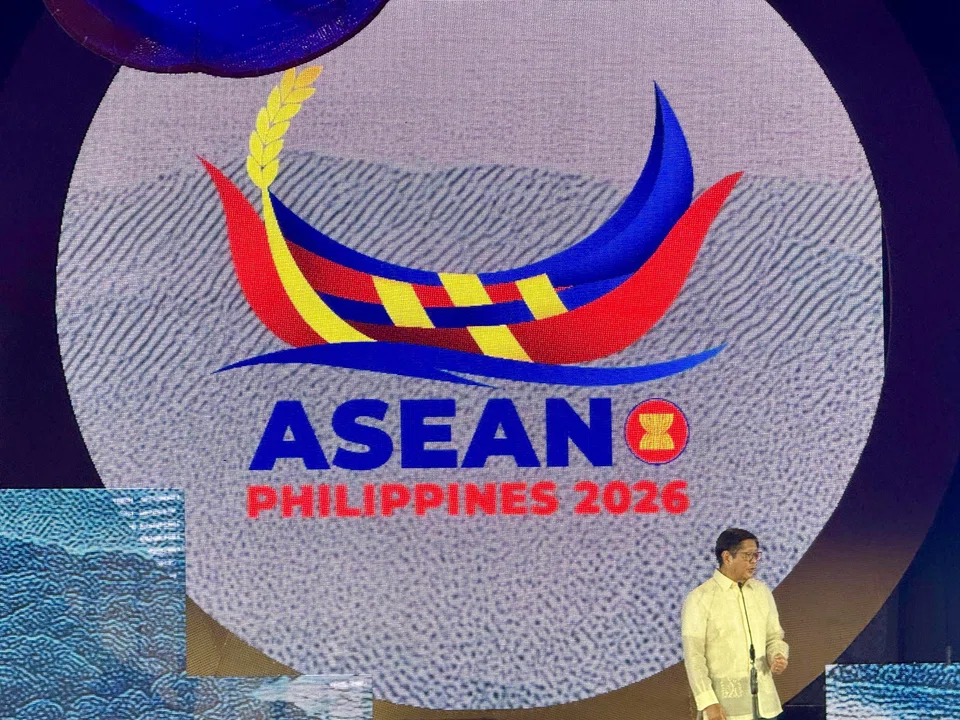
WHEN the Philippines assumed the Asean chairmanship on Jan 1, 2026, under the theme “Navigating Our Future, Together”, expectations were high within Asean that Manila would steer the bloc through a year marked by strategic uncertainty and accumulated regional pressures.
The organisation continues to face political crises in Myanmar, persistent tensions in the South China Sea and a broader environment in which the second Trump administration and geoeconomic competition continue to test Asean unity.
Early meetings and diplomatic engagements offer initial signals of how Manila is positioning itself within these structural constraints.
The Philippine chair has focused on continuity. The Asean Foreign Ministers’ Retreat in Cebu in late January was an early test of forging unity on sensitive issues, with Myanmar at the centre of discussions.
There, Manila reiterated established Asean positions, including continued reference to the Five-Point Consensus and the restriction of high-level representation by the Myanmar military authorities.
In her capacity as special envoy of the Asean chair, Foreign Secretary Maria Theresa Lazaro visited Myanmar on Jan 6. She made clear that Asean would not recognise the recent electoral process as yet, reinforcing the grouping’s position that political developments in Myanmar must move towards inclusive dialogue and cessation of violence.
While engagement with the military leadership prompted criticism from regional observers, the visit reflected Asean’s longstanding approach of dialogue without endorsement.
This dual-track posture reflects Manila’s effort to bridge differing views within Asean on the balance between political pressure and continued engagement with Naypyitaw. Manila appears to be signalling that it will prioritise managing escalation risks and preserving Asean’s collective position rather than forcing an expedited political outcome.
This balancing act extends to the South China Sea issue, where the Philippines faces a particularly delicate balancing act.


As a claimant state, the Philippines has been among the most vocal in asserting its maritime rights under international law. As Asean chair, however, it must frame the issue in a manner that sustains regional cohesion while keeping negotiations with China on the Code of Conduct moving.
Lazaro has reiterated that any Code of Conduct must be consistent with the UN Convention on the Law of the Sea, signalling Manila’s continued emphasis on a rules-based approach as it steers Asean discussions.
Yet expectations among some Asean policymakers and observers of a legally binding conclusion within the year remain tempered by political reality. Divergent strategic calculations among Asean member states, together with the pace and substance of negotiations with China, make a rapid breakthrough unlikely.
While the Philippines has scheduled more negotiations on the Code of Conduct, the more consequential test lies in ensuring that any outcome is substantive and credible.
If Manila can sustain negotiation momentum, help contain the risk of maritime escalation among claimant states and China, and avoid visible fractures within Asean’s collective position, that would constitute meaningful progress in a more polarised environment.
Crisis management
On another front, the Cambodia-Thailand border tensions further underscore the limits of Asean’s crisis management architecture.
While the Philippines has not introduced new mechanisms, it continues to support the work of the Asean Observer Team and sustain discussions within Asean on ceasefire verification and de-escalation. Here too, the chair’s role has been facilitative rather than interventionist. The priority appears to be preventing bilateral frictions from spilling over into broader regional fragmentation.
Beyond the immediate political and security pressures, the Philippine chairmanship has continued work on Asean’s longer-term integration agenda. Sectoral and ministerial meetings in economic cooperation, tourism, energy cooperation and socio-cultural engagement have proceeded as scheduled, reinforcing continuity across the bloc’s core workstreams.
Manila has linked these efforts to the early implementation of the Asean Community Vision 2045, framing its leadership around peace and security anchors, prosperity corridors and people-centred empowerment.
In periods when consensus on strategic questions proves elusive, it is often through functional cooperation that Asean sustains its relevance and momentum. While unlikely to generate headlines, steady advances in these domains can help sustain confidence in the bloc’s practical relevance.
So far, the Philippine chairmanship has projected steadiness and alignment with Asean’s established diplomatic practice. The question going forward is less about rhetorical ambition and more about sustained capacity.
The more consequential answer may lie at home. Chairing Asean requires more than foreign policy signalling; it demands bureaucratic discipline, coherent messaging and the alignment of domestic agencies behind agreed regional priorities.
Manila’s ability to sustain focus, coherence and diplomatic bandwidth will be shaped in part by domestic political dynamics and inter-agency coordination across the Department of Foreign Affairs, and defence, trade, energy and economic agencies responsible for advancing Asean sectoral commitments.
What’s more, President Ferdinand Marcos Jr’s political standing has significantly changed since 2022. With two years left in office, his approval and trust ratings are in decline. The break-up of his alliance with the Dutertes and the lack of credible progress in the ongoing flood control corruption scandal probe have considerably diminished his political capital.
Domestic issues
Apart from these, the looming impeachment trial of Vice-President Sara Duterte and the ongoing trial of former president Rodrigo Duterte in the International Criminal Court will likely occur this year, further adding to the list of domestic political distractions and constraining the government’s capacity to project sustained leadership abroad.
Sara Duterte’s recent declaration that she will run in the 2028 presidential elections has caught the Marcos Jr government on the defensive. Vowing to change the policies of the current administration, she has become a formidable opposition figure.
It is possible that the government’s actions and foreign policy goals related to the Asean chairmanship might be interpreted as protecting Philippine interests against Sara Duterte’s revisionist plans. The latter’s plans could include a more pro-China policy that downplays the country’s maritime interests in the South China Sea as implemented by her father’s presidency.
This is clearly seen recently. A “word war” ensued between Chinese Embassy officials in Manila and several Filipino officials and senators when a coast guard official used an unflattering caricature of Chinese President Xi Jinping in a public lecture.
Mindful of its role as Asean chair, Manila has allowed the Department of Foreign Affairs to de-escalate the tensions since stormy relations with China will not bode well for its capacity as host to world leaders this year.
However, an analyst warned that the Marcos Jr administration must ensure that this is not interpreted as a change in its current policy of fervently promoting the country’s maritime interests in the South China Sea.
This exposes the internal political vulnerabilities of the Marcos Jr administration. Manila must project a modicum of domestic political stability, bureaucratic coherence and policy consistency if it wishes to inspire confidence among its counterparts in the region and beyond.
President Marcos Jr must rally the entire government apparatus as well as the nation, to convince them that the Asean chairmanship presents a vital opportunity to show responsibility and leadership. While the Philippines has historically shown that it can host well, it cannot rest on its old laurels.
The first quarter of the Philippine chairmanship reflects a broader reality confronting Asean in 2026: The challenge lies in preserving cohesion amid mounting challenges. Manila’s approach thus far has been measured and calibrated. Whether that steadiness proves sufficient in a year of overlapping crises will be the more consequential test for the Philippines and for all of Asean.
The writers are from Iseas-Yusof Ishak Institute. Joanne Lin is a senior fellow and coordinator of the Asean Studies Centre, and a Fulbright visiting scholar at the MIT Center for International Studies. Aries A Arugay is a visiting senior fellow and coordinator of the Philippine Studies Programme. He is also professor at the department of political science at University of the Philippines-Diliman.
This is an edited version of an AseanFocus+ article that was first published in Fulcrum, Iseas – Yusof Ishak Institute’s blog.
Decoding Asia newsletter: your guide to navigating Asia in a new global order. Sign up here to get Decoding Asia newsletter. Delivered to your inbox. Free.
Share with us your feedback on BT's products and services






