Price of war: How the conflict with Iran is hitting the US economy
A longer-lasting escalation would shrink America’s forecasted expansion by more than half
ONE and a half weeks into the US-Israeli military campaign against Iran, the economic tremors are already being felt by ordinary Americans, at the gas pump, in the grocery store, and in the anxious swings of financial markets. While the full damage won’t be clear until the dust settles, early indicators paint a sobering picture.
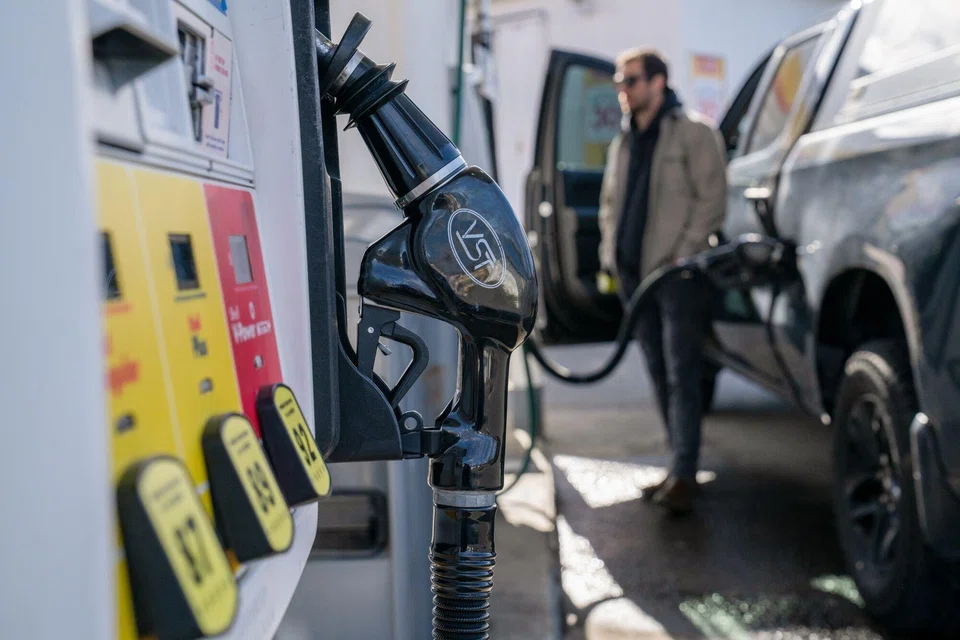
The most immediate and visible impact has been at the fuel pump. Petrol prices in the US soared to US$3.20 a gallon within days of the conflict’s start, flashing a warning sign for the nation’s economy.
US consumers are seeing prices rise US$0.05 to US$0.10 per gallon daily, and those increases ripple far beyond the forecourt. Higher fuel costs mean more expensive goods on the shelves, more expensive airline tickets, and more expensive freight – ultimately, a tax on virtually everything Americans buy.
At the heart of this problem is a narrow stretch of water. The Strait of Hormuz facilitates the transport of about one-fifth of the global supply of crude oil and liquid natural gas. A commander in Iran’s Islamic Revolutionary Guard Corps declared the strait closed in the war’s early days, and the consequences have been swift.
Traffic through the strait is down about 90 per cent compared with normal levels, and at least nine commercial vessels have been targeted in attacks nearby, prompting multiple insurance firms to cancel coverage for vessels in the Gulf.
The disruption sent oil prices sharply higher. Brent crude oil prices surged to around US$119 per barrel on Mar 9, up from around US$70 before the strikes began. US West Texas Intermediate crude futures jumped past US$90 a barrel by Mar 9, and analysts warn of worse to come if the strait remains choked.
According to energy analysts, a prolonged closure of the Strait of Hormuz would be a guaranteed global recession.
For the US economy, the danger comes in two forms: slower growth and higher inflation arriving simultaneously. Before the war, economists had forecast solid US growth of 2.4 per cent in 2026. A short-lived conflict would slightly reduce that figure, while a longer-lasting escalation would shrink the anticipated expansion by more than half.
This so-called stagflation scenario puts the Federal Reserve in an impossible position. Former treasury secretary Janet Yellen said the conflict could hit US economic growth and fuel inflationary pressures, holding the Fed back from cutting rates. The Fed was already cautious; now it may be paralysed.
Wall Street, for its part, has reacted with characteristic ambivalence. On the first day of the conflict, the Dow initially shrugged, only to tumble more than 1,200 points the following morning before recovering to close down 400 points.
Investors seem caught between historic precedent – which suggests markets recover quickly after geopolitical shocks, and the realistic fear that this conflict could drag on far longer than the original strikes suggested.
One factor giving economists some comfort is America’s domestic energy strength. The US is the world’s largest oil producer, which means it is far less exposed to Middle East supply shocks than it once was. Domestic energy production has buffered some of the immediate shock, but uncertainty still risks undermining 2026 growth outlooks.
The administration has also floated measures to ease prices, including releasing oil from the Strategic Petroleum Reserve and removing some restrictions on India’s ability to buy Russian oil to boost global supply.
But buffers only go so far. For a global economy already rattled by US tariffs and uncertainty about the post-World War II order, much now depends on how long the disruption lasts.
A sustained surge in energy prices would drive up the cost of everyday goods. Central banks would then likely raise borrowing costs to curb inflation, dampening consumer spending and dragging down economic growth.
The harsh truth is that the American economy entered this conflict in a fragile state, inflation still above the Fed’s target, tariffs already squeezing supply chains, and consumer confidence unsteady. Economists note that inflation had been slowing over the past year, though still slightly above the Fed’s 2 per cent target, progress that could now be reversed.
Wars are expensive in blood and in treasure. The conflict with Iran is only 10 days old, but its economic costs are already compounding by the hour.
Whether those costs remain manageable or spiral into something far more damaging will depend on a single, unanswerable question: how long does this last?