Ritual CEO sacrifice is looming over Jensen Huang
Markets may be overstating the risk his potential sacking poses to the wider AI industry
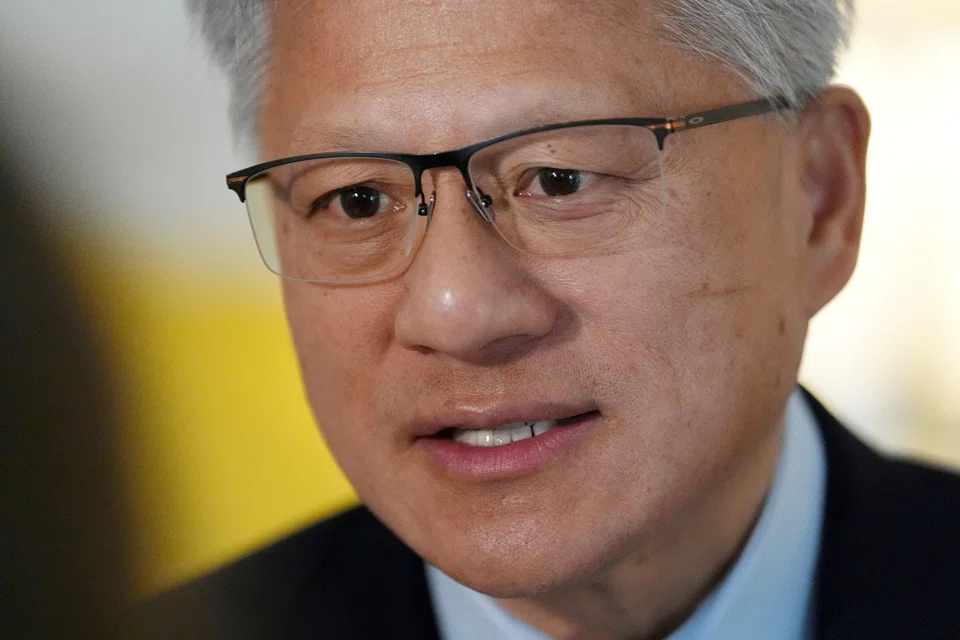
THE revelations keep coming, and they make it ever clearer that Nvidia had badly underestimated the key-man risk it was taking in the person of its hugely powerful and respected CEO Jensen Huang. It is possible, however, that the market is overstating quite how much peril is rolled up in him.
A bigger and more difficult question is whether Huang is also a key man for the entire artificial intelligence industry. So far, the bet seems to be that he is not. Shares in Nvidia and the main exchange-traded fund tracking the Nasdaq 100 have taken huge damage since the start of trading on Nov 6.
After the weekend’s extraordinary revelation of a relationship with an alleged Chinese spy (who has now reappeared in Beijing), the news that he also had an affair with Kimberly Powell, who heads Nvidia’s efforts to introduce AI to healthcare and reports directly to him, might well have been the final straw.
It is hard to see how any executive could survive after transgressions like this. At the time of writing, Nvidia’s board was meeting and appeared highly likely to dismiss him. Huang has been a hugely successful leader. However, with no succession plan in place, all this is bad news and reason to sell off.
But even before the revelations of the second affair, traders had taken down Nvidia’s valuation to the point where its forward earnings multiple, on a blended 12-month basis, was only 66 per cent that of the S&P 500 as a whole.
Three years ago, it was more than 200 per cent more expensive than the market. Nvidia is at its cheapest relative to the market in 24 years.
The slide predates the scandal, but still seems remarkable. Nvidia’s prodigious earnings, combined with mediocre stock market performance by the other members of tech’s Magnificent Seven, means that it has not lost that much ground.
Nvidia surrendered its position as the largest company by market cap to Apple in October, but it is still bigger than all the other Magnificent Seven companies.
What is perhaps most surprising is how bland all of their performances have been. There is much talk of a bubble, and fear that the market has grown over-concentrated, but none of these companies have looked like either an inflating or a bursting bubble over the last 12 hectic months. Broadly, they have gone sideways.
And despite all the heavy trading and swings, the overall index remains extremely narrow. Concentration has reduced since the S&P 500 topped five weeks ago, but not by that much.
On Oct 6, the top 10 stocks accounted for 40.8 per cent of the S&P 500. That is now down to 38.7 per cent – still historically high. (Note that both numbers might slightly understate the issue because the S&P 500 does not yet include SpaceX, which would be among the top 10.)
So, it “feels” like a bubble is bursting, and stocks have reshuffled manically all year, but the overall result looks nothing like that.
The AI-everything trade
The reason may lie in the nature of investment in AI. Speculative bubbles are inevitable during the adoption of any radical new technology where gains are far in the future and uncertain.
From railroads to the Internet, past great innovations have transformed the economy after losing some people’s shirts along the way.
What is different about AI is what Viktor Shvets of Macquarie calls a “rolling bubble”: “There is no way to hedge the ‘AI trade’, as it is everywhere. Instead, embracing AI is a better way forward: diversify across a wide range of themes shaped by AI... identify new ‘bubbles’ while discarding past winners that are likely to derate rapidly; broaden exposures outside indices, both listed and private. Our world is not one of a single AI bubble but multiple rolling bubbles.”
New research from the index provider MSCI showed how this process has worked out. They divided the AI phenomenon into a series of sectors that would benefit in different ways.
Most recently, physical infrastructure (chips and data centre providers) have formed what looks like a classic bubble that now appears to be bursting. Previously, the lead belonged to digital infrastructure.
The veteran investor Jim Paulsen has suggested that there has been a series of “Busted Bulls”.
It is a strange phenomenon with few analogues, and it is still unclear whether this is fundamentally negative: “Is a bull market which chronically suffers from ‘Busted Bulls’ one which is constantly refreshing itself, allowing the bull market to continue as new bullish themes emerge?
“Or, as each bull theme cracks, is the overall bull market weakened and made more vulnerable, increasing the possibility that a bear market does eventually conquer? Maybe the answer is neither?”
If this is truly a rolling bubble, then maybe the instant judgment that the Huang scandal will do terrible damage to Nvidia without hurting the market could make sense. But we can expect it to be tested – and if this story does not force everyone to take corporate governance more seriously when they invest, then nothing will. BLOOMBERG