

S-E Asia has room to manoeuvre in the US-China critical minerals race
The region does not have to choose between the two superpowers
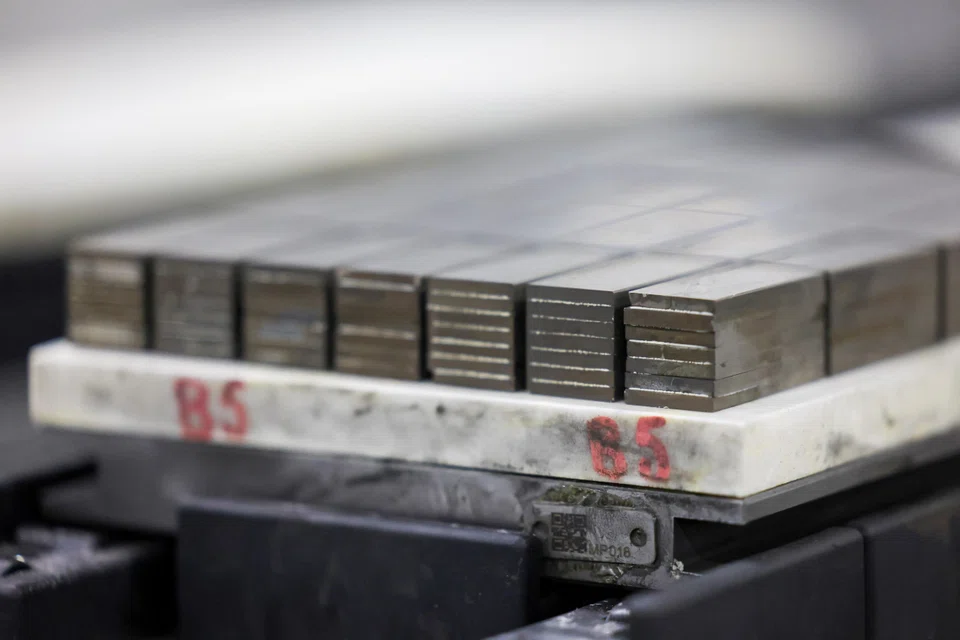
CRITICAL minerals have become a recurring source of friction in international diplomacy. China’s dominance in this sector and US efforts to build alternative supply chains are raising concerns that South-east Asian countries may be forced to choose between the two powers.
But this is a false choice. As important exporters of input for final products containing rare earth elements (REEs), South-east Asian countries have leverage of their own and can use intensifying competition to diversify partnerships and capture more of the value chain at home.
The G20 Finance Ministers and Central Bank Governors Meeting in the US ended on Sep 1 with a chairman’s declaration rather than a joint statement, underscoring the lack of unanimity between participants. China objected, among other things, to calls to eliminate “non-market policies” and ensure smooth global supply chains for vital goods, including critical minerals.
The disagreement comes amid China’s tightening controls over REEs in April 2025, in retaliation to US tariffs and export controls.
Beijing’s October 2025 measures went further, extending licensing requirements to certain foreign-made products containing at least 0.1 per cent Chinese-origin controlled REEs or using specified Chinese rare-earth technologies. These measures were subsequently suspended until November 2026, while the April 2025 controls remain.
Although Beijing has sought to reassure non-US importers that normal commercial trade will continue, such controls inevitably increase costs and uncertainty for firms dependent on Chinese rare earths, processing and magnets.
At the same time, a number of East Asian economies have joined the US’ Pax Silica initiative and other Washington-supported efforts to build more resilient critical-mineral and technology supply chains.
Have the developments increased pressure on them to choose between China-centred and US-backed supply chains? Given the region’s economic geography and dense webs of trade, few can afford such a binary choice.
Not geopolitical weapons originally
In the case of critical minerals, however, such concerns about being forced to choose need to be put into context.
First of all, China’s present dominance over REEs stems from a long process of industrial development dating back to the late 1950s, not a strategy originally conceived to give Beijing a geopolitical weapon.
As applications of REEs expanded across metallurgy, petrochemicals, glass and ceramics, agriculture and equipment manufacturing, the metals were incorporated into national R&D programmes in 1986. In January 1991, the Chinese State Council issued a circular to curb rampant illegal mining under a national licensing regime, strengthen regulation and consolidate a fragmented industry.
REEs were thus initially treated as industrial resources for domestic use and export; they were not designed to be used as geopolitical instruments. Yet, decades of research and investment have built up China’s capabilities in the industry, giving the country considerable leverage within global REE supply chains.
Amid intensifying Sino-US competition, these accumulated strengths have acquired strategic significance – hence the observation by think tank Egmont Institute that, over REEs and other minerals deemed critical by the US, “Beijing is now mirroring Washington’s own semiconductor export control regime almost to the letter”.
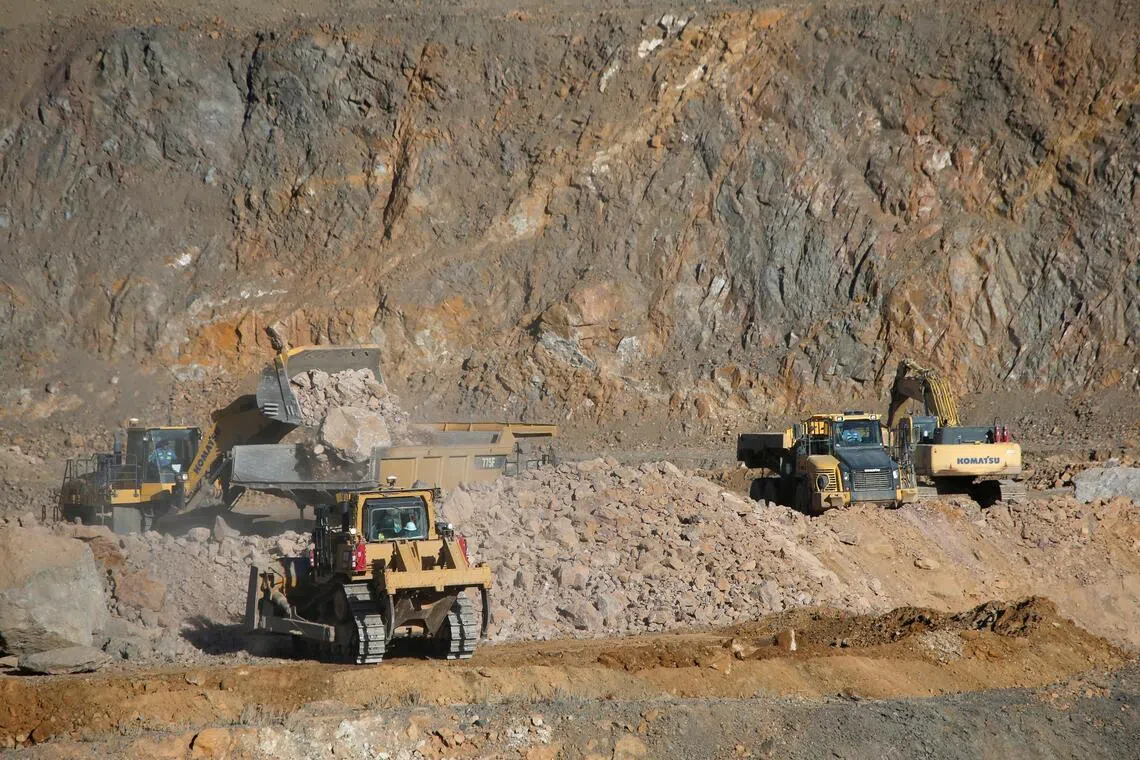
For Beijing and Washington, the legitimacy of their export controls rests in part on the military applications of such dual-use materials and technologies. But the effectiveness of controls is also limited: Curbing supply incentivises investment in alternatives, eroding the restricting country’s credibility and long-term competitiveness as a supplier.
Neither side can fully control an interdependent chain – midstream producers rely on downstream consumers abroad, while end users can reduce dependence through alternative sourcing, substitution and recycling.
This supply chain interdependence is particularly relevant to South-east Asia. Despite China’s dominance in REE extraction and processing, the country is a net importer of raw REE materials, including substantial supplies from the region.
In 2024, Myanmar supplied 34.3 per cent of China’s REE imports, Malaysia contributed 10.6 per cent and Laos 8.3 per cent. Together, they accounted for more than half of China’s total imports.
But South-east Asia will not remain a mere raw-material supplier. Malaysia hosts the most commercially significant rare-earth separation facility outside China, with much of the feedstock supplied from Australian mining company Lynas’ Mount Weld mine in Western Australia.
The resultant rare-earth carbonates go into products from lamps to semiconductors. Semiconductors, in particular, are a sector in which Malaysia has decades of manufacturing and supply chain experience.
It is only a matter of time before other regional ore exporters move into separation and other downstream applications in the semiconductor industry.
Indonesia is another case in point. In recent years, it has banned exports of unprocessed minerals such as nickel and required producers to invest in processing facilities domestically to add greater value before export.
This continues the country’s earlier practices, but its character aligns with industrial policies adopted by China, the US and others at comparable stages of technological capabilities.
Hence, for South-east Asian countries, the proverbial choice between aligning with China or joining the US-led Pax Silica is largely rhetorical. Both China and the US are interested in accessing the region’s supplies of raw REE materials on the basis of cost, and not for the lack of material availability elsewhere, including within their own countries.
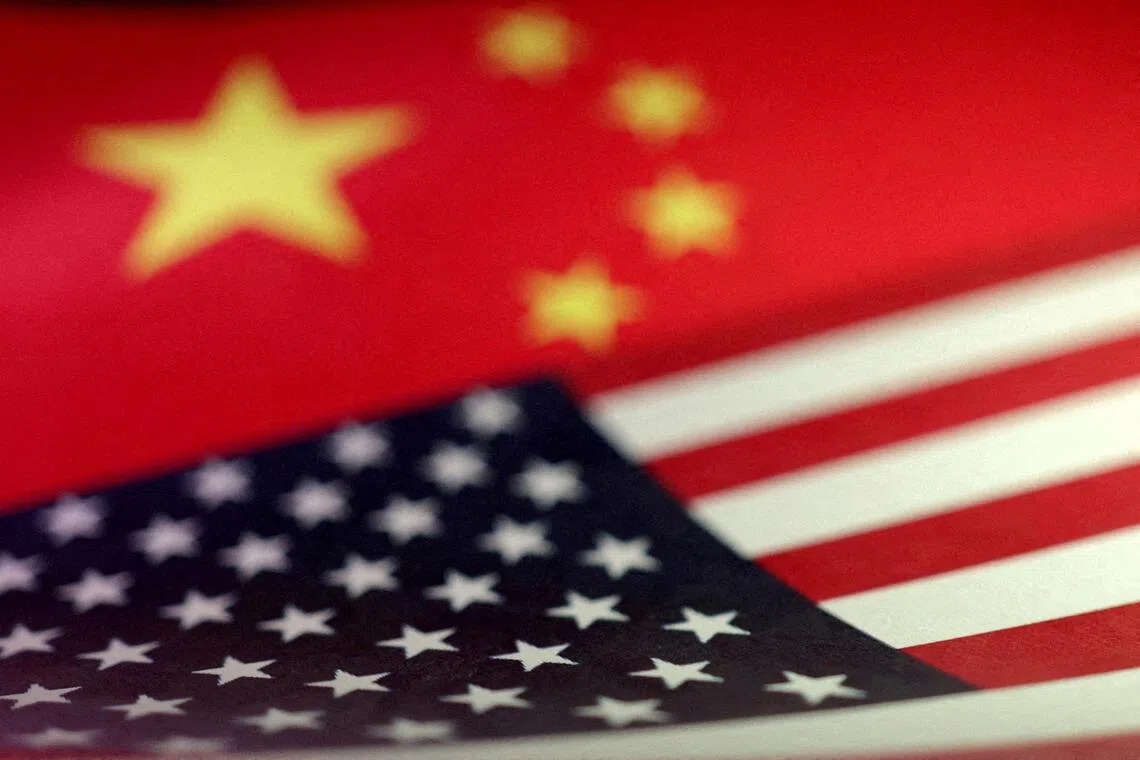
The more consequential question for South-east Asian mineral exporters is how competition over critical minerals can help them diversify into higher-value activities.
The real measure of competing partnerships should therefore be what China, the US and other partners can contribute to South-east Asian efforts to move up the value chain. This includes investments in processing and refining, technology and skills transfer, and stronger linkages to downstream manufacturing.
Seen in this context, the emerging contest is not just over who secures South-east Asia’s minerals, but also over whether the US or China offers a more credible pathway from resource supplier to higher-value producer, while being able to uphold sustainability standards in REE refining.
In the final analysis, for major economies of the world, access to critical minerals will likely remain high on the regional agenda. But this is also the area in which South-east Asian REE exporters can exercise a certain level of agency.
China’s dominance in REE processing gives it considerable leverage, but this should also not be overstated as other countries are in the same global supply chain, only at different stages of the technological ladder. The likely outcome of China and the US’ REE trade relationship is a shifting balance between interdependence and diversification, not a full decoupling.
For South-east Asia, the perceived binary choice between the two powers is false one: All countries face the same task of adjusting their policies within a shared set of mineral-industry dynamics among producers, processors and consumers.
The writer is a visiting senior Fellow with ISEAS – Yusof Ishak Institute. He is also professor of international political economy at the School of International Studies, Peking University.
This is an edited version of an article that first appeared on Fulcrum, ISEAS – Yusof Ishak Institute’s blog site.
Decoding Asia newsletter: your guide to navigating Asia in a new global order. Sign up here to get Decoding Asia newsletter. Delivered to your inbox. Free.
Share with us your feedback on BT's products and services
TRENDING NOW

Once staunchly pro-China, Malaysian Chinese businesses are now distancing themselves from Beijing

Looking beyond looming CEO succession, should UOB potentially pursue a transformative merger?

Could stablecoins be the future of money?

Grab CEO’s wife Chloe Tong on life with Anthony Tan and finding her purpose

