

Singapore’s resilience and ‘unnatural resourcefulness’ amid global shocks
The nation’s ‘resources’, built through infrastructure, markets and trusted relationships, may prove critical in times of disruption
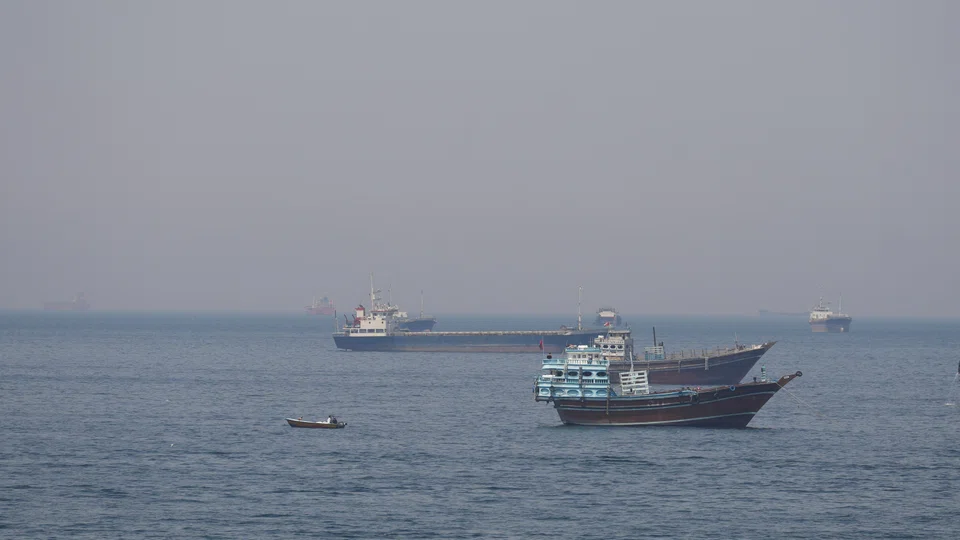
OPEN or closed, no one should underestimate the potential economic damage from disruptions in the Strait of Hormuz.
The chokehold of the past weeks has revealed a new geo-economic weapon in controlling the flow of oil and gas. This impacts not only energy but sectors such as transport, fertilisers and chemicals.
Directly or through inflation, every business and consumer in every country will be affected.
Much depends on whether the conflict will continue. It remains anyone’s guess whether the US-declared ceasefire will hold.
Even if bombing ceases, refineries and pipelines have been hit and will take time to repair. So too will confidence in shipping – mines in the strait must be cleared, and insurance rates stabilised.
How will Singapore fare? Can it remain resilient amid energy shocks – and stay competitive in a more turbulent world?
'%3e%3cpath%20d='M12.1475%2025.5262C13.7713%2025.4295%2014.94%2023.913%2014.94%2021.8832C14.94%2019.5359%2013.474%2018.093%2011.5917%2018.093C11.3745%2018.093%2010.9582%2018.093%2010.8393%2018.1413V25.2086L11.8891%2025.5745C11.8891%2025.5745%2012.207%2025.5262%2012.1475%2025.5262ZM11.4934%2017.6281C13.2567%2017.6281%2014.3843%2016.4292%2014.3843%2014.4501C14.3843%2012.372%2013.275%2011.2973%2011.4339%2011.2973H10.8393V17.6305H11.4934V17.6281ZM6.66078%2025.6482L7.39265%2025.5492C8.02617%2025.4502%208.26403%2025.3053%208.26403%2025.1097V11.6149C8.26403%2011.4193%208.1451%2011.3709%207.23484%2011.249L6.68137%2011.173L6.6219%2010.7588H11.9508C15.7153%2010.7588%2017.0624%2012.0797%2017.0624%2014.1578C17.0624%2015.9666%2015.7748%2017.1909%2013.4969%2017.6305V17.7041C16.111%2017.948%2017.6571%2019.5382%2017.6571%2021.7636C17.6571%2024.3318%2015.8937%2026.0417%2012.1109%2026.0417H6.60132L6.66078%2025.6482Z'%20fill='%232B2B2B'/%3e%3cpath%20d='M20.6287%2025.6505L21.5596%2025.5515C22.1725%2025.4779%2022.4104%2025.3076%2022.4104%2025.112V11.249H21.9346C20.073%2011.3479%2018.982%2013.0095%2018.408%2014.6227L18.1907%2015.5018H17.6555L18.1701%2010.7588H29.3837L29.6421%2015.4787H29.1664L28.9491%2014.6227C28.3728%2012.8645%2027.3047%2011.2743%2025.5002%2011.249H24.9856V25.1856C24.9856%2025.3812%2025.1251%2025.4548%2025.9965%2025.5515L26.7695%2025.6505L26.829%2026.0417H20.5693L20.6287%2025.6505Z'%20fill='%232B2B2B'/%3e%3c/g%3e%3cdefs%3e%3cclipPath%20id='clip0_5242_21648'%3e%3crect%20width='24'%20height='16.8'%20fill='white'%20transform='translate(6%2010)'/%3e%3c/clipPath%3e%3c/defs%3e%3c/svg%3e)
Market-based energy resilience
For Asia, the energy impact will weigh heavily; many depend on imports from the Middle East that go through the vital strait. Some countries already face short supplies, prompting rationing and subsidy cuts.
In such a context, many might assume Singapore is especially vulnerable.
Singapore is often described as a country without natural resources. That is true. It is also true that energy stockpiles are limited – even International Energy Agency (IEA) benchmark emergency reserves are only about 90 days of net imports.
Yet it would be mistaken to see this as helplessness.
Our “resources” are, in many ways, constructed rather than natural – built through infrastructure, markets and trusted relationships. This kind of “unnatural resourcefulness” may prove to be a critical factor in times of disruption.
Consider how systems are organised.
Singapore’s electricity is generated mainly from natural gas, supplied through pipelines from Indonesia and Malaysia – infrastructure that is not easily diverted. Liquefied natural gas (LNG) is imported via tankers, providing flexibility in sourcing.
Equally important are relationships. A recent understanding with Australia pledges to maintain LNG exports while Singapore continues to supply refined fuels – which reflects mutual dependence and trust.
Significantly, Singapore is also a major refining and trading hub. While it does not produce crude oil, it has among the largest refining capacities in the region.
This creates strong incentives for global suppliers to keep crude flowing into Singapore, where it is processed and redistributed.
Taken together, these features illustrate a different model of resilience – one based not on ownership or self-sufficiency, but on deep integration into global markets and supply chains.
This does not insulate Singapore from higher prices. As global supplies tighten, costs will rise. But the likelihood of physical shortages is reduced.
In this sense, resilience is not about avoiding shocks altogether, but about absorbing them and adjusting quickly.
The government’s response reflects this understanding. A high-level ministerial committee has been convened under Coordinating Security Minister K Shanmugam to monitor developments and coordinate action.
Financial resources are set aside to support businesses and households in dealing with price increases, with an initial S$1 billion earmarked.
Competitiveness amid turmoil
The emphasis is on agility and coordination in a fast-moving situation. Beyond immediate resilience, a deeper question is competitiveness.
Even before the current energy shock, global businesses were rethinking investment and hiring decisions – shaped by US tariffs, US-China tensions, and technological shifts. The added uncertainty over energy costs will reinforce caution.
For businesses, energy is not just a supply issue but a cost variable that affects location decisions, margins and long-term planning. Persistent volatility may accelerate shifts in supply chains and production bases.
Singapore has done well to attract and anchor global companies. But in a more fragmented and uncertain world, this position cannot be taken for granted.
The ongoing Economic Strategy Review under Deputy Prime Minister Gan Kim Yong is therefore timely. The work of the committee on strengthening Singapore’s global competitiveness – Acting Transport Minister and Senior Minister of State for Finance Jeffrey Siow and Senior Minister of State for Trade and Industry and Culture, Community and Youth Low Yen Ling – gains urgency under current conditions.
With regard to energy, several responses stand out.
One is to push further on energy efficiency. This is already a policy priority, but higher prices strengthen the case for firms to invest in reducing consumption and improving productivity.
Another is to accelerate the transition to renewable energy, including cross-border power trade within the region. If oil and gas prices remain elevated, the economics of green energy will become more compelling.
However, countries with coal – such as Indonesia – could take the signal to this carbon-intensive source as part of their energy mix.
The longer-term prospect for nuclear energy – via standardised small modular reactors – must be explored. Regional regimes to share energy and to ensure safety in design and operation must also be negotiated.
Bio-fuels are also important to consider, provided these do not divert food production or spur unsustainable land clearing and the use of fires.
On the flip side, the push from higher market prices may bring some leeway on Singapore’s planned step-up on carbon pricing to S$50 to S$80 per tonne by 2030.
Flexibility mechanisms could be considered – as long as energy efficiency improves – to address current concerns of higher costs.
Here, the effort must be made to align energy resilience with the concept of sustainability. With the right policies, there can be a healthy overlap.
More broadly, energy security must be considered alongside other essential needs, with food especially important. The blockage of Hormuz is triggering higher prices and scarcity for fertilisers, and this can drive higher cost as well as reduced agricultural production.
Singapore’s recent agreements have been timely in emphasising resilience in food supply.
This was included alongside energy in the agreement with Australia. Specific food security arrangements were concluded with a number of countries such as Thailand, signed by Singapore’s Minister for Sustainability and the Environment Grace Fu and Thailand’s Commerce Minister Suphajee Suthumpun.
Singapore has signed an agreement on essential goods with New Zealand to provide diversification and mutual assurance to both the seller and buyer. With Brunei, the focus is on creating a joint agri-tech food zone.
Resourcefulness, not resources
Yet there is no room for complacency. Singapore remains exposed to global shocks, and the current crisis is a reminder of that vulnerability.
But neither should there be fatalism. If anything, disruptions such as those in the Strait of Hormuz underline a key strength: Singapore’s ability to build resilience without natural endowments – through markets, infrastructure and partnerships.
In a world of growing uncertainty, this “unnatural resourcefulness” may matter more than resources themselves.
The writer is chairman of the Singapore Institute of International Affairs. His latest book is Island in the World: Singapore’s Geopolitical DNA.
Decoding Asia newsletter: your guide to navigating Asia in a new global order. Sign up here to get Decoding Asia newsletter. Delivered to your inbox. Free.
Share with us your feedback on BT's products and services
TRENDING NOW

DBS, OCBC, UOB rout lops billions off STI as inflation, rate concerns spook investors

Grab CEO’s wife Chloe Tong on life with Anthony Tan and finding her purpose

OCBC sheds S$8 billion in value as shares close nearly 6% down; analysts cautious on banks

Deal between tycoon friends sparks scrutiny of Philippine power sector

