StarHub-M1 merger: Investors should not hope for unchecked windfall of increased profitability
Pulling back cheap cellphone plans may be as unpopular as hiking electricity prices or public transport fares

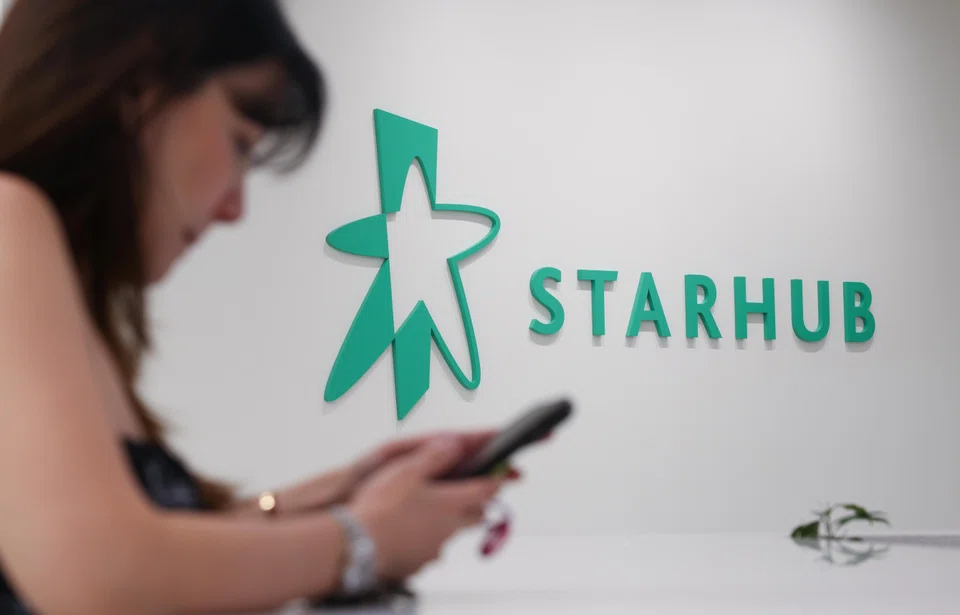
[SINGAPORE] When Simba Telecom attempted to acquire M1’s telco business last year, this column said that the move would probably lead to more intense price competition despite the reduction in the number of industry players – and that it was better to be a consumer than an investor in the local telecoms sector.
While Simba’s Australia-listed parent Tuas Ltd expected material gains from network and operations convergence, its proposed all-cash acquisition and related capital raising exercise were couched as the beginning of a new chapter in its growth journey.
The market reacted accordingly. Tuas shares soared significantly after the proposed deal was announced. On the other hand, StarHub suffered a sell-off as it cut its guidance and indicated that it would adopt a more aggressive commercial stance.
More than year on, M1 now is on the brink of being acquired by StarHub rather than Simba. But, StarHub is framing its all-share proposal as an industry consolidation exercise rather than a growth initiative.
In a statement on Nov 24, StarHub CEO Nikhil Eapen harked back to the days when the company and M1 were “challengers” that drove industry competitiveness by offering Singaporeans choice. “That chapter is now closing,” he said.
“Four operators competing for the same mature market will no longer deliver the infrastructure Singapore needs next, and consolidation is the answer. Bringing StarHub and M1 together is how two challengers become a builder of Singapore’s digital future.”
Many market watchers say this could spell the end of price wars among the local telcos that have benefited consumers more than investors.
Reflecting that sentiment, StarHub rallied 10.8 per cent last week while Singtel climbed 4.1 per cent. Even Tuas chalked up a gain of 20.8 per cent – and drew a query about unusual trading activity of its shares from the Australian Securities Exchange.
Have the dynamics of Singapore’s telecoms sector shifted against consumers in favour of investors? How much higher could Singapore’s telco stocks climb?
Low valuation for M1
StarHub plans to issue 651.7 million new shares to acquire M1 together with S$380 million of net debt. These new shares will account for 27.4 per cent of StarHub’s expanded share base. Keppel will hold 23 per cent of the enlarged group while the remaining 4.4 per cent will be held by the other current shareholders of M1.
Given StarHub’s 15-day volume weighted average price of S$1.04, the deal prices M1 at an enterprise value (EV) of S$1.06 billion.
Some analysts have said they were expecting Keppel to obtain a better valuation for M1. Notably, Macquarie Equity Research said in a report last week that it had previously estimated M1’s EV to be between S$1.16 billion and S$1.25 billion.
Last year, Simba had offered to pay an EV of S$1.43 billion for M1 on a debt-free and cash-free basis.
One reason Keppel may have agreed to the lower-than-expected valuation is that StarHub is currently the only viable buyer of M1. Another is that Keppel may be betting that it will reap substantial gains over time from the stake it will hold in the merged StarHub-M1 entity.
Under the deal, StarHub and M1 are being valued at similar EV-to-earnings before interest, taxes, depreciation and amortisation multiples, and the enlarged group is expected to deliver operating expenditure synergies of S$110 million a year by 2030.
Taking the estimated S$1.1 billion net present value of these synergies into account, the new shares that StarHub will issue imply an EV of S$1.36 billion for M1.
These operational expenditure synergies are in addition to ongoing cost-cutting at both StarHub and M1.
“StarHub continues to target S$70 million of savings under its existing cost-optimisation programme, while M1 has identified a further S$40 million of standalone reductions,” noted Maybank, in a report last week.
All in, the merged StarHub-M1 group could eventually achieve “steady state” annual savings of S$220 million, the research house said.
End of cheap plans?
The big question is whether the price wars that have hammered StarHub and Singtel’s average revenue per user over the past decade will ease going forward.
One reason for investors to be optimistic is that the number of price disruptors in the market has fallen.
Alongside its acquisition of M1, StarHub said last week that it had exercised an option to acquire Circles.Life Singapore, a mobile virtual network operator (MVNO) that rides on M1’s network.
StarHub also said in October that it would acquire MyRepublic’s mobile phone business. In June, StarHub’s low-cost brand eight Telecom absorbed the customers of defunct MVNO RedOne.
Meanwhile, some analysts say Simba’s ability to sustain aggressive pricing is waning in the face of rising infrastructure and cybersecurity costs.
In its report last week, Maybank said the industry-wide consolidation may boost the revenues of the remaining players even without headline price increases. For instance, the telcos could reduce the free months and port-in discounts for new customers, or cut back their oversized data and roaming allowances.
The risk, of course, is that some customers may flee as brands are rationalised and freebies are withdrawn.
Whatever the case, StarHub would not need to increase headline prices in the short term to draw the attention of investors, said Maybank. “Stabilising consumer revenue, partial delivery of cost savings and the inclusion of M1 should be sufficient to drive a meaningful earnings recovery.”
Expect tougher regulation
StarHub expects to complete its acquisition of M1 in the first half of next year, and it has committed to maintaining a dividend payout of S$0.06 per share in 2027 for its existing shareholders.
This suggests investors can look forward to a dividend yield of at least 5.3 per cent based on StarHub’s current share price, while waiting for the merger with M1 to deliver a potentially big improvement in profitability in 2028 and beyond.
Whether this leads to a sustained rerating of StarHub’s shares is another matter, though. Singapore’s telecoms sector may well need to consolidate in order to continue upgrading its network infrastructure and providing good customer service.
Yet, pulling back the cheap mobile phone plans that consumers have enjoyed over the past decade may be as unpopular as raising electricity prices or public transport fares – especially if it is accompanied by a major public listed company reporting substantially stronger earnings.
The way I see it, the StarHub-M1 merger will probably lead to calls for tougher regulation of the remaining players, and punitive penalties when things go wrong. This does not mean that investors should avoid Singapore’s telecoms stocks, but that they should not hope for an unchecked windfall.
As StarHub and M1 complete their transition from challengers in a fast-growing sector to stalwart of a mature utility-like industry, they should expect to have to share some of their efficiency gains with consumers as well as investors.