Stuck between inflationary and deflationary forces, Fed almost certain to keep rates unchanged
Officials warn any rate-cut plans will be shelved until the aftershocks of the Iran war become clear
[SINGAPORE] The US Federal Reserve seems to be stuck between a rock and a hard place – or rather, between several rocks and countless hard places.
The rock is the oil shock caused by the ongoing war in Iran. The largest disruption in oil markets since the 1973 embargo, the closure of the Strait of Hormuz has already spurred prices to above US$100 a barrel.
If the aftermath is anything like what followed the brief suspension of Middle East energy exports in 1973, analysts say that the world could be on the cusp of a multi-year stagflationary economic malaise.
In other circumstances, the Fed would likely try to cushion the impact of energy inflation on American households by raising interest rates. That brings us to the principal hard place: a weakening US economy.
Recent labour-market data has shown a pronounced softening, while anecdotal accounts of major companies replacing workers with chatbots are becoming prevalent.
The Fed’s dual mandate discourages it from cutting rates when inflation is rising, or from raising rates when the labour market is weakening. The toughest situation, as chair Jerome Powell has often noted, is when both of those things are happening at the same time.
Stuck between inflationary and deflationary forces, the Fed is almost certain to keep rates unchanged in a range of between 3.5 per cent and 3.75 per cent when it releases its latest decision on Wednesday (Mar 18).
But it could be a hawkish hold, as officials warn that any rate-cut plans will be shelved until the aftershocks of the Iran war become clear.
Signs of distress in credit markets
Markets have grown accustomed to the holding pattern, but any indication that the next move for rates could be higher rather than lower would exacerbate the recent sell-off. That is because there are already signs of distress in credit markets.

There are echoes of the early stages of the 2008 global financial crisis, as private-credit firms try to forestall a run on their funds from nervous investors, said Bank of America (BOA) strategist Michael Hartnett in a recent Bloomberg report.
Once again, hundreds of billions of dollars of loans – in this case to corporations, many of them software firms – were pooled on Wall Street and sold to investors who did not read the fine print.
Now, there are belated questions about the underwriting conducted on those loans by firms such as Blue Owl and Blackstone, which appeared to make optimistic assumptions about the long-term outlook for software companies.
So far, the stock market has been relatively calm in the face of the oil and private-credit shocks. Only the domestically focused Russell 2000 index has entered correction territory, at more than 10 per cent below its record.
That might be because of a fallacy, sometimes associated with the economic concept of moral hazard. The same fallacy kept markets calm around the time of Bear Stearns’ failure 18 years ago this month.
It’s the idea that the “policymakers always ride to the rescue of Wall Street”, said BOA’s Hartnett. The Fed has often bailed out Wall Street, as in the case of Bear Stearns. But there were also times, such as the Lehman Brothers shock, when the Fed allowed institutions to fail and asset classes to implode.
A hawkish statement from the Fed would shut the door on chances of an imminent private-credit bailout from the US central bank.
More pressure on Powell
Another hard place for Powell is the White House. US President Donald Trump has already tried to oust Powell for resisting pressure to cut rates. Trump is sure to respond if Powell warns that rate cuts are off the table indefinitely, particularly if the latter cites the Iran war as the cause of the postponement.
When Israel and the United States launched strikes on Iran at the end of February, they also blew up the oil market and, possibly, the global economy.
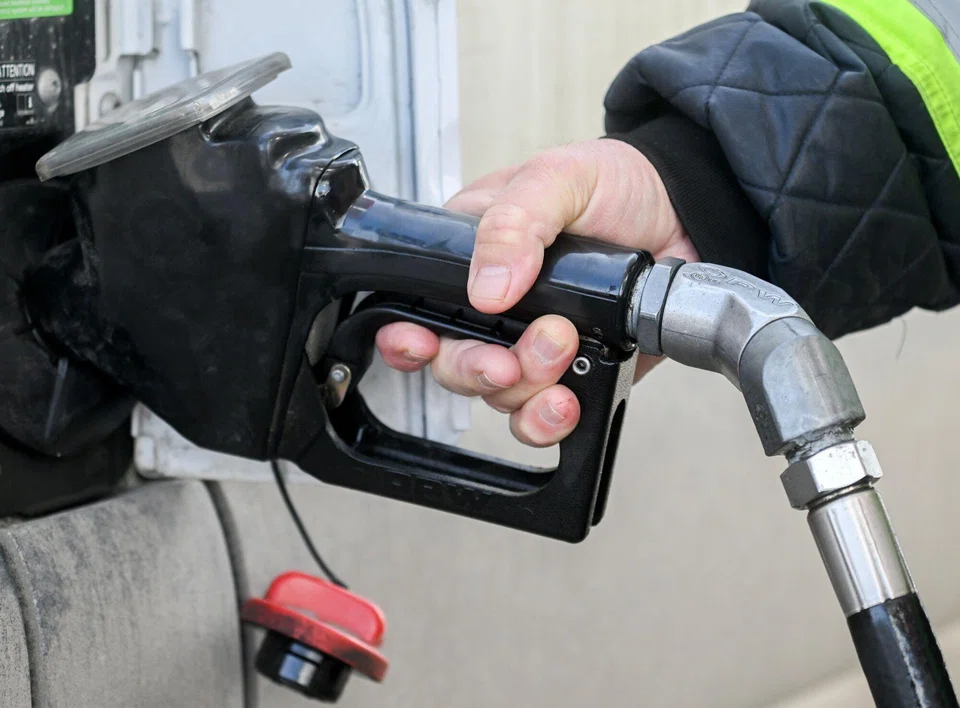
Oil – a key component of pricing for any goods that require transportation – shot up 35 per cent in the first week after the attacks, and is now hovering around US$100 a barrel. Petrol stations all over the US and pretty much everywhere else around the world responded instantly and raised prices.
It is anyone’s guess as to how to replace the oil that typically passes through the Strait of Hormuz. In 2025, the US Energy Information Administration estimated that around 20 million barrels of oil passed through the strait each day.
The US Navy does not have enough ships to escort all 100 of the supertankers that pass through the narrow choke point on an average day. Trump acknowledged as much when he called for an international flotilla of warships to reopen the key channel.
Even after the Group of Seven nations agreed to release an unprecedented 300 million barrels of oil from their reserves, oil’s gains were only temporarily moderated. After all, that amount still represents only about three days of global oil consumption.
So where does that leave the Fed? At the very least, it is likely to sit back and wait for the oil spike to end.
Before the war began, futures markets were pricing in a series of rate cuts this year. Anticipation of those cuts had brought 30-year US mortgage rates below the psychologically significant 5 per cent level. Now, futures markets are foreshadowing one rate cut at most, and mortgage rates are rising again.
Arthur Burns, the Fed chair during the 1970s, was faulted by economic historians for being too loose with monetary policy during his time in charge. Yet, even his board raised rates during the aftermath of the 1973 oil shock.
Iran has warned that the world should prepare for oil to reach US$200 a barrel at some point. In a world where traditionally slow-moving gold futures more than doubled in a year, partly because of momentum and meme traders, that may not be an idle threat.
Hopeful signs
There were some hopeful signs recently. The February price report from the US Labor Department showed a modest 2.4 per cent increase in prices from a year earlier, close to the Fed’s target. Economists, however, do not expect that to last.
“This is the calm before the storm that will show up due to surging gasoline prices in March,” said Sonu Varghese, chief macro strategist at financial consulting firm The Carson Group.
“Still, this report does show that the Fed has an inflation problem, even if you set aside the energy shock. Tariff impacts are still hitting core goods inflation, while services inflation outside housing remains hot.”
While inflation looks set to get steeper, labour-market weakness may be getting harsher too, as the unemployment rate recently ticked up.
Meta Platforms recently joined Amazon and Square fintech owner Block in laying off thousands of workers. Amazon and Block both said that they were replacing employees with artificial intelligence chatbots, a trend that may well continue.
Powell has drawn the admiration of many economists for his nimble handling of monetary policy under extreme pressure from events and from the Trump administration.
He is likely to weigh three decisions: cut rates to avert a full-fledged financial crisis spreading in private-credit markets; raise rates to discourage US companies from passing on higher energy costs to consumers; or leave rates flat and risk accusations of inaction in the face of an inflationary and/or recessionary emergency.
In the remaining weeks of his tenure as Fed chair, Powell seems set to face the toughest challenge of his long career.
Decoding Asia newsletter: your guide to navigating Asia in a new global order. Sign up here to get Decoding Asia newsletter. Delivered to your inbox. Free.
Share with us your feedback on BT's products and services