As supply shocks multiply, monetary policy will shape corporate resilience
Why targeted central bank instruments that incentivise strategic investments are crucial in this age
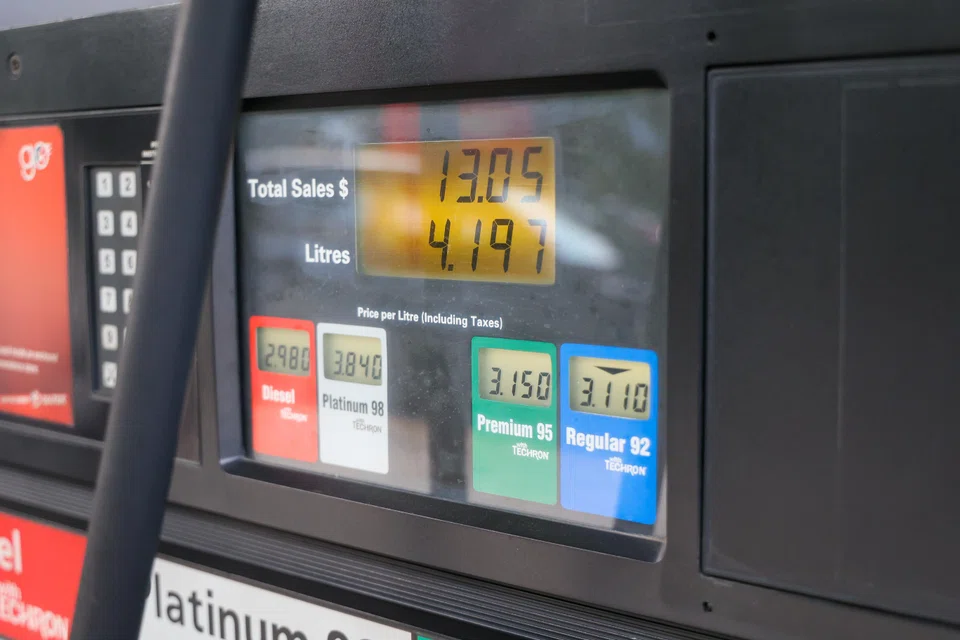
THE ongoing disruption of wide-ranging commodities following the closure of the Strait of Hormuz is the latest in a series of supply-side shocks arriving with growing frequency and intensity.
When such a shock hits, monetary tightening raises the cost of borrowing for exactly those long-horizon, capital-intensive projects that would reduce exposure to the next one.
The higher capital intensity of renewable energy projects, for example, makes them more sensitive to the cost of credit than fossil-based alternatives. Such “resilience projects” become the most expensive to finance precisely when they are needed most.
The pre-existing condition of the real economy determines how severely a shock threatens welfare as well as financial and price stability. It also determines the space for monetary policy to absorb the price surge, and how strong the policy reaction needs to be.
Targeted central bank instruments that incentivise resilience investments ex ante (before the event), and keep them alive when shocks occur, can be decisive for economic resilience.
Eroding fiscal space and looming insurance gaps
Speaking in Shanghai in June 2026, Monetary Authority of Singapore (MAS) managing director Chia Der Jiun set out how to prepare for a world of persistent uncertainty and more frequent shocks. First on his list: “Economies will have to invest in their own resilience and growth.”
He also warned that the adaptability shown so far cannot be taken for granted, since fiscal space is thinning and debt is growing after each successive response.
During the current oil price shock, central banks in the Asian region held to medium-term price stability while governments cushioned the sharpest impacts.
That division of labour is becoming harder to sustain at a time when ageing populations, rising inequalities, climate transition and adaptation, and defence build-ups already put pressure on public finances.
The erosion runs through insurance as well: novel risks yield correlated losses, which strain the conditions of insurability. As shocks become more frequent, premiums rise and cover narrows.
A growing share of the residual risk previously absorbed by public balance sheets and insurers will therefore remain on corporate balance sheets.
For businesses, the implications are profound. GIC said in its recent annual report that it expects to operate in an economic environment where constraints are tightening while outcomes are widening.
Firms planning on the assumption that the next shock will be cushioned like the last one will not be well-prepared.
Strategic planning in an age of deep uncertainty
As various novel risks generate higher uncertainties, some analysts suggest that “wait-and-watch” approaches are likely to dominate in the near future.
Yet, this is not an appropriate strategy when dealing with risks – from geopolitical fragmentation and tariff increases to climate-related extremes – for which core drivers are already understood and can be anticipated.
What remains unknown is only when and how exactly they materialise. Since their underlying mechanics are known, proactive preparation is possible.
The goal then is to choose low-regret strategies and those that hold for multiple scenarios, minimising the likelihood of failure.
Resilience is built actively through investment, often with long lead times.
An example is the diversification of energy supply and grid upgrades. Sustaining access to affordable, clean and secure energy is fundamental to almost all economic activity and household well-being.
Geopolitical exposure, the artificial intelligence boom and climate mitigation are all directly related to energy supply and infrastructure. Energy demand in South-east Asia is also set to double by 2040.
When the recent shock came, countries with more diversified energy systems were less affected, which preserved the policy space needed to contain inflation.
Another example is the re-shoring and diversification of supply chains. Qualifying second sources, duplicating production capacity and holding larger inventories carry upfront costs.
However, they pay off when a geo-economic or geopolitical shock arrives and pressures intensify.
Assuming that such shocks will be part of the new normal, supply chain diversification determines business survival.
A third example is climate change adaptation. Flood protection, water security, cooling and resilient buildings and logistics are urgent priorities.
Increasingly intense and frequent extreme weather events will affect supply chains, food prices, human health and economic productivity in the decades ahead. Adapting early preserves the ability to operate in adverse climate conditions.
Strategic investments in these areas come with low regret for businesses, since they shield against future material losses.
At the same time, they preserve financial, fiscal and monetary policy space, leaving room for managing other shocks that are entirely unexpected.
However, with long lead times and considerable capital expenditures involved, resilience investments need to be undertaken before shocks arrive. Also, they are among the first things to become unaffordable when monetary policy tightens. This needs to change.
Updating central bank toolkits
Because a central bank’s room to manoeuvre is dictated by its pre-crisis positioning, proactive policy management is vital.
Take the example of financing terms for resilience-building investments. Targeted refinancing operations and other targeted facilities are useful instruments that could support resilience investments before a shock hits, reducing disproportionate burden following the event.
By providing banks with funding on preferential terms against lending that supports resilience, based on pre-defined criteria, a central bank can lower the cost of exactly those capital-intensive projects that are most rate-sensitive, yet most important for reducing future exposure.
The Bank of Japan and the European Central Bank have already introduced such facilities for structurally decisive goals. MAS also has previous experience, with its Facility for ESG Loans introduced during the Covid-19 pandemic to support lending to small and medium-sized enterprises.
For countries targeting inflation, facilities with differentiated terms allow the general stance to tighten while resilience investment activities are partly shielded from rate increases.
For exchange rate-centred frameworks, targeted facilities can spur investments into resilience pre-emptively and maintain their viability once monetary conditions tighten.
This is not advocating for an overall loose monetary stance. The difference is who bears the cost of tightening, and whether long-term priority projects survive short-term responses.
With sound and transparent governance rules, such facilities can be targeted while still ensuring that monetary policy objectives are maintained.
Building strength requires joint efforts
Some economies entered the latest oil price shock from a position of strength. Diversified and well-electrified energy systems with relatively lower fossil fuel dependency reduced exposure. Vulnerability was relatively low, thanks to low inflation and strong banks with sufficient financial buffers.
Fiscal space was sufficiently large to deal with the residual impact of the shock, with targeted support to most vulnerable groups. This preserved monetary policy space. Readers in Singapore will recognise the profile.
The years ahead will be shaped by more shocks, and by shocks that compound. That is a given. What remains manageable is whether they land on an economy that reduced its exposure in advance, with buffers and policy space intact, or on one that waited.
Resilience is largely decided before the next shock arrives. In an era of compounding supply shocks, central bank policies and business strategies must adjust in tandem to maintain welfare for society at large.
The writer is senior fellow at the Council on Economic Policies