

Trump, weakened by midterms, needs a win when he meets Xi
But the likeliest outcome of their meeting is an extension of the status quo
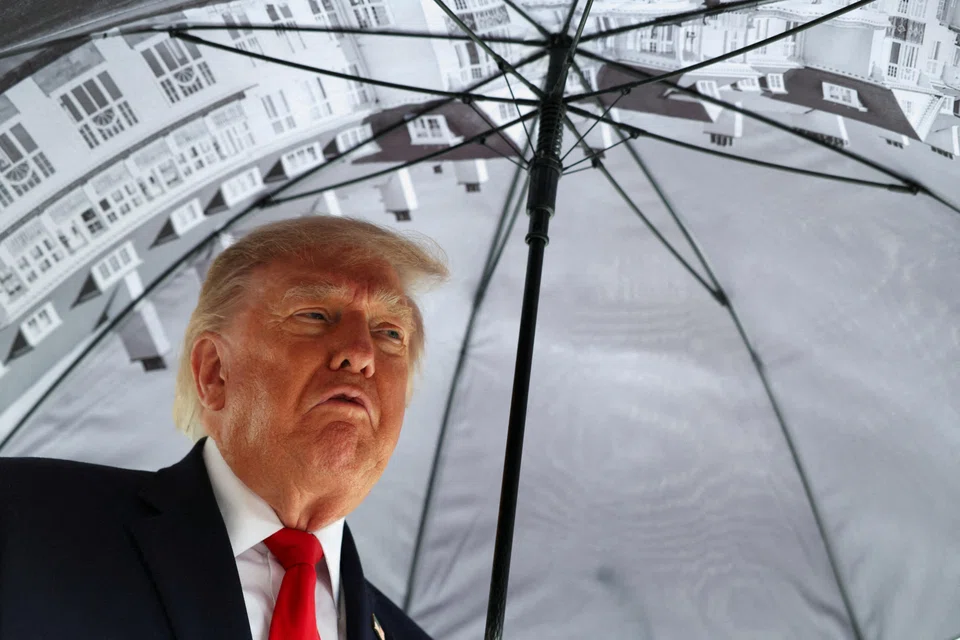
ON WEDNESDAY (Nov 18) and Thursday, US President Donald Trump will meet Chinese leader Xi Jinping on the sidelines of the Asia-Pacific Economic Cooperation (Apec) leaders’ meeting in Shenzhen.
It comes barely two weeks after voters handed Democrats both chambers of Congress, and will be the pair’s third face-to-face meeting of 2026, after Beijing in May and Washington in September.
The scale of the defeat is the backdrop. Democrats won at least 256 House seats and 55 Senate seats, in the process flipping eight Senate seats including those in Texas, Ohio and South Carolina.
In the NBC News exit poll, 43 per cent of respondents said they voted partly to oppose Trump.
That makes Shenzhen more than a trade meeting. It tests three things at once.
First, whether Trump can still deliver abroad, when he can no longer legislate at home. Second, whether Xi treats a lame-duck president as an opening to press for concessions, or as a partner whose promises are worth less than they were. Third, whether a year-old detente between the two countries can survive.
China would face a new Congress far more willing to push on Taiwan, technology and human rights, while making it more difficult for the White House to advance its tariff agenda when dealing with Beijing.
After the Supreme Court ruled in February that the emergency law Trump used to introduce his April tariffs does not give the president such powers, he relied on Section 301 tariffs as the backbone of US pressure on Chinese goods.
Any new tariffs now need slower statutory investigations, and a Democratic Congress will not hand over its fresh authority to Trump.
Summit stability, not settlement
Shenzhen will mark the third Trump-Xi meeting in 2026, with a fourth planned for December, a pace Wu Xinbo, director of Fudan University’s Centre for American Studies, calls unprecedented.
Previous meetings have kept the peace between the two countries without resolving their core disputes.
Xi’s state visit to the US in September was widely described as heavy on pageantry and light on deliverables. China did not cut its tariffs on soybeans, and no timeline was set for the new US-China Board of Trade.
US Treasury Secretary Scott Bessent is expected to meet Chinese Vice-Premier He Lifeng in Shenzhen beforehand, but analysts doubt he can promise much, given the uncertainty over US-China policy with the incoming Congress.
Hence, the likeliest headline from the Trump-Xi meeting is a continuation of the status quo: a trade-truce extension.
The challenge for Trump is that he arrives needing a win more than Xi does. His hardest problem is leverage. Xi hosts on home ground, with an economy that boasts a second-straight US$1 trillion trade surplus, facing a president who has just lost his majority.
The Iran war also ties Trump’s hands and gives Xi a card to play. A wider Gulf conflict is Beijing’s biggest worry because it could threaten China’s energy supply. That gives Xi a reason to help end the war, but also a price he can name for helping.
Beijing may conclude Trump needs a deal more than China does, and push harder for tariff cuts. But this could be a miscalculation that unsettles the stability Xi wants.
A deal is only as good as its durability. Chinese analysts are already asking what a weakened Trump can deliver without Congress. Beijing’s officials also know a successor could be tougher; US Secretary of State Marco Rubio is often cited.
There is also bipartisan pressure to release the US$14 billion arms sales package to Taiwan that Trump has held back since May.
On that front, Tokyo, Seoul and Taipei are watching every word Trump says about the self-governing island.
Trump has insisted that he could use arms sales to Taiwan as a “bargaining chip” in his dealings with China, so he certainly might raise the issue in order to extract concessions from Beijing over trade.
But analysts have said discussing arms sales with Xi may cut against the 1982 Six Assurances, which pledge no consultation with Beijing on such sales.
Rubio and Ambassador David Perdue have insisted US-Taiwan policy is unchanged, so it is unclear what stance Trump might take during the summit.
What Trump might give up
The midterms have not taken foreign policy away from Trump, but they have changed its purpose.
With his domestic agenda stalled, summits such as the Apec leaders’ meeting in Shenzhen are where he can still claim wins. That is exactly why Xi holds the stronger hand this week.
Three outcomes are plausible:
- Steady state: Another truce extension, purchase announcements and talk of artificial intelligence cooperation, with Taiwan left ambiguous. No breakthroughs and breakdowns, with the hard issues pushed to the Group of 20 meeting in Miami on Dec 14 to 15.
- Grand bargain: A broader trade package in addition to Chinese help on Iran. That would be a headline win for Trump, but the price would likely be paid on Taiwan or AI chips.
- Rupture: A Taiwan concession that provokes Congress and allies, a potential congressional push on the arms sales package that might anger Beijing, or a sudden Iran escalation that swamps the agenda.
The most telling details will be the quiet ones: Trump’s exact words on Taiwan independence, mentions of the Iran war, any date for the US$14 billion arms package, and whether China’s readout matches that of the White House.
Those will show whether the detente is being managed, or traded away.
TRENDING NOW

South-east Asia has lost Nvidia’s best salesman

Higher rates, weaker spending: Is the Philippines entering stagflation?
Who is Leo KoGuan, the Singapore-based billionaire backing Nvidia’s Jensen Huang?

Demand, tech capabilities position Apac and AI as Skyscanner’s next growth frontiers: CEO Bryan Batista

