
Global Enterprise logo
BROUGHT TO YOU BYsc logo

The Trump-Xi truce stops at AI; who gets caught in the middle?

If the US forces countries to pick sides, more may switch to China’s cheaper and more open models
Summarise
    • In the AI race, the US has decided to push its allies into line, rather than to cultivate and offer incentives.
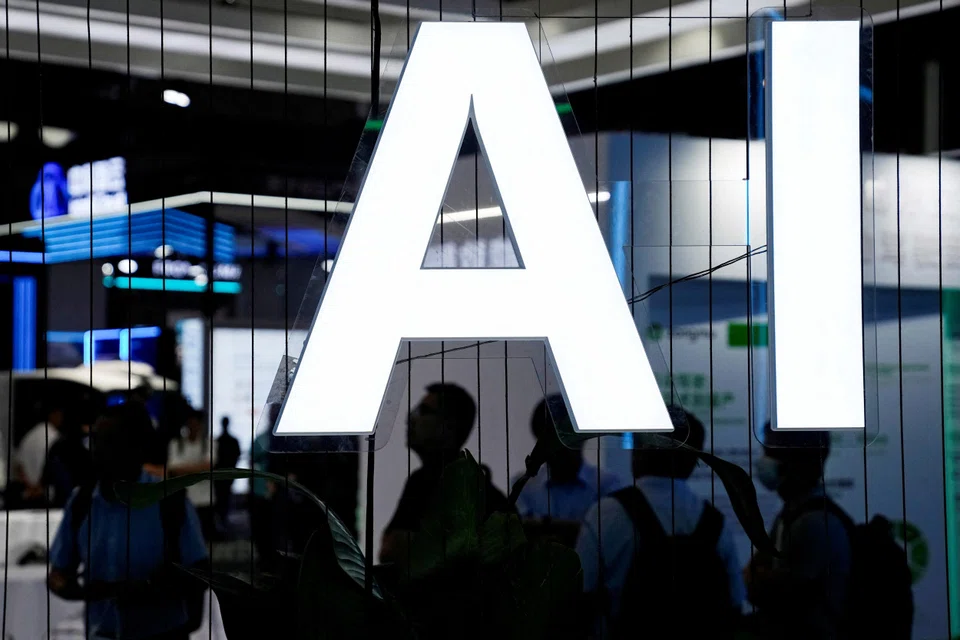
    • In the AI race, the US has decided to push its allies into line, rather than to cultivate and offer incentives. PHOTO: REUTERS
    Published Mon, Sep 28, 2026 · 12:45 PM

    US PRESIDENT Donald Trump’s summit with Chinese President Xi Jinping in Washington on Thursday (Sep 24) extended the trade truce but produced little on artificial intelligence beyond a channel for flagging AI incidents.

    Export controls on advanced chips were not even on the agenda.

    That absence is the point. Tariffs and rare earths can be traded; AI capability cannot, because both sides see it as the determinant of relative power.

    The truce covers everything that can be bargained. AI sits outside it and the contest has moved to third countries.

    In December 2025, seven countries signed up to join Pax Silica, a US-led coalition intended to secure the supply chains underpinning AI technologies. Nothing in the declaration said signatories would have to choose between Washington and Beijing.

    Yet, by August 2026, Reuters reported that the US State Department was telling Pax Silica members and other countries that endorsed an AI Opportunity Statement that they could not also back “duplicative initiatives”. This was broadly seen as a swipe at China.

    Asean Intelligence

    Get insights into businesses across South-east Asia

    Get the free report

    Kazakhstan was the first test. It joined Pax Silica and, weeks later, China’s World Artificial Intelligence Cooperation Organization (Waico). As the only country in both, it drew scrutiny in Washington.

    The US State Department’s draft letter followed: “To be part of everything is to be part of nothing.”

    Yet, Kazakhstan’s critical minerals are precisely what Pax Silica was built to secure; excluding it would weaken the very supply chains the coalition exists to diversify.

    For Pax Silica’s founding signatory Singapore, this change to the terms of AI engagement with the US is a potential problem. Singapore has approached AI pragmatically, engaging with different countries through multilateral, plurilateral and bilateral platforms.

    China is also its largest trading partner. Limitations on AI models could impose operational friction and compliance costs on Singapore businesses. A choice between US and Chinese models seems impossible.

    Singapore has now also been invited to join Waico, and its government has responded in measured terms: It will judge each initiative on its merits and on Singapore’s overall interests.

    That is a sensible stance. Several of its Asean neighbours are already Waico members. How Washington treats a trusted partner seeking to keep both doors open will shape the choices of many others, including, in time, Europe.

    Open-weight systems, such as China’s DeepSeek, Qwen and Kimi, are downloaded and run worldwide and cannot be recalled; Chinese models already account for 41 per cent of open-model downloads.

    While semiconductors can be counted and exports stopped (though with much leakage), the capabilities of AI models diffuse across borders, and no export regime yet devised can restrain them.

    On the hardware needed for AI, a US-China split might be possible. The US’ ability to choke China on hardware nevertheless requires external collaboration, particularly from Taiwan for advanced chips and from the Netherlands for advanced lithography.

    The core of Pax Silica is to coordinate such capabilities. And yet, fracturing the hardware layer will not necessarily stop China’s advance in AI. Instead, it would create two chip ecosystems, two sets of standards and duplicated infrastructure.

    For Europe, much is at stake. The European Commission in June 2026 proposed the Cloud and AI Development Act, an “AI autonomy” bet conceived to avoid choosing between the US and China. Yet, in the same month, the European Union signed the Pax Silica declaration, planting itself in the US camp.

    Europe – or at least the Netherlands – is indispensable to one key layer of the AI stack (advanced lithography), so the question is why such leverage is, via Pax Silica, being offered to the US virtually for free.

    This accelerates China’s push to replicate Dutch advanced lithography, with potentially major consequences, not only for ASML, but also for Europe’s leverage versus China.

    All in all, in the AI race, the US has decided to push its allies into line, rather than to cultivate and offer incentives, and the early signs do not favour Washington. Waico has grown from 29 members in July to 38 as at mid-August, according to China Daily.

    The recent summit exposes the asymmetry: Trump will strike a truce with Xi on trade while demanding exclusivity from partners on AI.

    If the US enforces its push for countries to choose sides, more countries may switch to China’s cheaper and more open models – a counterproductive outcome for the US.

    The question for Europe then, is why choose so early in the game, especially given Europe’s indispensability?

    Other middle powers across Asia and beyond will be watching closely as they calibrate their own strategic stances.

    The writer is chief economist, Asia-Pacific and Middle East, at Natixis

    Decoding Asia newsletter: your guide to navigating Asia in a new global order. Sign up here to get Decoding Asia newsletter. Delivered to your inbox. Free.

    Share with us your feedback on BT's products and services



