

Trump’s 21st-century mercantilism
The US president threatens to dismantle the economic order that helped produce unprecedented growth and trade
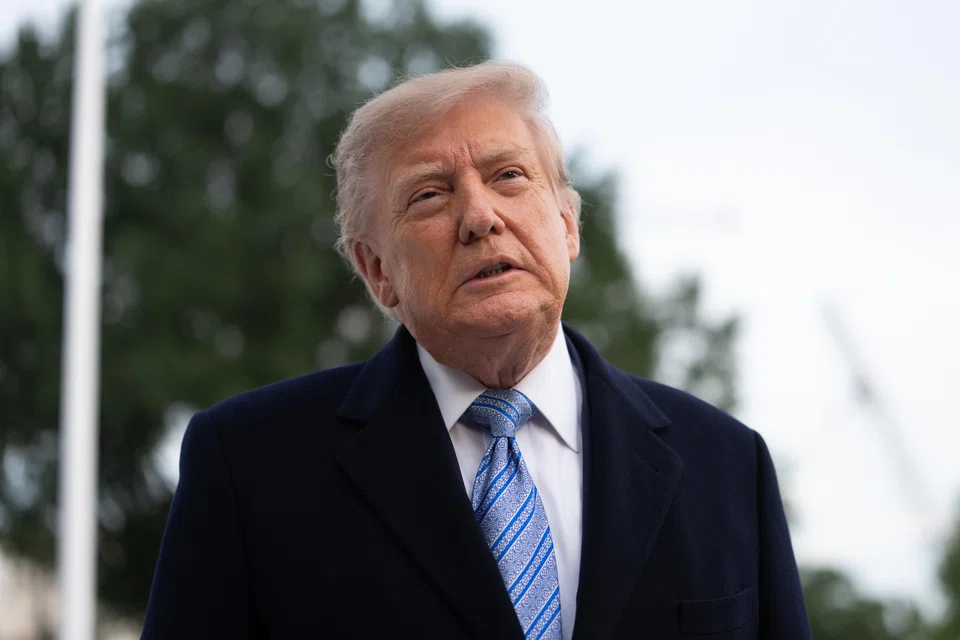
[WASHINGTON] In his second administration, US President Donald Trump has injected the federal government deep into private markets and undermined the independence of government agencies and institutions. Most notably, he repeatedly and publicly pressured the Federal Reserve to lower interest rates.
In a sharp departure from the traditional US model, and the model of economic government that has prevailed in the US for centuries, Trump’s administration has acquired equity stakes in more than 30 American firms, and has even taken control of large swathes of the Venezuelan economy.
Until the 19th century, Trumpian-style mercantilism was widely regarded as sound economic policy. That changed after Adam Smith’s powerful refutation of mercantilism revolutionised economic thinking.
When private-sector producers compete with one another, Smith argued, an “invisible hand” generates benefits that none intend, resulting in the production of goods and services that constitute the true “wealth of nations”.
Once Smith established that the wealth of nations lay in the goods and services they produced rather than in their gold reserves, the case for international trade became much clearer.
Trade enabled countries to consume a wider range of goods and services than they could if everything had to be produced at home.
Britain was the first major country to embrace Smith’s ideas, combining private markets with open trade and allowing competition to flourish. It became the dominant economic power of the 19th century, with other countries soon following its example.
After World War II, most advanced economies relied on private markets for production while governments protected competition and provided social safety nets.
Markets functioned within a legal framework that enforced contractual obligations and set rules for safety and business conduct.
The US took the lead in building a rules-based system for international trade, through the General Agreement on Tariffs and Trade and its successor, the World Trade Organization (WTO).
Countries agreed not to discriminate against foreign traders, to make their trade policies transparent, to bind tariff rates and to remove barriers through reciprocal negotiations. The combination of competitive markets and open trade contributed to the most rapid expansion of global output and trade in human history.
The US’ turn to protectionism
Over the past decade, starting with Trump’s first administration, the foundations of that extraordinary growth have been severely challenged as the US abandoned its leadership role in the WTO and discarded the principles that allowed private markets to generate prosperity.
Governments that want to support domestic producers without incurring fiscal costs often turn to tariffs and other forms of protection. Trump, whose federal budgets have been awash in red ink throughout his two presidencies, is a textbook example.
After rebranding the North American Free Trade Agreement as the US-Mexico-Canada Agreement and starting a trade war with China during his first term, Trump upped the ante in his second.
Shortly after returning to the White House, he imposed sweeping tariffs on dozens of countries, including allies such as Canada. The response was predictable: higher barriers for some American exporters and rising costs for producers that rely on imported goods.
These costs have been compounded by uncertainty over how abruptly Trump’s policies might change and how foreign governments and companies respond.
Nippon Steel, for example, sought to acquire US Steel, promising major investments in its American plants and pledging to honour its existing labour contracts.
The eventual deal allowed Nippon to buy the company in exchange for granting the US government a “golden share” with veto power over certain corporate decisions.
Domestic US companies are also falling under Trump’s sway. Intel was once a global leader in semiconductor production but had lost market share and billions of dollars in recent years.
After receiving substantial public subsidies, the company agreed to give the US government a 10 per cent equity stake. Its fortunes have since improved as orders have increased, though some of those orders reportedly came from firms under pressure to buy more Intel chips.
And equity stakes are only part of the story. The administration has also partnered North American Blue Energy Partners, a private oil company granted control of 17 Venezuelan oil fields, and invested billions of dollars in critical-mineral companies.
The Pentagon has reportedly held talks about lending US$5 billion to an artificial intelligence startup called Fluidstack. Trump even floated the idea that the government “just buy” Spirit Airlines.
Trump has justified these policies on national-security grounds, and there are certainly industries in which defence considerations warrant government intervention.
But the Trump administration has gone well beyond what those concerns can reasonably justify. And even in such cases, it is far from clear that keeping loss-making companies under government control is the answer.
National security depends on a strong private sector, not one propped up by politicians. PROJECT SYNDICATE
The writer, a former World Bank chief economist and former first deputy managing director of the International Monetary Fund, is senior research professor of international economics at the Johns Hopkins University School of Advanced International Studies and senior fellow at the Center for International Development at Stanford University
TRENDING NOW

Once staunchly pro-China, Malaysian Chinese businesses are now distancing themselves from Beijing

Looking beyond looming CEO succession, should UOB potentially pursue a transformative merger?

Could stablecoins be the future of money?

Grab CEO’s wife Chloe Tong on life with Anthony Tan and finding her purpose

