

Canada’s fight with the US has far bigger stakes than trade
Many world leaders are closely monitoring Carney’s gamble as America’s demands go beyond trade and strike at national sovereignty
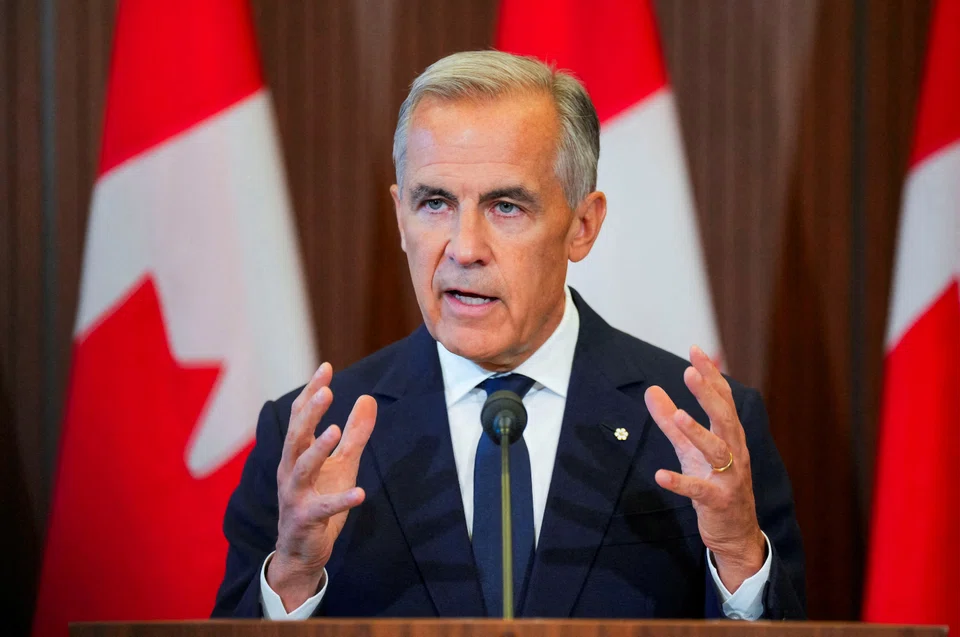
NO OTHER country has unilaterally walked away from trade negotiations with US President Donald Trump. Yet in a stunning decision on Aug 21, Canadian Prime Minister Mark Carney did precisely that: He said “no” to a proposed deal with the United States, the country that buys about 70 per cent of all Canadian exports.
The collapse of the Canada-US trade talks has generated two alternative narratives. The media and the commentariat in much of Canada and Europe are now spinning the story of a grand, heroic national epic, of how a Canadian leader who spent most of his life as a central banker has suddenly decided that national pride is more important than money.
Yet in parallel, the Anglo-American business press and investor community seems preoccupied with figuring out how a US$2.5 trillion economy can pick itself up and sustain a fight with a US$32 trillion gorilla.
Both narratives ultimately miss the point. Carney’s decision to invite a trade war with the US was certainly courageous. Still, it was also the result of shrewd political calculation, rather than just being the product of hurt nationalist pride. And although no country can ignore the reality of dependency on its biggest commercial partner, the history of nations is still not written by trade spreadsheets.
What remains true, however, is that many world leaders are watching the Canada-US trade dispute with huge interest. And some may follow Canada’s lead if Carney’s gamble succeeds in both avoiding a lengthy trade war and preserving Canadian national interests. At least in this respect, Canada’s fight is also the fight of many other nations.
The skirmish and the big battle
The sequence of events is not in dispute. Days after Trump proclaimed that “a very good deal for both parties” was all but done, Carney pulled his negotiators out. As a result, US tariffs of 50 per cent duly fell on some US$20 billion of Canadian exports – furniture, wine, and that bizarre item of North American trade: hockey sticks. In return, Canada announced what Carney called “a dollar-for-dollar retaliation” to bite from Sep 8, on US milk, steel, agricultural equipment and electrical goods.
Predictably, Trump has now upped the stakes by vowing to slap a further 50 per cent duties on Canadian cars, trucks and parts from the start of 2027. He has dismissed Canada as a country that supposedly wants “the benefits” of being part of the US, “without being one”.
Carney, in turn, did not mince his words. Most world leaders avoid calling their trade differences with Washington “wars”. Not Carney, however. Asked whether an all-out war confronts Canada, he replied in the affirmative: “You’re at war when you get attacked, and we got attacked,” he explained.
Measured by both tonnage and value, this is still just a skirmish, affecting only about 5 per cent of what Canada sells south. Yet what Washington asked for is in a different league altogether.
SEE ALSO

Carney was prepared to accept an unequal deal; after all, this is the nature of all the trade deals demanded by Trump. Still, the US demands in this case were evidently different.
Canada was expected to accept hefty tariffs on auto, steel, aluminium and lumber exports, and all in return for just maintaining the market access it had enjoyed for decades.
But the Canadians were also asked to grant the US a right of veto over any trade deals Canada concludes in the future with other countries, as well as curtail the protection of the French language, which, in deference to the all-important French-speaking Canadian province of Quebec, is an article of faith for most Canadians and embedded in the Canadian Constitution.
Any country confronted with such extreme demands would find the experience upsetting. But for the Canadians, who have put up with almost two years of Trump’s taunts and insults, the latest demands to erode their sovereignty have been nothing short of infuriating.
As Carney put it, “we cannot accept what they’ve offered, and we will not give what they’ve asked”. In effect, the Trump administration was demanding not only economic concessions, it was also insisting that Canada mortgage its independence to whoever sits in the White House.
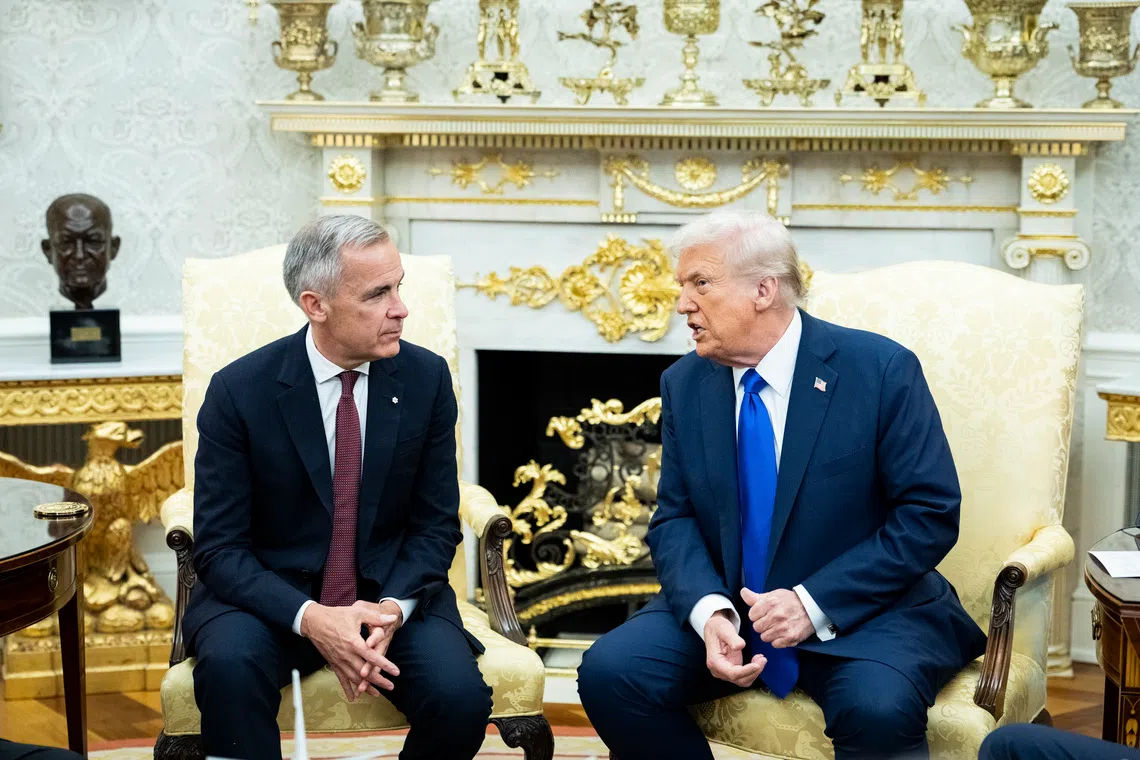
A calculated gamble
The confrontation is hardly one between equals, and those who doubt the wisdom of Carney’s tactics are right to keep pointing this out. Canada sends roughly 70 per cent of its goods to the US; the Americans send about 15 per cent north.
More to the point, Canadian exports are not similar to commodities such as Brazilian soya sold into a spot market: Canada’s products are welded into American supply chains, which makes them very difficult to redirect to other markets and therefore very cheap for the US to hold hostage in trade wars.
According to most estimates, the new US tariffs – as limited as they currently are – may still push an already stubbornly high Canadian inflation to 4 per cent by 2027 and cost around 90,000 current Canadian jobs, and that is before any account is taken of the self-harm in Canada’s own counter-tariffs, which are a tax on Canadian manufacturers buying American inputs.
Carney’s stance has made him wildly popular at home. Nonetheless, the fact remains that the Canadian economy grew by only 0.8 per cent in the second quarter of 2026 after contracting in 2025, and a majority of Canadian voters point to the cost of living as their top concern. So, the danger is that Canadians may tire of paying ever-increasing grocery bills, regardless of how much they prize their sovereignty.
Delicate political footwork
As David Frum, an influential American commentator, shrewdly observed soon after the US-Canada trade talks collapsed, wars are decided not only by who can inflict more pain, but also by those who can absorb more pain.
In sheer determination and endurance, the Canadians seem to be doing well. A boycott of US goods by Canadian consumers long predates the latest trade walkout. Pollsters indicate that up to 80 per cent of Canadian voters are with their prime minister.
Stephen Marche, another commentator, hailed the latest developments as Canada’s “Liberation Day”; Trump seems to have achieved what no Canadian leader since perhaps Pierre Elliott Trudeau did half a century ago, which is to redefine Canadian identity.
Still, Carney has not chosen suffering without taking into account wider political calculations, for three political calendars corner him, only one of which is American.
Quebec votes in provincial elections in October, with the separatist Parti Quebecois narrowly ahead. This is part of the explanation why the language demand which the US made was utterly unacceptable to Carney; any concession to the US on this would have handed the Canadian province of Quebec to French-speaking separatists.
The oil-rich province of Alberta – which exports most of its resources to the US – also votes on Oct 19 on whether to begin the legal process towards a referendum to leave Canada. Again, standing up for ordinary Canadians not only plays well in this Alberta vote, but also reminds the residents of that province that there are enduring advantages in sticking with the rest of Canada.
The third calendar Carney is watching is the US midterm elections on Nov 3. Everything in Canada’s posture is a bet that Canadian lumber, potash, aluminium and electricity will show up in US grocery bills, rents and car prices before US tariffs show up decisively in Canadian unemployment figures – and that a US president whose economic policy is already unpopular will discover a need for stability by the second week of November.
It is not an unreasonable bet. But it is also not a strategy, because its decisive variable sits in another country; buying time is only a plan if you know what you are buying it for. Furthermore, this is a game of chicken in which Carney has very little time. For while Canada can afford to handle the current skirmish, it cannot afford a full-fledged trade war.
Global implications
Nonetheless, the US demand that Canada grant Washington the right of veto over future Canadian trade deals deserves more attention than it has received, for at least in this respect, Canada’s fight is that of many other nations.
The US has long insisted that its trade partners notify Washington before opening negotiations with a “non-market economy”, which usually meant China. This so-called “China Clause” was invented by Trump in 2018 during his first presidential term, and Canada initially swallowed it as part of the broader United States-Mexico-Canada Agreement. But what Washington appears to have sought now is to generalise the principle by acquiring the right of veto over all future Canadian trade relations.
The timing explains the reason for this sudden US demand. In January, Carney concluded a tariff-quota arrangement with China that cut Chinese duties on canola oil and Canadian duties on electric vehicles, and Trump immediately threatened tariffs of up to 100 per cent in response, forcing Carney to state publicly that Canada had no plans for a free trade agreement with China.
Since February, Ottawa has been the principal broker of talks between the European Union and the Comprehensive and Progressive Agreement for Trans-Pacific Partnership bloc aimed at a tariff-insulated economic alliance covering a substantial share of world trade outside the US.
And in June, Canada formally acceded to the EU’s so-called Safe defence procurement instrument, giving Canadian firms access to European money to develop new weapons.
Carney has spent a year telling every audience that will listen – at 2025’s Davos gathering most explicitly – that what he called “middle powers” must combine to resist the tariff leverage of great powers. Washington has watched all of this and drawn the obvious conclusion: Canada is building the architecture of an alternative trade world which the US must crush.
The latest trade negotiations were, therefore, a US attempt to demolish Carney’s strategy. Seen from this perspective, Carney had to treat Trump’s demand as disqualifying rather than negotiable, because a country that accepts a broad veto over its trade policy has accepted a veto over its foreign policy.
What lies ahead will be a long battle, and it will hurt Canada considerably more than the US. But the shape of the confrontation now favours patience over concession, for reasons that go beyond Canada.
Carney has understood that the century-old assumption that geography and affinity made the US a permanent guarantor of Canadian prosperity is finished, and it is finished regardless of who wins control of Congress in November, or the White House in 2028.
Canada’s answer cannot be to wait for the weather to change in Washington; it has to be based on a wider diversification of trade relations and investment flows.
Washington asked Canada to stop being a sovereign trading state. Canada said no. That refusal is the most consequential decision made by any Canadian government in generations, and a consequential one for the rest of the world.
Everything that matters now depends on whether it can be sustained. THE STRAITS TIMES
Decoding Asia newsletter: your guide to navigating Asia in a new global order. Sign up here to get Decoding Asia newsletter. Delivered to your inbox. Free.
Share with us your feedback on BT's products and services
TRENDING NOW

DBS, OCBC, UOB rout lops billions off STI as inflation, rate concerns spook investors

Grab CEO’s wife Chloe Tong on life with Anthony Tan and finding her purpose

OCBC sheds S$8 billion in value as shares close nearly 6% down; analysts cautious on banks

Deal between tycoon friends sparks scrutiny of Philippine power sector

