US engagement at Asean Summit signals renewed focus on S-E Asia
Trump’s visit offers both validation and a reminder of Asean’s pivotal position in great power competition
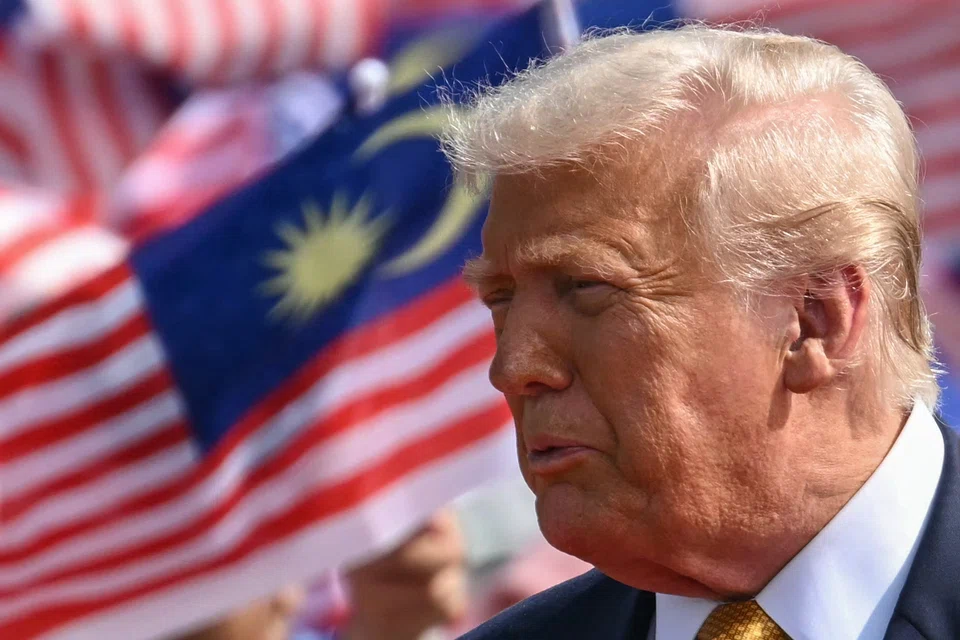
US PRESIDENT Donald Trump’s attendance of the 47th Asean Summit in Kuala Lumpur (Oct 26 to 27), marked a significant diplomatic moment for US-Asean relations.
This was his first visit to South-east Asia since beginning his second presidency in January 2025, and his presence signalled a renewed American commitment to a region increasingly caught between US and Chinese spheres of influence.
Peace and trade
The summit saw the brokering of the historic Kuala Lumpur Peace Accord between Thailand and Cambodia, which ended border tensions between the two nations. This peace deal showcased diplomatic leadership in regional conflict resolution, with the US serving as observer while Malaysia facilitated the agreement.
On the economic front, the visit was particularly productive. Trump and Malaysian Prime Minister Anwar Ibrahim signed a wide-ranging 17-point US-Malaysia Reciprocal Trade Agreement aimed at strengthening bilateral economic ties, expanding market access and enhancing supply chain resilience.
The accord will eliminate or reduce Malaysian tariffs on nearly all US exports and address non-tariff barriers, including ending discriminatory practices for US motor vehicles.
The commercial dimensions were equally impressive. Deals announced include up to US$3.4 billion annually in US liquefied natural gas purchases through multi-year agreements with Petronas, purchases of 30 Boeing aircraft, and further purchases of US semiconductors, aerospace components and data centre equipment valued at about US$150 billion.
Additionally, the two countries signed a memorandum of understanding on critical minerals cooperation, addressing a key vulnerability in US supply chains.
Broader regional engagement
Trump’s visit extended beyond Malaysia. He signed reciprocal trade agreements with Cambodia and issued joint trade statements with Thailand and Vietnam. The US administration also lifted the arms embargo on Cambodia and agreed to restart the bilateral Angkor Sentinel defence exercise, last held in 2017, marking a significant warming of US-Cambodia relations.
Both the Philippines and Malaysia signed the Artemis Accords during the summit, bringing the total number of signatory countries to 59, demonstrating US leadership in establishing international space exploration norms.
Malaysia’s delicate balancing act
For host nation Malaysia, Trump’s visit represents both opportunity and challenge. Malaysia is deeply entwined with both the US and Chinese economies, with the US serving as Malaysia’s top foreign investor and third-biggest trading partner in 2024. Anwar has sought to walk a careful line between the two great powers, pursuing what analysts describe as strategic autonomy.
Anwar has cast the presidential visit as a chance to bolster economic ties, champion regional peace and stability, and elevate Asean’s standing on the international stage.
The challenge lies in extracting benefits from engagement with Washington without alienating Beijing or appearing to compromise Malaysia’s non-aligned principles, particularly given Trump’s unpopularity in Malaysia due to his support for Israel.
Implications for US-Asean relations
This renewed engagement contrasts with that of Trump’s first term, when he attended the Asean Summit once in 2017 and left before the East Asia Summit concluded. The visit suggests a more sustained focus on South-east Asia, driven by several factors:
- Economic competition with China: The trade deals and investment commitments reflect US efforts to offer Asean nations tangible economic alternatives to Chinese influence. The emphasis on critical minerals cooperation directly addresses strategic vulnerabilities exposed by China’s dominance in rare earth metal processing.
- Transactional diplomacy: True to Trump’s dealmaking style, the visit prioritised concrete, measurable outcomes – trade agreements, investment commitments and a peace accord – over abstract multilateral declarations.
- Regional security architecture: By mediating the Thailand-Cambodia dispute and restarting defence cooperation with Cambodia, the US demonstrated its capacity as a security provider and honest broker, countering narratives of American disengagement from Asia.
The road ahead
Trump’s Asean visit represents a tactical success for US regional engagement, but several questions remain. Will the administration sustain this level of attention to South-east Asia, or will it prove episodic? Can the US offer a comprehensive strategic vision beyond bilateral deals? And how will China respond to this renewed American activism in its near abroad?
Trump departed Malaysia for Japan to continue his Asia tour, with meetings planned in South Korea and an expected bilateral with Chinese President Xi Jinping at the Asia-Pacific Economic Cooperation summit. How these subsequent engagements unfold will significantly shape the trajectory of US-Asean relations.
For Asean nations, Trump’s visit offers both validation and a reminder of their pivotal position in great power competition. The challenge for South-east Asian leaders will be converting this moment of attention into sustained, mutually beneficial partnerships, while preserving their autonomy and centrality in regional affairs.
The true test of this engagement will come not in the headlines generated during summit week, but in the implementation of agreements signed and the follow-through on commitments made.