

When airspace becomes the front line
Global aviation faces three possible recovery paths from the US-Israel-Iran conflict
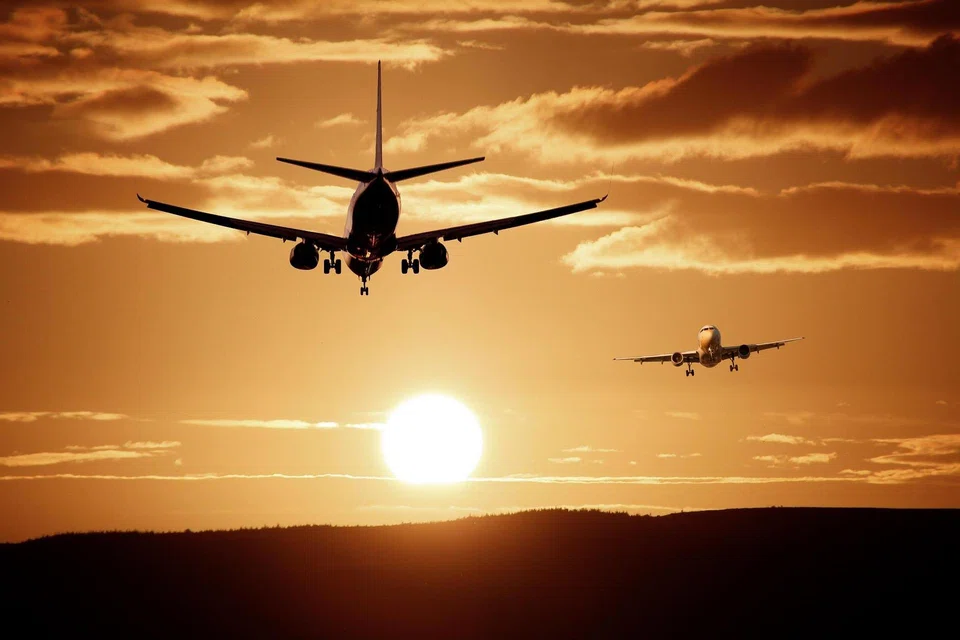
MODERN aviation rests on a deceptively fragile foundation. The system appears seamless to the traveller: Aircraft depart, cross continents and arrive according to carefully orchestrated schedules.
Yet beneath this apparent stability lies a complex web of airspace agreements, geopolitical assumptions and operational dependencies. When those assumptions break down, aviation can be disrupted with remarkable speed.
The current geopolitical tensions across the Middle East have once again demonstrated how quickly the skies themselves can become contested territory. Within days of escalation, large portions of regional airspace were closed or restricted. Airlines cancelled flights, rerouted aircraft around conflict zones and scrambled to reposition crews and equipment.
What the industry is experiencing now is not simply another operational disruption. It is a reminder that in aviation, airspace is more than infrastructure. It is a strategic asset – and, in times of crisis, a potential front line.
Aircraft flying between Europe and Asia must now detour around large sections of the Middle East, sometimes adding several hours to already long journeys. Longer flight paths mean higher fuel burn, lower aircraft utilisation and complex crew-scheduling constraints. Airlines built on precision network optimisation find themselves operating in a much less predictable environment.
But beyond the immediate disruption lies a more important strategic question: How quickly can the aviation system recover once stability returns?
History suggests that the trajectory of recovery rarely follows a single path. Instead, aviation shocks tend to produce one of three recovery patterns: a V-shaped rebound, a U-shaped recovery, or a K-shaped divergence between winners and losers.
Understanding which scenario may unfold is now central to how airlines, airports and policymakers prepare for the months ahead.
The V-shaped scenario: rapid normalisation
The most optimistic scenario would see a relatively quick stabilisation of regional security conditions and a rapid reopening of key airspace corridors. Here, the aviation system experiences a classic V-shaped recovery: A sharp drop in traffic followed by an equally sharp rebound.
There are precedents. After the volcanic ash cloud that paralysed European aviation in 2010, flight operations resumed within weeks once safety conditions allowed it. Many regional airspace closures in past conflicts were lifted relatively quickly once diplomatic de-escalation took hold.
Such recovery relies on three conditions:
First, airspace reopens gradually but consistently, allowing airlines to rebuild schedules with confidence.
Second, fuel markets must stabilise. Oil-price spikes tend to amplify aviation crises because fuel accounts for roughly a third of airline operating costs on long-haul routes.
Third, consumer confidence must return quickly. Leisure travel demand is surprisingly resilient when passengers believe risks have passed.
Under such conditions, the Gulf hub model – centred on airports such as Dubai, Doha and Abu Dhabi – could recover relatively quickly. These hubs are built on highly flexible networks and modern wide-body fleets capable of rapidly restoring long-haul connectivity.
In this scenario, aviation traffic flows between Europe, Asia and Africa would normalise within months rather than years.
The U-shaped scenario: prolonged disruption
A second possibility is a slower, more gradual recovery – in a U-shaped curve.
Here, geopolitical tensions persist long enough to keep parts of regional airspace restricted for an extended period. Airlines continue operating around longer corridors, increasing fuel consumption and lowering aircraft productivity.
This would not necessarily halt global aviation growth, but it would slow it.
Long-haul airlines face structural cost pressures from longer routes and higher insurance premiums. Aircraft spend less time generating revenue on additional sectors. Maintenance cycles and crew duty schedules become harder to optimise. Some routes become temporarily uneconomic.
In such a scenario, airlines might be forced to make strategic adjustments, such as reducing frequencies on certain intercontinental routes or shifting capacity towards more resilient regional markets. Aircraft deliveries could be deferred as carriers seek to preserve liquidity in uncertain conditions.
The broader impact would be felt across the aviation ecosystem. Airports dependent on transfer traffic could see reduced passenger throughput. Air cargo corridors might shift towards alternative routing patterns, affecting global logistics chains.
A U-shaped recovery would therefore not imply collapse, but instead represent a period of recalibration.
The K-shaped scenario: divergence in the industry
The third and perhaps most intriguing scenario is the K-shaped recovery.
Here, the industry does not recover uniformly. Instead, some airlines and hubs emerge stronger while others struggle.
The Covid-19 pandemic produced precisely such divergence. Some carriers used the crisis to restructure balance sheets and modernise fleets, while others were weakened by prolonged financial stress.
A similar dynamic could emerge in the current crisis.
Airlines geographically positioned to bypass disrupted airspace could temporarily gain a competitive advantage. For example, carriers operating hubs slightly outside the conflict zone may find themselves absorbing diverted traffic flows.
Similarly, airlines with ultra-long-range aircraft capable of operating extended missions without refuelling stops may gain operational flexibility.
Conversely, airlines whose network structures depend heavily on specific corridors could face greater disruption.
The global hub landscape may then evolve in subtle ways.
Alternative routing nodes – from Istanbul to parts of South Asia – could temporarily absorb traffic that normally transits through Gulf hubs.
In the cargo sector, where speed and reliability are paramount, shippers may increasingly diversify routing strategies, spreading logistics flows across multiple hubs rather than concentrating them in a single region.
A K-shaped recovery would not simply restore the pre-crisis system. It would reshape parts of the global aviation network.
The strategic geography of aviation
To understand why these scenarios matter, one must appreciate the central role the Middle East plays in global aviation geography.
Over the past two decades, Gulf airlines transformed the structure of long-haul travel. By positioning hubs at the intersection of Europe, Asia and Africa, they created a highly efficient transfer model capable of connecting hundreds of city pairs with a single stop.
Dubai, Doha and Abu Dhabi became some of the most important aviation crossroads in the world.
But this model also concentrates global connectivity in a relatively small geographic corridor.
The ripple effects of airspace restriction in the region travel far beyond the Middle East itself. Airlines across Europe, Asia and Australia must redesign route networks almost overnight.
The result is a reminder of a broader structural reality: The global aviation system depends on a surprisingly small number of strategic air corridors.
Aviation’s remarkable resilience
Despite these vulnerabilities, aviation has repeatedly proven its resilience.
The industry has survived wars, terrorist attacks, pandemics and economic crises. Each shock initially appears existential, yet aviation eventually adapts.
Aircraft technology improves. Route networks evolve. Airlines discover new efficiencies and new markets.
Even during the current disruption, aviation authorities are already exploring temporary “safe corridors” through carefully controlled sections of airspace.
Such arrangements allow limited traffic flows while maintaining strict safety oversight. The industry is accustomed to operating under uncertainty.
The broader lesson
Ultimately, the present crisis underscores a deeper truth about global aviation.
Aircraft may fly above national borders, but the airspace they traverse remains subject to geopolitics.
The sky is not a neutral domain; it is governed by sovereign decisions, diplomatic relationships and security considerations.
For airlines and policymakers alike, this means that geopolitical risk must increasingly be treated as a central strategic variable. Network planning, fleet selection and hub development can no longer assume a stable geopolitical environment. Resilience must be designed into the system from the outset.
Whether the industry now experiences a V-shaped rebound, a slower U-shaped adjustment or a K-shaped divergence will depend largely on how quickly stability returns to the region.
Airspace may be invisible infrastructure, but amid geopolitical tension, it becomes one of the most strategic assets in the global economy.
The writer is founder of BAA & Partners
TRENDING NOW

Once staunchly pro-China, Malaysian Chinese businesses are now distancing themselves from Beijing

Looking beyond looming CEO succession, should UOB potentially pursue a transformative merger?

Could stablecoins be the future of money?

Grab CEO’s wife Chloe Tong on life with Anthony Tan and finding her purpose

