
When robots are helping, who is watching?
Humanoid robots will one day be ubiquitous, helpful – and threaten our privacy
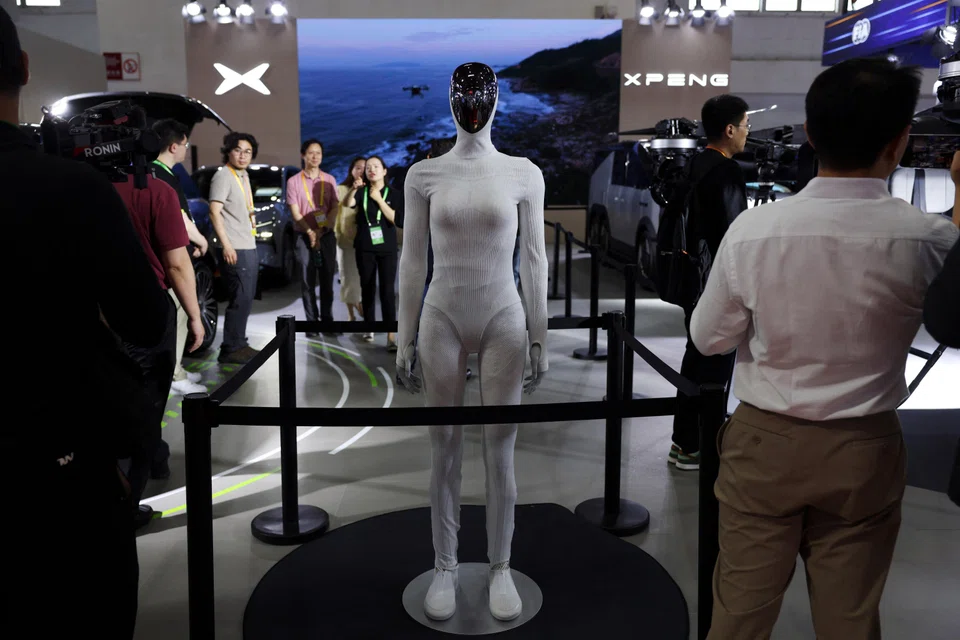
FOR years, making sandwiches and picking my trousers up off the floor have been some of my regular household tasks. Soon, I will be able to outsource this to Iron, the humanoid robot that car company-turned-“physical AI” company XPeng intends to launch next year.
An Iron will eventually clean people’s houses, chairman He Xiaopeng said at a media event on Jul 16, though businesses will get to buy them first when the robot launches next year.
The appetite for this kind of device is not limited to my own household. By 2050, Morgan Stanley calculates, the market for humanoid robots will be worth US$5 trillion.
These robots will also need to observe their surroundings closely. For Iron to carry out household tasks and follow instructions, it will need to see and hear everything around it.
This means cameras and microphones that are switched on continuously, in every room, including spaces where I am often not fully dressed.
This is not a new concern. Mark Zuckerberg is known to tape over his own laptop’s webcam. Benjamin Netanyahu has been photographed with tamper-evident tape over his phone’s cameras.
Yet, covering a lens only works when a device’s function does not depend on sight. It is no good when the device is designed to watch continuously.
This may seem like paranoia, but there is troubling precedent. A development model of iRobot’s Roomba vacuum captured images of a woman on the toilet, which were then leaked online by the gig workers paid to label it.
In 2023, the US Federal Trade Commission revealed that a male Ring employee viewed thousands of private videos belonging to at least 81 female customers, and searched for intimate camera labels such as “Master Bedroom”.
1X, the company now sending its US$20,000 Neo household robot into actual homes, says that when the robot cannot manage a task alone, a human operator wearing a VR headset watches its camera feed and takes over.
Onus on the companies
Privacy laws tend to treat the act of watching as the violation, but the robots we bring into our homes will have no choice but to see the world around them.
Those who build and operate them, however, have a duty of care. Leaks so far have been carried out by people, and unlike robots, people can be held to account.
Governments will have to punish leaks and shoddy data handling. The European General Data Protection Regulation already lets the bloc fine companies up to 4 per cent of their global revenue for mishandling personal data.
Its newer AI Act is meant to go further, requiring systems that use biometric data or recognise human emotions to disclose that people are being monitored.
If nothing else, this will reinforce the idea that our robot helpers will be agents of the companies that built them, not members of the family.
One response would be to guard my own privacy more carefully around the house. But the onus should not fall on me to protect my own modesty. It should fall on the companies that make these robots to safeguard my data.
TRENDING NOW
One-third of Singapore-listed firms at risk in severe AI downturn: MAS
‘We don’t want to stay as we are’: CEO Patrick Ng builds a more resilient Huationg
He built the Vingroup empire. Now South-east Asia’s richest man is handing some key roles to his sons
Radiant World table shows six lenders with US$870 million exposure



