

Wholesale stablecoins: fad or future?
The combination of private-sector indifference and public-sector caution suggests no rush for these digital tokens
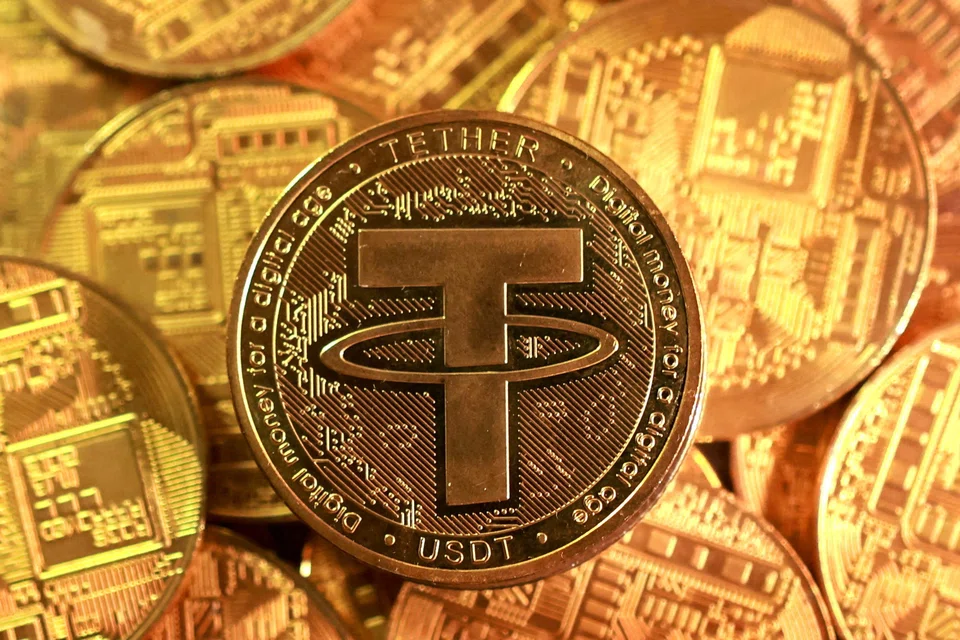
JUDGING from the current flood of seminars, conferences, papers, articles and social-media hype, one can be forgiven for concluding that the future of electronic payments is going to be centred on stablecoins, the now commercially respectable face of crypto.
The need to choose between clunky, expensive and restrictive traditional finance on the one hand and multiple varieties of potential fairy dust – or cryptocurrency – on the other is no longer necessary.
Stablecoins are privately issued digital tokens with value tied to fiat assets carried on distributed ledger technology infrastructure.
It will henceforth offer the speed, low cost and indifference to national frontiers offered by the digital realm, with the safe store of value and fidelity validated by traditional fiat payment instruments.
Against this background, US Treasury Secretary Scott Bessent has suggested that the value of payments accounted for by stablecoins can reach US$3 trillion by 2030.
Yet, the Bank for International Settlements has said that the value of stablecoins currently in issue approaches just US$315 billion compared with, for example, around US$8 trillion held in US bank deposits alone.
Research by McKinsey and Artemis Analytics has found that the actual volume of real stablecoin payments amounts to a mere US$390 billion, or around 0.02 per cent of global payments volumes.
This is as opposed to internal blockchain book-balancing exercises and the like.
So, for the moment, lots of sizzling but few sausages exist.



Numerous central banks have been conducting studies on various aspects of stablecoins.
They have been expressing their willingness to consider the issue with bespoke and appropriate regulatory supervision. But the queues of eager and mainstream issuers have yet to form.
Lack of enthusiasm
It is not hard to understand the reticence among potential large-scale private-sector users.
For one thing, the exact legal status of a stablecoin has yet to be internationally codified.
It is still less validated by case law. Is it a digital asset, bearer bond, IOU or casino chip?
Interoperability, be that between various stablecoins, the platforms on which they are carried or the regulatory jurisdictions in which they are based, is very low and unstandardised.
It is likely to remain so.
For another, many of the business-use cases advanced for stablecoins are hardly unique. Most are achievable using existing rails and procedures, with similar or less risk.
The complicating factor here is that no singleness of money exists.
Despite their pretensions to the contrary, stablecoins are not perfectly fungible instruments backed by unequivocal fiat money – with settlement instantly and at par absolutely guaranteed by a central bank and the nation that stands behind it.
It is therefore not surprising that – with one or two notable exceptions – the Official Monetary and Financial Institutions Forum (OMFIF) has heard a distinct lack of enthusiasm from major central banks and financial supervisors on wholesale stablecoins.
Recent gatherings have shown that these institutions still have severe reservations about stablecoins – and the way they might operate within the financial system.
Three major challenges
Three major concerns repeatedly surface.
The first, most salient and arguably the most philosophical, is the threat that stablecoins are perceived to present to the singleness of money – or indeed, to the whole universe and ethos of fiat currency itself.
The concept that only the state can issue, circulate and guarantee the means of exchange, ultimately backed by force of arms, is ancient, sanctified, pervasive and successful.
Stablecoins threaten to upset this equilibrium.
Second is the perceived threat to the stability of the commercially regulated banking system, in particular the potential for remunerated non-bank stablecoins to draw significant deposits away from commercial banks, thereby raising the costs of lending to the real economy.
The third issue is about concerns regarding the lack of customer transparency in unhosted blockchain-crypto wallets, and the risks thereby of the deployment of stablecoins in money laundering, terrorist financing or other criminal enterprises.
As far as mass, universal deployment is concerned, this combination of private-sector indifference coupled with public-sector caution is likely to head off the wholesale stablecoin stampede at the pass.
Some successful niche applications will probably be put into place, but they will be relatively small.
They will also operate in clearly defined and tightly regulated applications, with a low possibility of systemic contagion.
In the wider sphere, wholesale stablecoins will be a solution looking for a problem.
For many of the fields in which stablecoins claim to be the answer, the future probably belongs to tokenised deposits used for trading, to be settled by wholesale digital central-bank money. But that is another story. OMFIF
The writer is deputy chairman of OMFIF
Decoding Asia newsletter: your guide to navigating Asia in a new global order. Sign up here to get Decoding Asia newsletter. Delivered to your inbox. Free.
Share with us your feedback on BT's products and services
TRENDING NOW

LTA proposes combining car COE categories, adding rebate-surcharge system

StarHub to acquire MyRepublic’s mobile business amid ongoing telco consolidation

DBS, OCBC, UOB rout lops billions off STI as inflation, rate concerns spook investors

Grab CEO’s wife Chloe Tong on life with Anthony Tan and finding her purpose

