Why COP31 is not a total failure
Businesses have backed a major electrification push in Antalya, but fixing UN climate diplomacy remains critical
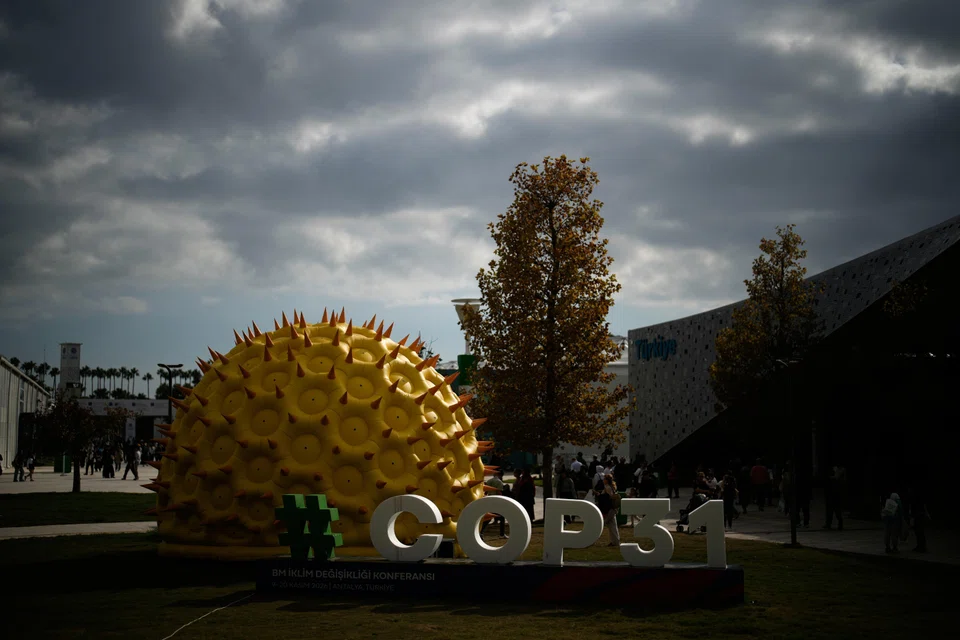
THE collapse of the COP31 climate summit in Antalya, Turkey, has sent shockwaves across much of the globe, marking the first time in 17 years that a UN Climate Conference ended without a consensus agreement.
It might even come to be seen as a wake-up call to the world to get more serious about tackling global warming.
However, the event was not a total failure.
One indicator of progress is the Global Climate Action Agenda Electrification Delivery Package. According to the United Nations, more than 260 businesses, with over US$4 trillion in combined annual revenue, announced or profiled actions related to this initiative at COP31.
This also underlines how the centre of gravity at recent COPs has shifted from the negotiating zone of government officials – important as they remain – to a wider ecosystem of investors, technology experts, business leaders, scientists and civil society groups.
COPs have evolved from medium-sized policymaking gatherings into massive events encompassing wider corporate trade fairs and roadshows with growing industry participation, including from the Asia-Pacific.
COP21 in 2015 in Paris, where the landmark global climate deal was agreed, drew around 25,000 attendees. By contrast, Antalya gathered nearly quadruple that overall attendance, making it the largest climate summit ever.
The Electrification Delivery Package itself involved major multinational corporations including Mahindra, Octopus Energy, Unilever, Siemens, Iberdrola, Schneider Electric, Volvo Cars, Fortescue, Nestle, Orsted and SSE.
It is not just the private sector getting behind this electrification push. Some 150 countries plus the European Union, accounting for more than two-thirds of world gross domestic product, have also signed up.
From the C40 Cities group – a global coalition of urban centres seeking to reduce greenhouse gas emissions and meet wider environmental objectives – 37 member cities agreed to either report electrification progress in 2026 or announce actions for 2027.
Beyond this specific package, which will result in billions of dollars in clean energy investment, is a wider 35x35 Electrification Pledge. The voluntary pledge aims to raise electricity’s share of global energy consumption to 35 per cent by 2035, from just over 20 per cent today.
The pledge, backed by countries representing around half of the global economy according to the UN, has also been championed by the International Energy Agency, which asserted that “the world has entered the Age of Electricity”.
While the proposed Antalya Pact was not agreed at COP31, the electrification deals send market signals on where the global energy system is heading – just as early renewable power investment did in the past.
With a vanguard of companies already pushing forward, a global benchmark has been established for the future electric economy around which private capital can mobilise.
COP reform still needed
While the COPs remain important events where the private sector can play a constructive role, reform is needed to maximise the momentum coming out of them.
Anything less will threaten the legitimacy of future summits, including COP32 in Africa in 2027, which will now require supreme political skill to deliver.
At the heart of change is the need to adapt the consensus rule. This currently allows a very small number of states and their allies to exercise an effective veto and curtail global climate ambition.
One of the sharpest criticisms of COP31, voiced by UN Secretary-General Antonio Guterres and key powers such as the EU, is the blocking role played by oil states. It highlights how geopolitical divisions, from the Ukraine war to the Iran crisis, are making COP diplomacy far harder to navigate.
Such diplomatic gridlock creates uncertainty for mobilising private capital. To be sure, the private sector can see broad changes in direction of travel. But the clarity and strength of policy signals still determine the speed and extent to which companies react.
This matters all the more because the next few years of global climate diplomacy will largely determine whether the 2015 Paris Agreement succeeds or fails.
Major economies are still working to deliver on their latest Nationally Determined Contributions – country-level emission reduction targets under the Paris Agreement – where the private sector has a huge role to play.
Nations must not only put forward greater ambition, but also follow through on it if the world is going to get anywhere near the Paris goals.
Amid this uncertainty, the danger for future COPs is that summits settle for a lowest-common-denominator outcome, even if total collapse is avoided. The world needs much more.
That is why there is growing urgency to reform how global climate diplomacy works. COP31 was not an outright failure, as the electrification initiatives show, but without fixing the negotiating process, policymakers risk slowing down the very capital ready to fund the transition.
The writer is an associate at LSE IDEAS at the London School of Economics