

About 11,000 homes planned on Maju Forest, Gillman Barracks sites with more greenery to be retained
Revised proposals will yield about 9,500 public homes and 1,500 private units, with taller blocks on the cards

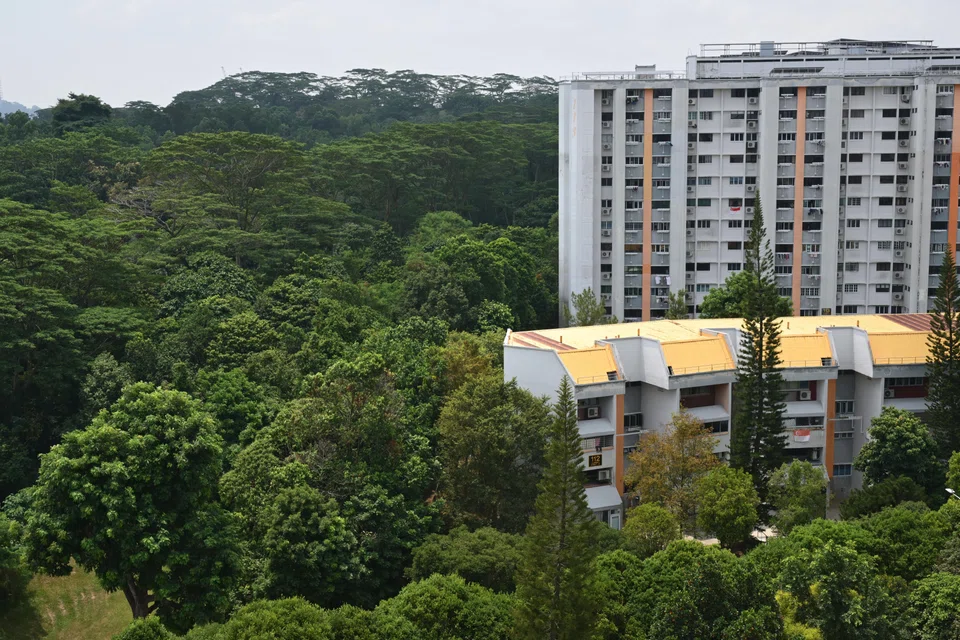
[SINGAPORE] Some 11,000 homes are expected to come up at Maju Forest and Gillman Barracks over the next decade, under revised development plans that will preserve more greenery in both areas following public feedback.
The Housing & Development Board (HDB) said on Wednesday (Oct 28) that about 4,000 public housing units are planned at Maju Forest, in the Sunset Way area of Clementi, while Gillman Barracks, near Alexandra Road, is expected to yield about 7,000 homes.
Of the 7,000 homes at Gillman Barracks, about 5,500 will be public housing units and the remaining 1,500 will be private homes.
Minister of State for National Development Alvin Tan said at a media doorstop that the revised plans would result in about 800 fewer homes at Gillman Barracks and roughly 400 fewer at Maju Forest.
Asked whether the original plans could therefore have accommodated up to about 12,000 homes, he said the plans had never been finalised, and that the revised housing figures were arrived at following public consultations and feedback. “I think you can do the sums yourself,” said Tan.
“It (comes) down to a very important principle, and that is, we are committed to preserving as much as possible, but, at the same time, we need to be able to provide homes that are accessible and affordable to Singaporeans who are looking for homes in choice areas, in central areas, areas where they are close to their families,” he noted.
“So we think that through all of the engagements, we have achieved a right balance. It’s very difficult for us to find the right landing, but I think we’ve done so together with the support and the understanding of residents, as well as stakeholders.”
On whether the revised plans represented the government’s final decision on the two sites, Tan pointed out that the government had studied and considered the public feedback “very carefully”.
HDB received about 7,200 submissions concerning Maju Forest and 2,300 concerning Gillman Barracks during a public consultation exercise held from July to August. The agency also engaged with residents, nature groups, youth, academics and built-environment professionals.
SEE ALSO

“This is the decision that we’ve made together, and we will have to proceed with the development,” Tan said.
With more land set aside for greenery, HDB noted that it plans to efficiently utilise the remaining development area to provide new homes, such as by building taller blocks. More details on the developments will be shared when ready.
Keeping more green spaces
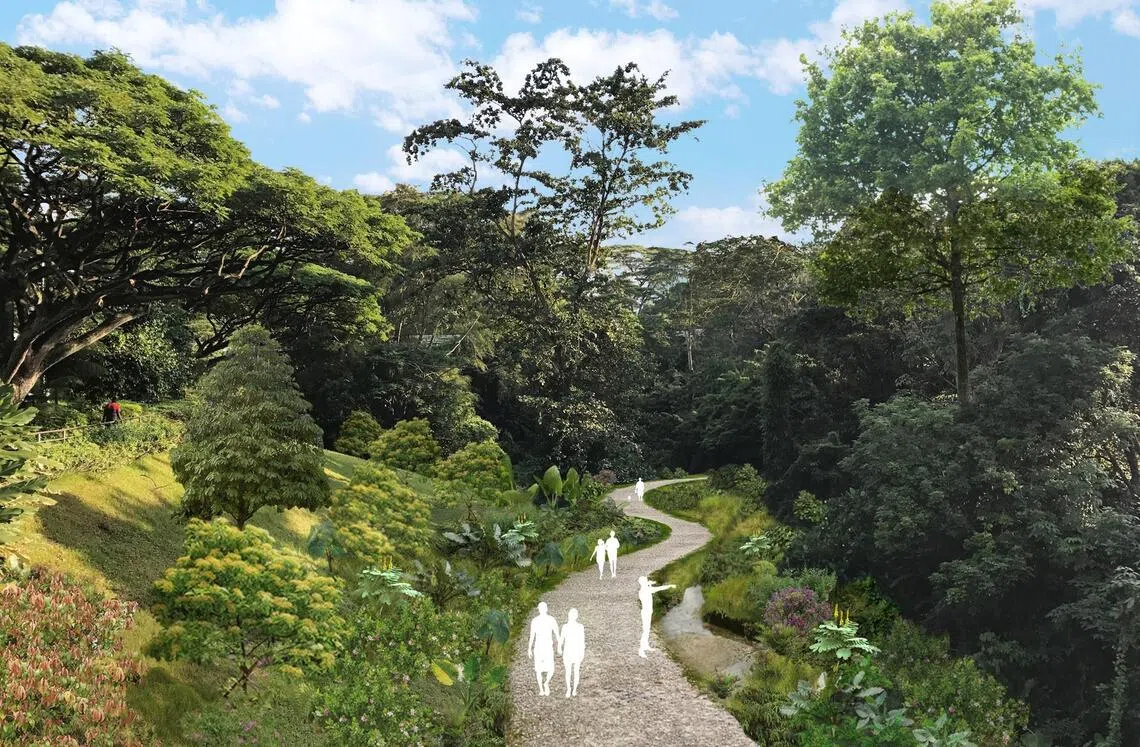
Under the revised plans, about 10 hectares (ha) of greenery will be retained at Maju Forest, up from 8 ha under the original plans. This represents about 45 per cent of the 23 ha study area, compared with 35 per cent previously.
The additional 2 ha of greenery will be retained largely in the southern part of the site, creating a larger contiguous green area and strengthening ecological connectivity along the Clementi Nature Corridor.
The retained greenery will be safeguarded as a new nature park.
At Gillman Barracks, about 12 ha of greenery will be set aside, up from 8 ha under the initial plans. This represents about 60 per cent of the site’s 20 ha of existing greenery, compared with 40 per cent previously.
The additional 4 ha will be retained largely in the eastern part of the site, preserving more of the forest around the hillock and widening the ecological corridor along Lock Road and Malan Road.
The retained greenery will be incorporated into the upcoming Alexandra Nature Park, part of the Labrador Nature Park Network.
The revised plans will also retain 25 buildings of “exceptional” and “high” heritage significance at Gillman Barracks, located in clusters along Preston Road, Lock Road and Malan Road. The buildings could be repurposed for commercial uses and amenities serving residents of the future housing estate.
Development works to begin from 2027
Site works at Gillman Barracks are expected to begin from the second half of 2027, starting with the demolition of buildings on the site. Land preparation works are expected to commence in 2029.
At Maju Forest, land preparation works are slated to begin in the first half of 2028, with public access to the site restricted once works begin. Prior to that, agencies may enter the site to conduct further technical studies, including soil investigations, said HDB.
Before development works begin in the vegetated areas at both sites, environmental management and monitoring plans will be put in place to mitigate the impact of construction on surrounding habitats. These plans will set out measures to protect retained greenery and biodiversity, it added.
The revised plans follow a public consultation exercise, where many respondents called for more greenery to be retained, citing concerns about the loss of habitat and biodiversity, and ecological connectivity.
Some suggested developing alternative brownfield sites instead of clearing forested areas, while others highlighted Gillman Barracks’ heritage, cultural and community value.
“Planning for national needs including housing, nature and heritage, requires difficult but necessary trade-offs. As part of the planning process, agencies have reviewed vacant and brownfield sites in the surrounding areas, including the locations suggested by members of the public and residents,” said HDB.
It added: “Some of these sites are already planned for housing and will contribute to future supply. Others are still needed for existing uses or will not be available within the time frame in which homes are needed.”
Sites near Maju Forest already planned for residential development include the former Raffles Junior College campus at Mount Sinai. Near Gillman Barracks, these include Depot Lane Industrial Estate and Outram Hill.
Other sites earmarked for residential use include Keppel Distripark, Keppel Terminal and Tanjong Pagar Terminal, which form part of the Greater Southern Waterfront.
Meanwhile, sites such as Maju Camp, Pasir Panjang Distripark and its surrounding parcels, and Alexandra Village Industrial Estate are still required for existing or other uses.
HDB said that housing demand remains strong as larger cohorts of Singaporeans born in the late 1980s and 1990s are now of age to buy their own flats. Demand is also being driven by shrinking household sizes, with more couples, singles and seniors choosing to live independently rather than with extended families.
Tan added: “Singapore has limited land; it’s land-scarce, and we have competing demands for land. That’s housing, it’s roads, it’s areas for businesses, for defence, for energy, and we’ve had to manage these throughout our history. The Singapore story is about sharing spaces and accommodating one another’s needs.”
Decoding Asia newsletter: your guide to navigating Asia in a new global order. Sign up here to get Decoding Asia newsletter. Delivered to your inbox. Free.
Copyright SPH Media. All rights reserved.
TRENDING NOW

If Europe goes to war, the fallout will be felt in East Asia

Firms linked to haze pledge cooperation in meeting with Shanmugam; government to table changes to haze law

Indonesia stocks suffer worst plunge in nearly 30 years as MSCI proposes standalone status

Keppel seeks US$1 billion for Vietnam investments as it joins country’s international financial centre

