As big tenants depart or downsize, London’s Canary Wharf faces pressure to stay attractive
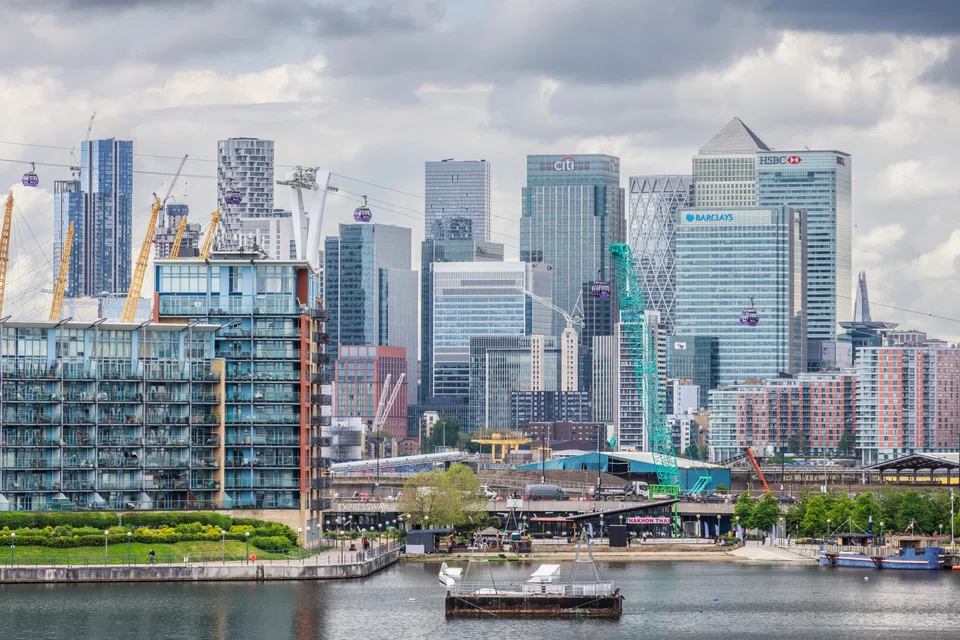
[LONDON] Canary Wharf, the real estate investment trust that owns numerous skyscrapers in London’s docklands, is under pressure as several key tenants including HSBC have decided to move out or downsize.
The bank recently announced that it will relocate its Canary Wharf headquarters to the City of London, where it will occupy space that is roughly half the size it enjoys today. For more than 20 years, it has been in a 45-storey tower.
Property analysts say this massive relocation – due to take place in 2027 and likely to the former headquarters of telecommunications group BT, near Saint Paul’s Cathedral – is a clear sign that London’s office market is in a cyclical decline.
More people and companies continue to adopt hybrid working, and there are other challenges such as increasing energy costs, higher interest rates and tighter environmental standards that many firms continue to grapple with.
Among the other major employers that are planning to leave Canary Wharf are law firm Clifford Chance and fintech giant Revolut, both of which are looking for new homes elsewhere in London.
Credit Suisse, meanwhile, has already begun sub-letting some floors in its Canary Wharf building. There is a big question mark over the Swiss bank’s future, as thousands of jobs are expected to be cut following the takeover by UBS.

Not all the big names are calling it quits, however. Last year, US investment bank Citigroup began an overhaul of its main tower in Canary Wharf that will cost more than £100 million (S$171.8 million). The refurbishment will be complete in 2025.
The Canary Wharf Group is co-owned by the Qatar Investment Authority and Canadian asset manager Brookfield. For the last 30 years or so, Canary Wharf has been a major financial and trading centre alongside the City of London. Apart from banks and professional services firms, Canary Wharf also has numerous hotels, shopping malls and residential blocks.
But the neighbourhood has not been spared from the troubles facing real estate globally. In late May this year, rating agency Moody’s downgraded the ratings on its bonds to junk. The financial district has more than £1.4 billion of debt that is due in 2024 and 2025.




Moody’s said that the owners would probably be highly reliant on asset sales, as well as shareholder support, to help the company de-leverage and refinance.
With these speed bumps on the horizon, Canary Wharf Group’s chief executive Shobi Khan – a real estate industry veteran with more than 30 years of experience – wants to turn the area into a leading life sciences centre and boost the development of residences, hotels and parks.
On the whole, analysts say that Britain’s commercial property sector faces a difficult time in the coming years.
A recent survey by real estate agent Knight Frank found that half of large multinationals are planning to axe office space in the next three years as they adapt to a permanent hybrid working model.
Grainne Gilmore, the director of research at Cluttons, an international firm of chartered surveyors and property consultants, estimates that the office vacancy rate in the UK has reached a 10-year high, although prime space is still at a premium.
“Employees continue to return to the workplace in greater numbers, but overall demand for office space remains muted compared to historical norms,” she said. “As a result, the vacancy rate (in the UK) at 7.6 per cent is the highest level since 2014. London (is now) at 8.9 per cent, from 5 per cent when the pandemic started.”
“Underneath the headline data, however, the flight to quality continues, with the demand for best-in-class office spaces, in the best locations, being registered across all the UK’s major cities,” she added.
In a recent report, Mark Callender, the head of Schroders Real Estate Research, calculated that the UK’s commercial real estate capital values fell by 21 per cent in the nine months between June 2022 and March 2023. He warned that the contraction will extend to as much as 30 per cent in the second half of this year.
“That is the sharpest correction since the period immediately following the Lehman Brothers failure in 2008,” he said. He added that rental values will be broadly flat through 2023 and 2024.
Decoding Asia newsletter: your guide to navigating Asia in a new global order. Sign up here to get Decoding Asia newsletter. Delivered to your inbox. Free.
Share with us your feedback on BT's products and services