Developers' margins squeezed by higher land, construction costs: survey

Singapore
THE pains of margin compression for property developers in Singapore look set to continue, given recent tightened border measures due to the surge of Covid-19 cases in India.
It comes as profit margins of developers had already thinned from the year-ago period, despite developers seeing strong private-home sales, according to a survey.
An increase in construction costs, land costs and agent commissions were among the reasons cited for these thinning margins.
For its Q1 2021 survey, the National University of Singapore Real Estate (NUS+RE) polled 49 senior executives in Singapore's real estate sector, with 24 developers among them. NUS+RE collectively represents the Department of Real Estate and Institute of Real Estate and Urban Studies (IREUS). Questions about profit margins were posed solely to the developers, while the rest of the survey involved all respondents.
Based on the responses, margins narrowed by 5-10 per cent from pre-pandemic levels for nearly half of the developers, and by 10-20 per cent for another 30 per cent of them.
About 13 per cent of developers saw margins thinning by less than 5 per cent, while 9 per cent reported contractions of over 20 per cent.
The Business Times (BT) reported in March that pre-tax profit margins for some private housing projects had fallen to around 10-12 per cent, or even sub-10 per cent.
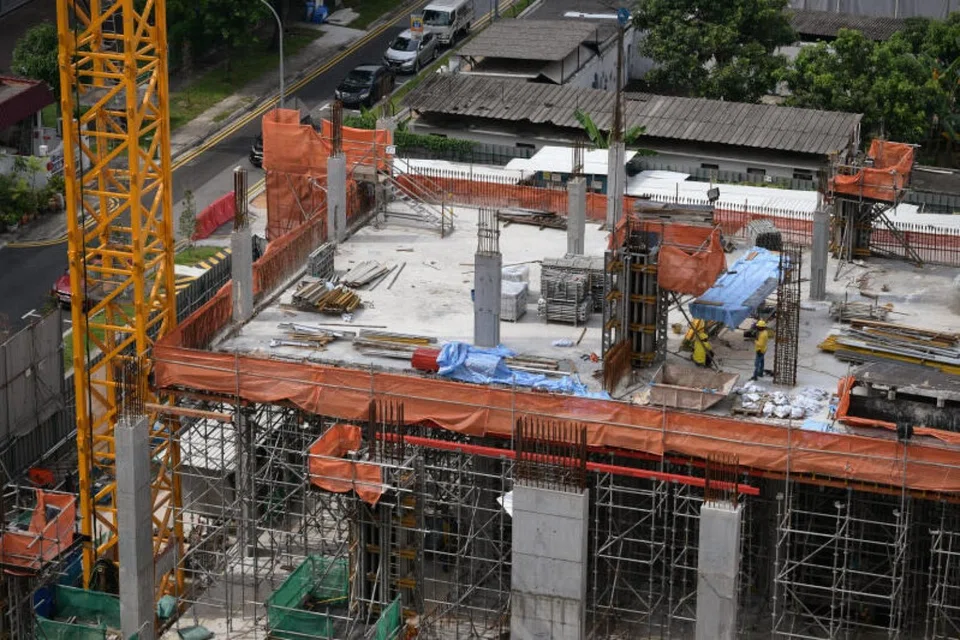
The biggest reason for shrinking margins was said to be the labour crunch in the construction sector, due to border restrictions during the pandemic, according to the NUS+RE survey findings.
Besides the manpower shortage, building materials also became more expensive as both freight and raw material costs shot up last year, NUS+RE noted. This likewise drove construction costs higher.
IREUS deputy director Lee Nai Jia expects such margin compression to persist for at least six months and up to a year, especially given the recent tightened border measures with India.
The travel ban, which kicked in on April 23, has affected the flow of Indian workers into Singapore. While the Building and Construction Authority would provide temporary flexibility in recruiting workers from China, construction firms would still need time to train these new workers and get them up to speed, Dr Lee noted.
Starting this week, border restrictions will be tightened again amid the rising spread of Covid-19 in Singapore. From 11.59pm on May 7, all travellers with travel history over the past 21 days to higher-risk areas will have to serve a 21-day stay-home notice in a dedicated facility. This is up from 14 days for certain countries now.
As at May 4, all places or regions are deemed to be of "higher risk", except for Australia, Brunei, mainland China, New Zealand, Taiwan, Hong Kong, and Macao.
Meanwhile, emergency legislation will be announced here soon to address the severe disruption to the construction sector arising from curbs on the entry of migrant workers.
In the May Day Rally, Prime Minister Lee Hsien Loong said it will be aimed at making the burden to be shared more fairly between the different parties - the contractors, the developers, and the buyers.
Other factors contributing to the margin contraction included a rise in fees that developers pay real estate agents to market their properties, as well as higher land costs, according to the poll results. About 30 per cent of developers said these were the top two reasons for their depressed margins in 2020.
The uptrend in agent commission rates may have started before the Covid-19 pandemic, perhaps shortly after the last round of cooling measures in mid-2018, Dr Lee said.
"However, not all developers were into increasing commissions then. I think more of them could have raised the commission payouts during the pandemic to be on par with other developers," he added.
Cooling measures aimed at keeping property price increases in line with economic fundamentals have also limited developers' pricing power, BT earlier reported.
Separately, integrated projects may be becoming more popular with developers, going by the study results. Some 82 per cent of the 49 real estate executives polled expected an increase in the number of developers bidding for integrated developments.
"As the Covid-19 outbreak has led to more firms adopting flexible work arrangements, developers will have to rethink future designs for workplaces and home spaces, and ultimately the type of development to build," NUS+RE told BT.
Still, there are downside risks for developers in taking up integrated projects. For instance, 73 per cent of respondents said the five-year deadline to complete and sell all units in order to qualify for remittance of 25 per cent additional buyer's stamp duty would pose a challenge to those undertaking such projects.
A third of real estate executives also expressed concern about the longer construction period for integrated developments, when compared to conventional residential projects.
Other challenges included the two-envelope tender approach, which locks in funds for a longer period while proposals are being evaluated. Restrictive regulations may also prevent developers from experimenting with alternative housing models, more than half of the respondents said.
For instance, if an integrated-development site has certain tender conditions that could be expensive to fulfil, developers may in turn have less of an incentive to "offer co-living spaces or serviced apartments that are more suited to the footloose millennial workforce in the future, post-Covid-19", Dr Lee said.
Under the government land sales programme, a commercial and residential site in Jalan Anak Bukit was launched last June via a two-envelope tender. The deadline has been extended to June 29, 2021, BT reported.
READ MORE:
- Undervalued property developers: are they worth a second look?
- Cooling measures cited as key risk by Singapore real-estate market, poll finds
- Property development no longer offers healthy returns for shareholders
- Developers hungry for land, but not likely to binge: analysts
- Singapore private home prices rise 3.3% in Q1 on 'extremely strong' demand