

Higher income ceiling for executive condos could boost buyer demand, developer confidence
The ceiling will be raised to S$18,000 for ECs and to S$16,000 for HDB BTO flats

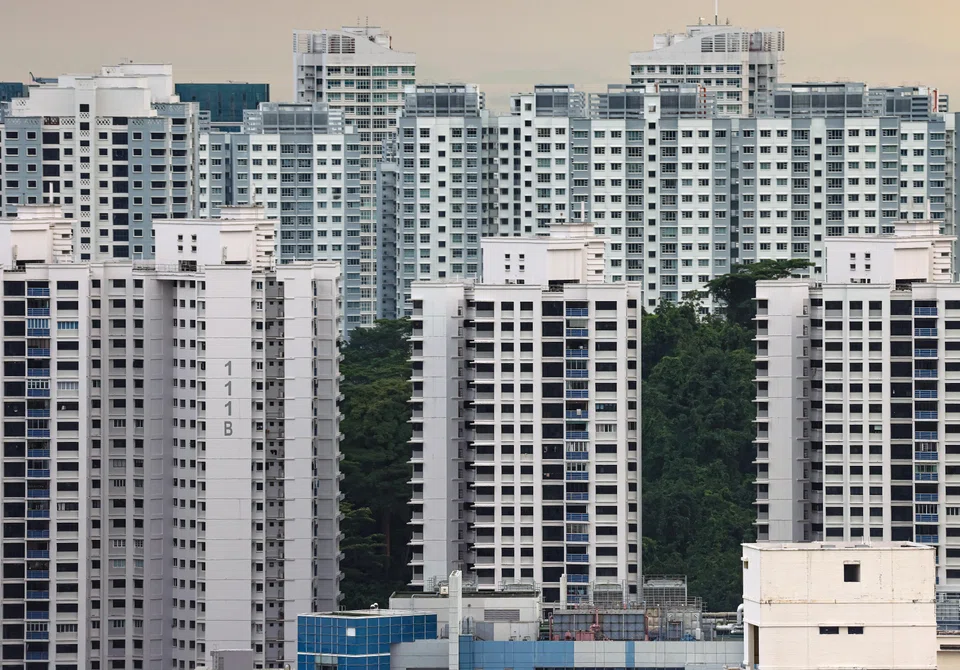
[SINGAPORE] A higher income ceiling for executive condominiums (ECs) could lift demand for future projects as it widens the pool of eligible buyers, and support developer confidence in upcoming land tenders.
In particular, raising the threshold for eligibility to buy new ECs will give EC buyers access to more financing, due to a lending limit tied to monthly income for this housing segment.
Prime Minister Lawrence Wong announced on Sunday (Aug 23) that the monthly household income ceiling for ECs will be raised from S$16,000 to S$18,000.
The raised ceiling will apply to projects on sites where land tenders close on or after Aug 24.
The EC income ceiling was raised along with the income ceiling for Build-To-Order (BTO) Housing and Development Board flats, which went up to S$16,000.
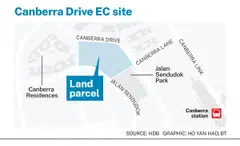
The new EC income ceiling will apply to projects on upcoming EC sites in Canberra Drive and Admiralty Walk, the tenders for which close on Oct 1 and Dec 17, respectively; it will also apply to a Jurong East site slated for launch by year-end.
Together, the three plots could yield about 1,370 units in total.
Higher income ceiling means more potential buyers
Kelvin Fong, PropNex’s chief executive officer, said that the revised threshold would enable more households – especially those where incomes have risen in recent years – to qualify for new ECs and potentially secure higher loan amounts.
PropNex estimates that the maximum bank loan an EC buyer at the previous S$16,000 income ceiling could have secured was around S$1 million, assuming a mortgage servicing ratio (MSR) of 30 per cent, a medium-term interest rate floor at 4 per cent per annum and a 30-year loan tenure.
SEE ALSO


Against the median price of S$1.83 million for new EC units sold in 2026 as at Aug 15, a further S$366,750 would need to be funded through cash and/or Central Provident Fund savings, on top of the 25 per cent down payment and booking fee.
At the new S$18,000 ceiling, the maximum loan could rise to about S$1.13 million, cutting the additional cash/CPF required to S$240,750, said Fong. He cautioned however that larger loans would also mean higher monthly repayments and debt obligations.
Policy changes to rein in EC prices
Christine Sun, chief researcher and strategist at Realion (OrangeTee & ETC) Group, does not expect a major impact on the market, given recent policy changes announced in May aimed at reining in soaring EC prices and tempering land bids.
In May, the minimum occupation period for the hybrid housing type was extended to 10 years, and a deferred payment scheme for new EC projects was removed. In addition, new EC projects now have to reserve 90 per cent of units for first-time buyers in the first two years of the launch of the project.
While developers may have taken a more measured view of demand after the measures were announced, SRI head of research and data analytics Mohan Sandrasegeran said that the higher income ceiling “may help support developer confidence and participation in upcoming EC land tenders, particularly for well-located sites where ECs continue to offer a meaningful affordability proposition relative to new private condominiums”.
Still, a larger pool of eligible buyers may not necessarily translate into stronger sales, Fong said, noting that this would depend on developers keeping the overall price quantum within buyers’ purchasing power.
The Canberra Drive site will be the first EC site to be tested against both the higher income ceiling and the policy changes announced in May.
Huttons Asia’s senior director of data analytics Lee Sze Teck expects the site to attract up to five bidders, and for the bids to range between S$630 and S$700 per square foot per plot ratio.
Data from the Department of Statistics Singapore (Singstat) indicates that the average monthly household employment income (excluding employer CPF contributions) among resident employed households rose 22 per cent from S$11,250 in 2019 to S$13,752 in 2025.
The median monthly household employment income (excluding employer CPF contributions) went up by 27 per cent over the same period to S$10,591 in 2025.
An income ceiling of S$16,000 would cover resident employed households up to just under the 70th percentile. When the ceiling was last raised to S$14,000 in 2019, it covered households up to slightly above the 70th percentile, Fong pointed out.
The higher income ceiling could spur demand for larger, pricier and well-located BTO flats, with some higher-income households previously excluded from the primary market becoming eligible.
Still, Fong does not expect the change to divert much demand from the resale market. “BTO and resale buyers typically have different priorities, with resale flats appealing to those who need move-in ready homes or a preference for specific locations. The resale market serves a wider pool of buyers, including singles seeking a larger flat and permanent residents, which should continue to underpin resale demand.”
Decoding Asia newsletter: your guide to navigating Asia in a new global order. Sign up here to get Decoding Asia newsletter. Delivered to your inbox. Free.
Copyright SPH Media. All rights reserved.
TRENDING NOW

Government to bring forward raising of retirement age, give employers more financial support to create flexi-load jobs

If Europe goes to war, the fallout will be felt in East Asia

Indonesia stocks suffer worst plunge in nearly 30 years as MSCI proposes standalone status

Vietnam’s northern provinces, not Hanoi or Ho Chi Minh City, are powering near 10% GDP growth

