Home sales set to recover in Q4 with prices seen rising further on new launch momentum
Residential prices rose 1.4% in Q3 with slowdown in sales; analysts forecast full-year price growth of 3% to 5%

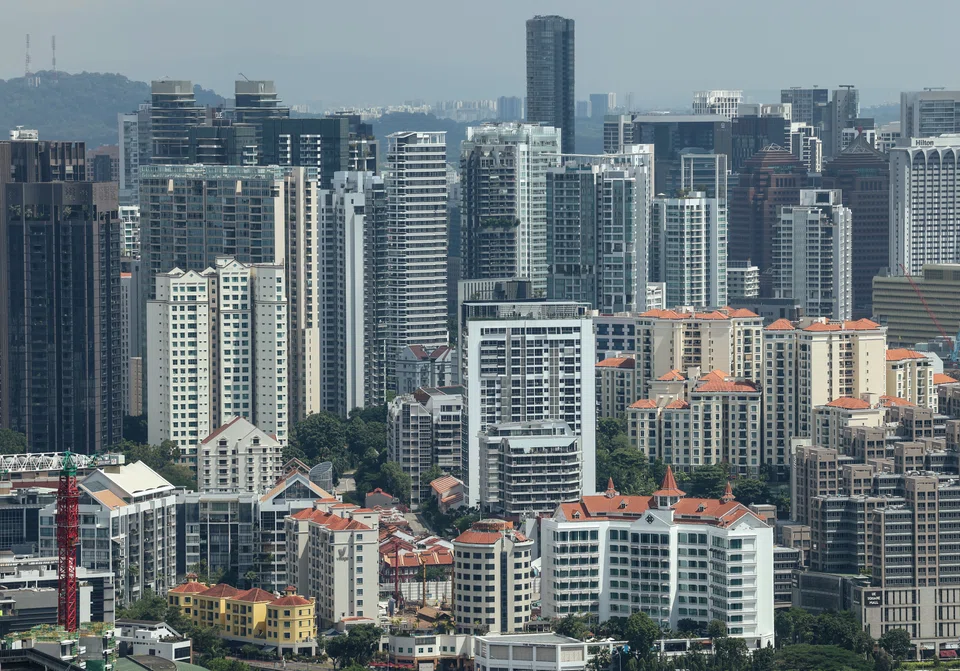
[SINGAPORE] Private home prices rose at their fastest pace in seven quarters in the third quarter of 2026 while buying activity slowed considerably, but sales momentum is expected to pick up in the fourth quarter with several major project launches coming to market.
The Urban Redevelopment Authority’s price index for private residential properties rose 1.4 per cent in Q3, accelerating from 0.5 per cent in the previous quarter and lifting nine-month price growth to 2.8 per cent.
The stronger price growth came despite a pullback in transaction volume, as the lunar seventh month partly curtailed activity while overall sentiment was muted.
The pullback in sales was especially prominent among developers’ new home sales, with 1,183 new private homes (excluding executive condominiums) sold in Q3, down 44.7 per cent from Q2. They launched 1,140 units, down 36.1 per cent from 1,783 in Q2.
While Q3 is a seasonally slow quarter, analysts noted that home sales were also lower year on year. “On a quarterly basis, sales volume slowed across all types of sales in Q3 2026,” said Wong Xian Yang, Cushman & Wakefield’s head of research for Singapore and South-east Asia, pointing out that sub-sales fell 16.5 per cent and resale transactions dipped 0.3 per cent on quarter.
Total sales volumes for the first three quarters of 2026 reached 16,707 units, some 16 per cent lower compared to the same period last year, Wong added.
Most expect the year to close with a developer sales tally of 7,000 to 8,000 new units. This would be “a moderation after above-trend sales of 10,815 units in 2025 and is below the five-year average (2021 – 2025) of 8,766 units”, noted Tricia Song, CBRE head of research for Singapore and South-east Asia.
Upcoming launches
While take-up slowed in Q3, “sales momentum is expected to pick up in Q4”, said Song.
The final quarter will see three major launches – Lucerne Grand in Lakeside, The Serra Residences in Novena and Thomson Reserve in Upper Thomson – collectively adding nearly 2,000 private homes.

Thomson Reserve, a 1,268-unit mega-development in the Rest of Central Region (RCR), will launch on Oct 31 with prices starting at S$2,608 per square foot (psf).
Christine Sun, chief researcher and strategist at Realion (OrangeTee & ETC), expects Thomson Reserve to lift the overall price index in Q4, given its size and expected pricing. As at its preview on last Saturday (Oct 17), the project has seen 23,000 visitors passing through its showflat doors, with agents expecting to see a strong sales response.
As higher new launch prices raise the bar on affordability, the resale market is likely to get busier. Wong Shanting, head of research at Newmark, said: “Higher new home prices could make resale private homes more attractive to buyers. The removal of the 15-month wait-out period could also steer some private homeowners towards HDB resale flats, particularly those looking to rightsize.”
Consequently, Newmark raised its forecast for combined resale and subsale transactions to 14,000 to 15,000 units, from 13,000 to 14,000, citing higher home completions and the widening price gap between new and resale properties.
Despite a more cautious buying sentiment, limited inventory continues to underpin prices, said Cushman & Wakefield. Unsold inventory rose 26.7 per cent quarter on quarter to 19,076 units, but remained below the 10-year average of 21,498 units.
Cushman & Wakefield’s Wong said the stock level continues to support developers’ appetite for land, “although bidding has become more selective”.
Analysts are forecasting that home prices will end the year with a 3 to 5 per cent gain.
Landed homes, and non-landed properties in Outside Central Region (OCR) led price growth in Q3, rising 2.9 per cent and 2.3 per cent respectively. Prices in the Core Central Region (CCR) increased 0.3 per cent, while those in the RCR were unchanged.
Marcus Chu, CEO of ERA said Dunearn House and Lentor Gardens Residences each sold more than 60 per cent of their available units, contributing to the price index’s growth.
Mark Yip, chief executive of Huttons Asia, noted that non-landed home prices in the OCR had risen 4.4 per cent in the first nine months of 2026, exceeding the 3.2 per cent increase for the whole of 2025. At the same time, OCR transaction volume fell 27.2 per cent in Q3, which he attributed to “affordability concerns” among buyers.
Rental outlook
The rental market, meanwhile, picked up some steam as rents rose 1.3 per cent in Q3, up from 0.7 per cent in the previous quarter. The growth was uneven however, driven largely by a 3.1 per cent jump in the OCR mass market, while CCR rents slipped 0.3 per cent.
The vacancy rate for completed private homes increased to 7.2 per cent from 6.4 per cent, following a rise in completed housing stock. Yet leasing activity remained strong, with PropNex highlighting that 28,423 rental contracts were signed in Q3, the highest quarterly figure on record since 1995.
Cushman & Wakefield expects private residential rents to rise by up to 3 per cent in 2026, compared with the 1.9 per cent increase in 2025, “supported by a constrained supply pipeline and steady demand from international students”, Wong said. He notes that 7,783 new private residential units are expected to be completed in 2026, significantly below the 10-year annual average of 10,837 units.
CBRE’s Song, who forecasts 2 to 3 per cent full-year rental growth, cautioned that “leasing may take longer as tenants become more selective and landlords compete for quality occupants, especially amid slower hiring conditions”.
Realion’s Sun noted: “AI has reshaped the employment landscape, potentially displacing some workers, while creating new roles and attracting AI-related businesses and talent to Singapore.”
Decoding Asia newsletter: your guide to navigating Asia in a new global order. Sign up here to get Decoding Asia newsletter. Delivered to your inbox. Free.
Copyright SPH Media. All rights reserved.