

Keppel Reit to buy 51% stake in Keppel South Central for S$610.9 million
Trust will have a guaranteed monthly income of S$2.23 million from the property for up to five years

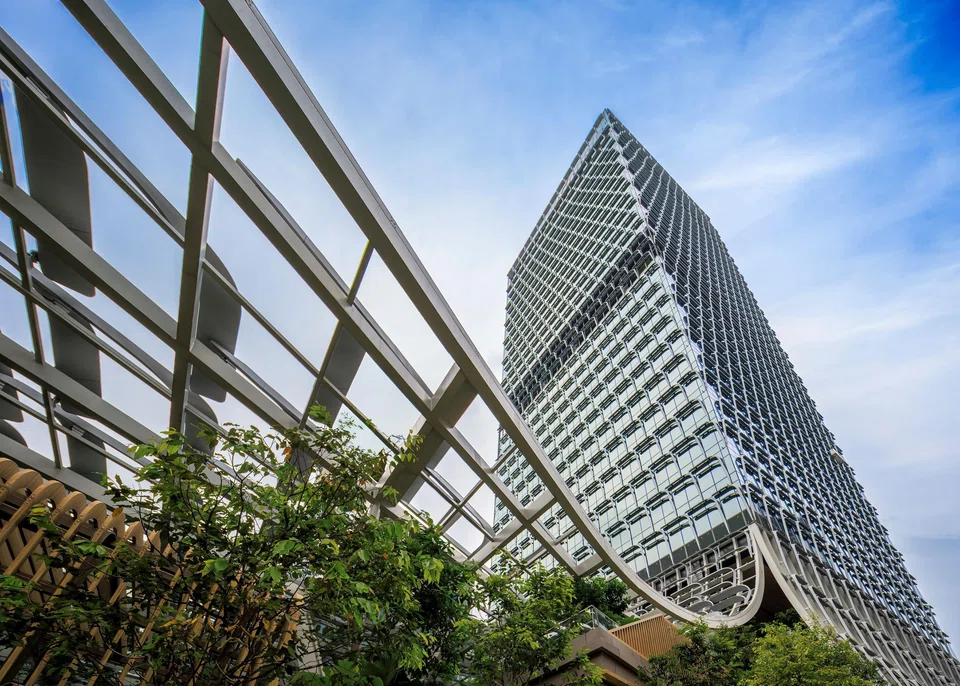
[SINGAPORE] Keppel Reit is buying a 51 per cent stake in Keppel South Central from its sponsor Keppel for a purchase consideration of S$610.9 million. This will strengthen its footprint in Singapore’s prime office market, the real estate investment trust’s (Reit) manager said on Tuesday (Oct 20).
The total value of the 33-storey Grade A commercial building in the Central Business District (CBD) stands at about S$1.2 billion. With 522,500 square feet of net lettable area, this translates to an overall building valuation of about S$2,350 per square foot (psf).
Based on this total valuation, the agreed property value for Keppel Reit’s 51 per cent interest on a 70-year leasehold basis is S$626.2 million.
“The proposed acquisition of Keppel South Central increases our presence in Singapore to 82 per cent,” said Chua Hsien Yang, CEO of Keppel Reit Management. “(It) reinforces Keppel Reit’s leading position in this supply-constrained CBD office market, which continues to benefit from resilient business demand and limited new supply.”
Investment banking firm Jefferies maintained a “hold” on Keppel Reit after the deal was announced, and kept its target price at S$0.85.
“We like the redeployment of proceeds from lower-yielding Japan and (South) Korea divestments into a higher-yielding Singapore asset,” said its analysts. “However, potential equity fundraising could create a near-term overhang, while the income support structure may raise questions around the asset’s underlying earnings yield before stabilisation.”
Completion of the deal will be subject to the approval of unitholders at an extraordinary general meeting, expected to be held in the fourth quarter of this year.
The transaction, which includes the repayment of S$462.1 million in existing shareholder loans, is expected to be completed in the second quarter of next year.
The manager of Keppel Reit said the acquisition offers a pro forma distribution per unit accretion of 2.01 per cent and an “attractive” initial property yield of 4.3 per cent.
SEE ALSO
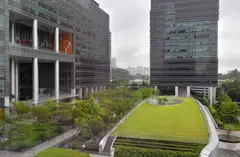

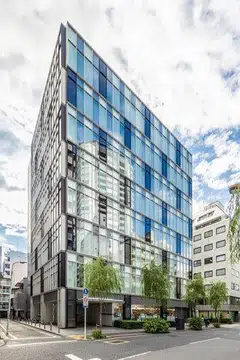

Had the proposed acquisition of Keppel South Central and the divestments of both T Tower in Seoul and KR Ginza II in Tokyo been completed on Jun 30, Keppel Reit’s portfolio occupancy would be 93.9 per cent.
The portfolio would also a weighted average lease expiry of 4.5 years, added the manager, and would comprise 13 properties with a total value of about S$12.1 billion across Singapore and Australia.
An arrangement with Keppel’s wholly owned subsidiary K-Commercial Investment will provide the Reit with a guaranteed monthly income of S$2.23 million for up to five years – supported by current rents at Keppel South Central.
Committed leases and leases which are in the process of documentation for the property comprised 52.7 per cent of net lettable area at an average rent of about S$11.30 psf per month as at Sep 30.
This is above the rent of S$11.15 psf per month assumed under the arrangement, said Keppel Reit Management. The average rent “largely reflects leasing activity on the lower-to-mid floors, with potential for higher rents from the remaining available space on the mid-to-high floors”, it added.
As at Oct 15, committed leases and leases which are in the process of documentation for Keppel South Central increased to about 60 per cent.
Keppel Reit’s manager said it intends to fund the acquisition through a combination of bank loans, perpetual securities, internal cash and/or equity financing, with post-acquisition aggregate leverage expected to be 39.2 per cent.
Units of Keppel Reit closed flat at S$0.825 on Monday.
Decoding Asia newsletter: your guide to navigating Asia in a new global order. Sign up here to get Decoding Asia newsletter. Delivered to your inbox. Free.
Copyright SPH Media. All rights reserved.
TRENDING NOW

Ageing in Asia: Huge potential for the consumer economy

Data centre infrastructure firm Elice’s 33% plunge in ‘ugly debut’ rekindles AI spending doubts
No chicken feed: How Malayan Flour Mills built an empire from flour to fowl

Once staunchly pro-China, Malaysian Chinese businesses are now distancing themselves from Beijing

