

Londoners complain of ‘unbearable heat’ in city’s modern housing
The culprit is box-style apartment buildings with sheer facades and huge windows
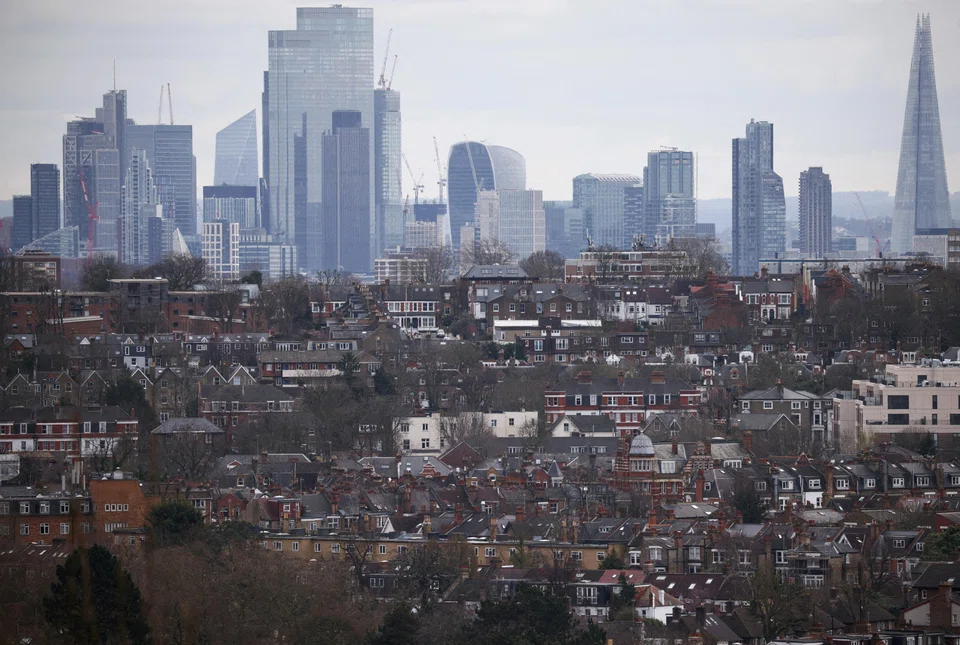
[LONDON] In Britain’s capital city, an architectural trend that started about two decades ago is now being linked to unbearable levels of indoor heat.
The culprit is box-style apartment buildings with sheer facades and huge windows, often only on one side so there is no way to create a through-draft. And with temperatures this week set to rise to around 35 degrees Celsius (deg C), those living in such designs say they are struggling to cope.
Alex Long, a 26-year-old video editor, lives in a three-bedroom apartment in a modern development in Bermondsey, south London. His living room has large south-facing windows that cover almost the entire length and height of one of the walls.
“Sunrise to sunset, our flat is being absolutely blasted by the sun at all times,” he says. He and his roommates avoid the living room in the summer, Long said.
“It’s just so hot and you can’t escape it,” he said. “It’s such an unbearable heat.”
The architectural style – sometimes referred to as New London Vernacular – has emerged as a particularly challenging design against the backdrop of rising temperatures. Tom Dollard, an architect at Pollard Thomas Edwards and director of the Good Homes Alliance, an industry group, says that in some cases, “even a massive air-conditioning unit” can’t help.
And even if air-conditioning could be relied upon to fix the issue, the office of London Mayor Sadiq Khan has said it expects the city’s residents to explore other options first. It worries that the added energy consumption of widespread air-con use would raise greenhouse gas emissions and contribute to urban heat islands, as the hot air sucked out of buildings gets pushed onto city streets.
Back when New London Vernacular homes were first erected en masse across the capital, the idea was to get away from the perceived shortcomings of earlier styles. The new aesthetic was all about drawing in light while still creating homes that echoed the city’s historic architecture.
A push for new homes by the city’s government while Boris Johnson was its mayor underpinned the trend. The Greater London Authority tried to create more and denser housing in tight urban sites, while building regulations intended to preserve energy and guarantee daylight meant “architects introduced larger windows”, says Judith Loesing, a director at London-based East Architecture. “That often leads to overheating without appropriate external shading in summer.”
SEE ALSO



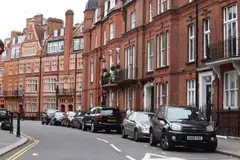
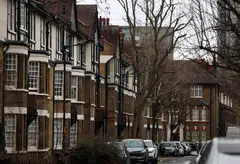
Policymakers and academics are aware that change is needed to make Londoners’ lives more bearable in the age of climate change. The office of the Mayor of London is due to publish a report on Thursday (Jun 25) that’s expected to lay out some of its plans for how to tackle urban heat.
A spokesperson for the Mayor of London said that with extreme heat “becoming more common because of climate change”, the mayor is working closely with other local authorities and emergency services to ensure the city is prepared.
Jon Winder, a historian at the University of Liverpool who’s been researching the issue, has just published his findings based on interviews with Londoners living in overheating homes. He says the feedback was sobering. Many interviewees say it can feel “life-threatening”, Winder said.
In one case, a family’s triple-glazed windows shattered in the heat, he said. They feel they can no longer use their living area or invite friends over “because the building was just too hot”, Winder said. And for people who are less mobile due to disabilities or sickness, rising temperatures in such buildings can be downright dangerous, he said.
Dollard says especially if a building is south-west-facing, has an internal corridor behind it and communal heating, then “there’s nothing you can do to prevent that from overheating”.
Meanwhile, access to cooling remains sporadic across the country. Though adoption of air-con units has doubled over the past three years, it’s still only installed in 7 per cent of UK homes. Another 8 per cent have portable units, which are cheaper to buy but less efficient and costlier to run.
Regulations introduced in 2021 were supposed to address the issue of overheating in newly built homes.
But Dollard says he continues to identify problems. That’s because developers tend to skip measures such as shades or external shutters, which are simple but effective ways to protect tenants from heat, he said.
With the UK experiencing a faster pace of warming than the global average, those living in the current stock of modern buildings with huge windows say they’re now worried about their ability to function.
Faiz Abbas, 31, a software engineer, says he has struggled to sleep and work from home in his two-bed apartment in south London.
“It’s hard to concentrate. I don’t like to sweat at my desk,” he says.
His building, which has floor-to-ceiling windows in the living room and was new when he bought it in 2019, has mechanical ventilation. But Abbas says it doesn’t reduce the temperature.
Joseph Dowling, a 47-year-old video-game developer who lives a few kilometres away in a similar development with his wife and baby daughter, said his family struggled after London temperatures breached 40 deg C in 2022, a history-making moment for the city.
Once the temperature surpassed 27 deg C or 28 deg C, “the heat just wouldn’t leave,” he says. Both he and Abbas say they’ve since invested in air-conditioning.
A part of the city that’s seen a proliferation of New London Vernacular design is the area around Olympic Park, where the UK hosted the 2012 games. A survey conducted by the London Legacy Development Corporation (LLDC) found that only 39 per cent of people living in Chobham Manor, a complex of 880 flats and houses on the Olympic Park site that was fully completed in 2022, considered their homes comfortable in the summer.
Indoor temperatures regularly exceed 26 deg C, and most bedrooms are too hot, according to the LLDC survey, which is due to be published next month (an earlier pilot study was made public last year). One resident said they had to sleep on the balcony during the summer in order to stay cool.
Esther Everett, director of place-making at the LLDC, says future building designs need to take these experiences into account to avoid repeating the same construction mistakes.
The LLDC is now carrying out research, funded by the Mayor of London, to test whether external shading features like shutters and louvres can help solve the problem.
“We now know a lot more than we did, but as an industry, we’re still on a journey in terms of understanding overheating,” Everett said. BLOOMBERG
Decoding Asia newsletter: your guide to navigating Asia in a new global order. Sign up here to get Decoding Asia newsletter. Delivered to your inbox. Free.
Share with us your feedback on BT's products and services
TRENDING NOW

DBS, OCBC, UOB rout lops billions off STI as inflation, rate concerns spook investors

Grab CEO’s wife Chloe Tong on life with Anthony Tan and finding her purpose

OCBC sheds S$8 billion in value as shares close nearly 6% down; analysts cautious on banks

Deal between tycoon friends sparks scrutiny of Philippine power sector

