

New EC rules to cool prices: MOP doubled to curb flipping, no more deferred payments and more units for first-timers
Land bids, new launch sales expected to slow with first-timer priority raised to 90% of units, extended to 2 years

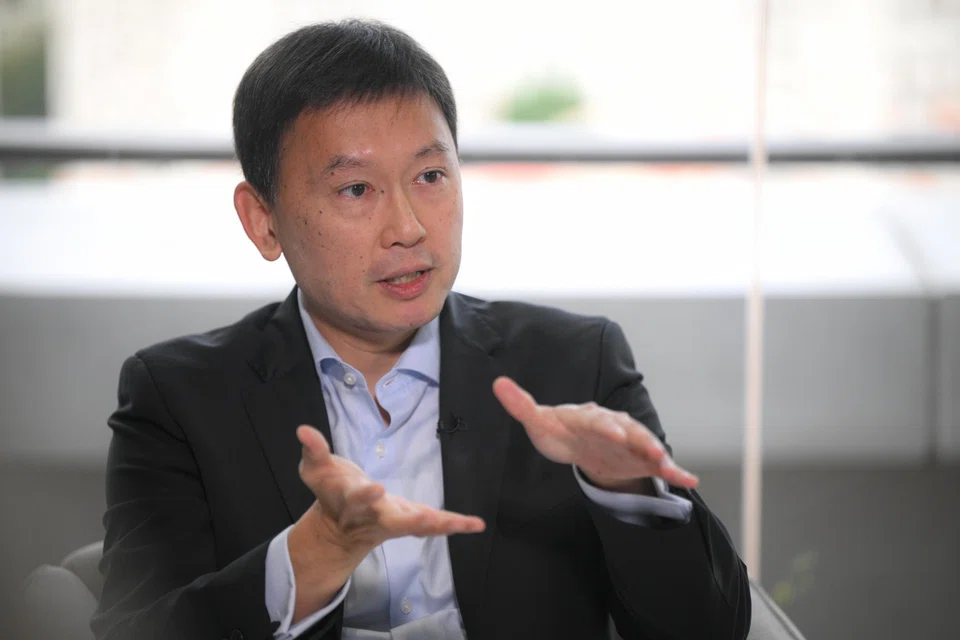
[SINGAPORE] The government has tightened rules for Singapore’s executive condominium (EC) market amid heated demand, with measures aimed at improving affordability and curbing “flipping” on resale.
Prices of new ECs, first introduced in 1995 as a more affordable public-private hybrid housing type, have risen sharply in the last few years, along with land bids.
Sellers have pocketed significant gains on resale as demand builds against a limited stock of new supply, with units often doubling in price when they are sold after a required five-year minimum occupation period (MOP).
The MOP for ECs will now be extended from five years to 10 years before an owner can sell their unit, and the deferred payment scheme for new EC projects will be scrapped, National Development Minister Chee Hong Tat announced on Friday (May 8).
In addition, the required quota of new units reserved for first-time buyers will be raised from 70 per cent to 90 per cent, and the priority period for first-timers extended significantly from one month to two years.
The new measures will apply to all EC projects on government land sale (GLS) sites with tender closing dates on or after May 8, Chee said. The minister was speaking at the opening of the National University of Singapore Institute of Real Estate and Urban Studies Urban Housing Symposium 2026.
“We hope this will result in developers reducing their land bids and the prices for their ECs, as they can only sell 90 per cent of their units to first-timers during the first 39 months from the date of award of the site, before the developer additional buyer’s stamp duty (ABSD) clawback kicks in at the five-year mark, or up to the six-year mark if the project is eligible for prevailing ABSD remission timeline extensions,” said Chee.
ECs are built on state land sold to private developers in tenders. Projects are priced about 20 to 30 per cent below comparable private condos due to eligibility and ownership restrictions similar to public housing, such as a S$16,000 income ceiling and MOP.
The government’s moves come some six weeks after the latest EC launch, Rivelle Tampines, sold 93 per cent of its 572 units at an average price of S$1,893 per square foot (psf). Prices started at just under S$1.6 million for three-bedroom units, and went up to over S$2.5 million for the largest five-bedders.

Bidding is expected to turn more conservative as developers take stock of how pricing and sales may be affected.
The extension of the first-timers’ priority period to two years, in particular, could drag on launch sales. Inventory unsold by the end of the current one-month first-timer priority period is typically snapped up by second-time buyers quickly.
Two EC sites are on offer in the GLS calendar this year: a Canberra Drive site to be released for tender in May and a Sembawang Drive site to be offered in June.
In line with strong sales at recent launches, bids for EC project sites have climbed to fresh highs. Bidders for two Woodlands plots pushed EC land prices to S$782 psf per plot ratio (ppr) in August 2025, then S$794 psf ppr in January 2026.
The revisions to the EC scheme follow a recent government review as concerns escalate over a market growing increasingly hot. Supply is also being ramped up, with more sites being released for sale.
Rising prices, resale gains
“In 2021 to 2025, among ECs that were transacted on the open market, about 75 per cent were sold within five years after their MOP, up from 45 per cent over the preceding five-year period,” said Chee.
Conceptualised as a public-private hybrid housing type to meet demand for private home ownership, EC prices have climbed steadily over the years.
PropNex data showed that median prices of new ECs surged 120 per cent from S$797 psf in 2015 to S$1,754 psf in 2025, outpacing the 96 per cent increase in new Outside Central Region (OCR) 99-year non-landed private homes, whose prices rose from S$1,150 psf to S$2,252 psf over the same period.
As at Apr 26, median prices stood at S$1,843 psf for new ECs and S$2,278 psf for new OCR 99-year non-landed homes.
Buyers of new ECs will now need to fulfil a 10-year MOP before they can rent out their whole unit, purchase another residential property, or sell their EC unit to Singapore citizens and permanent residents.
ECs will now only be fully “privatised” after 15 years, when owners can then sell to any buyer, including foreigners and corporate entities.
In the secondary market, EC transactions now regularly pop up as the biggest percentage gainers. The most profitable deals show units doubling in price on resale, yielding gross gains of more than S$1 million for sellers.
In every quarter since Q1 2023, ECs have topped resale percentage gains and grown increasingly profitable, based on data crunched for The Business Times by Cushman & Wakefield.
In Q1 this year, the top five profitable deals recorded gains of 130 to 140 per cent. In Q1 2023, two of the top five profitable deals recorded percentage gains of 83 to 86 per cent.
The end of deferred payments
The Ministry of National Development (MND) is scrapping the deferred payment scheme for ECs, where buyers pay 20 per cent of the purchase price upfront and the remaining 80 per cent is deferred until the project obtains its temporary occupation permit.
Buyers who opt for the scheme typically incur a 2 to 3 per cent premium over the EC unit purchase price, said MND.
“To encourage financial prudence and to align with the arrangements for other uncompleted private residential properties, developers can no longer offer the deferred payment scheme for uncompleted ECs,” said Chee.
The normal payment scheme, where buyers pay the purchase price progressively based on construction milestones, will apply to all EC homebuyers.
Prioritising first-timers
The government will also increase first-time homebuyers’ quota to 90 per cent and extend the priority period to two years.
This will provide greater support for young married couples and families looking to buy their first homes, with first-timers having a “better chance of securing ECs”.
Over the past few years, the proportion of first-time EC buyers has decreased, relative to second-timers who have larger housing budgets from the sale proceeds of their first home. In 2020, about half of EC buyers were first-timers. In 2024 and 2025, the proportion dropped to between 30 and 40 per cent, said Chee.
Currently, 70 per cent of EC units are reserved for first-time homebuyers during the first month from the project’s date of launch. After the one-month period, developers can sell the remaining units to all eligible buyers, including second-time buyers.
While industry watchers have called for the income ceiling for EC buyers to be increased, the government left the threshold of S$16,000 unchanged. Chee said in September last year that the authorities were reviewing the income ceiling for public housing.
Decoding Asia newsletter: your guide to navigating Asia in a new global order. Sign up here to get Decoding Asia newsletter. Delivered to your inbox. Free.
Copyright SPH Media. All rights reserved.






