Peter Kwee loses appeal to reclaim properties in daughter’s name; judges rule trust was ‘illegal’
Appeal judges find he retained beneficial ownership, trust was set up with fraudulent intent to hide assets from creditors

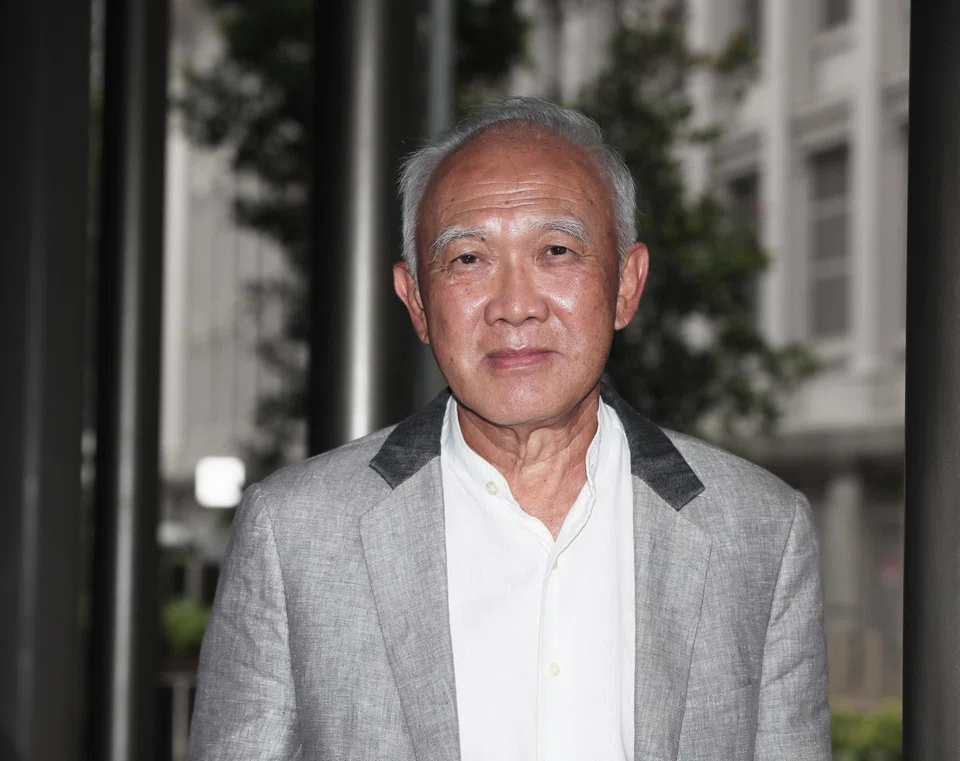
[SINGAPORE] Motoring tycoon Peter Kwee has lost his appeal bid to reclaim five properties registered in his daughter’s name, as the trust was set up to conceal assets from creditors and hence illegal and not enforceable in the eyes of the law.
The appeal judgment follows a 2025 trial where Peter Kwee lost his lawsuit against Karen Kwee’s bankruptcy trustee, Lai Seng Kwoon. It resulted in the trial judge denying the elder Kwee’s claims to properties placed in trust under his daughter.
At that trial, the judge found that Peter Kwee had made a gift of the properties to his daughter, who was thus the beneficial owner of the assets. Peter Kwee subsequently appealed against that decision.
In its judgment delivered on Wednesday (Nov 18), the Court of Appeal found that Peter Kwee retained the full beneficial interest in the properties under the trust arrangement.
But it dismissed his appeal because the arrangement was set up to conceal his assets from creditors, making the trust “void and unenforceable” as being “illegal and contrary to public policy”.
The court said a trust established by a beneficiary to hide assets from creditors was rooted in “dishonest and fraudulent intent”, and ran contrary to the principles of equity and public policy.

The decision overturned a key finding by the High Court, which had ruled in March 2025 that the properties were gifts and Karen Kwee was their beneficial owner.
The Court of Appeal disagreed, finding instead that both father and daughter shared an understanding that Peter Kwee would remain the beneficial owner.
The five properties – West Georgia and Lord Stanley in Canada, King’s Drive and Teneriffe in Singapore, and Spyglass Grove in Australia – were bought between 1995 and 2000, and registered in Karen Kwee’s sole name.
Peter Kwee, a seasoned businessman who had been buying and investing in properties for decades, told the court that he had a “name placing agreement” with family members to place properties under their names while he continued to manage them.
The Court of Appeal found that the full statement, including his intention to decide how to split the assets within the family, supported the conclusion that Peter Kwee had retained the full beneficial interest rather than gifted the properties to Karen Kwee.
The court pointed to Peter Kwee’s extensive control over the properties.
He decided which properties to buy, negotiated mortgage loans and handled refinancing, while Karen Kwee generally signed documents at his instruction.
The court also noted that she had not made significant financial contributions towards the purchases.
Peter Kwee had also used the properties for his own purposes. In 2009, for instance, he instructed Karen Kwee to take out a second mortgage on Spyglass Grove following the Lehman Brothers crisis, and used the loan proceeds for his business.
He had initially used the property as his Australian residence and as a holiday home for his family.
But establishing that he remained the beneficial owner did not resolve the case in his favour.
The court found that Peter Kwee’s intention in placing the properties under Karen Kwee’s name was to conceal his beneficial ownership from both tax authorities and creditors.
It said this was the only logical inference that reconciled his stated aims of avoiding estate duty and shielding the properties from creditors with his insistence that he had retained ownership.
As the creditor-concealment purpose was decisive, the court held that the trust fell within a category of arrangements that were unlawful per se and therefore void and unenforceable.
The case
The dispute came to a head after Karen Kwee and her former husband, Daniel Ou, entered into an agreement in February 2020 to borrow S$4.1 million from Thomas Woo and Paul Jonathan Grange.
They failed to make payments under the agreement, prompting the lenders to commence arbitration proceedings and obtain an award against them.
A statutory demand was served on Karen Kwee in May 2022. She was adjudged bankrupt in October that year, and Lai was appointed her private trustee in bankruptcy in February 2023.
Peter Kwee then sought declarations that Karen Kwee held the properties, other than King’s Drive, and money in three bank accounts on trust for him.
He also pursued a separate counterclaim over King’s Drive. The High Court dismissed his claims, prompting the appeal.
The Court of Appeal also considered whether Peter Kwee could rely on the doctrine of locus poenitentiae – which may allow a party to withdraw from an illegal arrangement – to recover the assets.
Peter Kwee argued that he had demonstrated such a withdrawal by selling another property, Claymore, in 2010 and using the proceeds to alleviate his financial difficulties.
He also pointed to his disclosure of the trust arrangement during the court proceedings.
The court rejected both arguments. It found that the Claymore sale was driven primarily by “financial necessity” rather than a “genuine intention to resile from his illegal purpose”.
The court also said that Peter Kwee had disclosed his beneficial interest in the properties only because Karen Kwee’s bankruptcy had compelled him to do so, and that there was no evidence he would have withdrawn from the arrangement had she remained solvent.
The court also left open whether the intention to evade estate duty could independently render the trust invalid. It said this was “unnecessary to come to a conclusive view” because the purpose of concealing the properties from creditors was already sufficient.
As the trust was unenforceable, the rental proceeds from the properties – which made up the bulk of the money in the three bank accounts – belonged to Karen Kwee, the court said.
With the appeal dismissed, Peter Kwee was ordered to pay Lai S$80,000 in costs.
Decoding Asia newsletter: your guide to navigating Asia in a new global order. Sign up here to get Decoding Asia newsletter. Delivered to your inbox. Free.
Copyright SPH Media. All rights reserved.