Quicker hiring process for migrant construction workers from 2027 amid strong building demand
This will shorten the hiring process from four months to one month
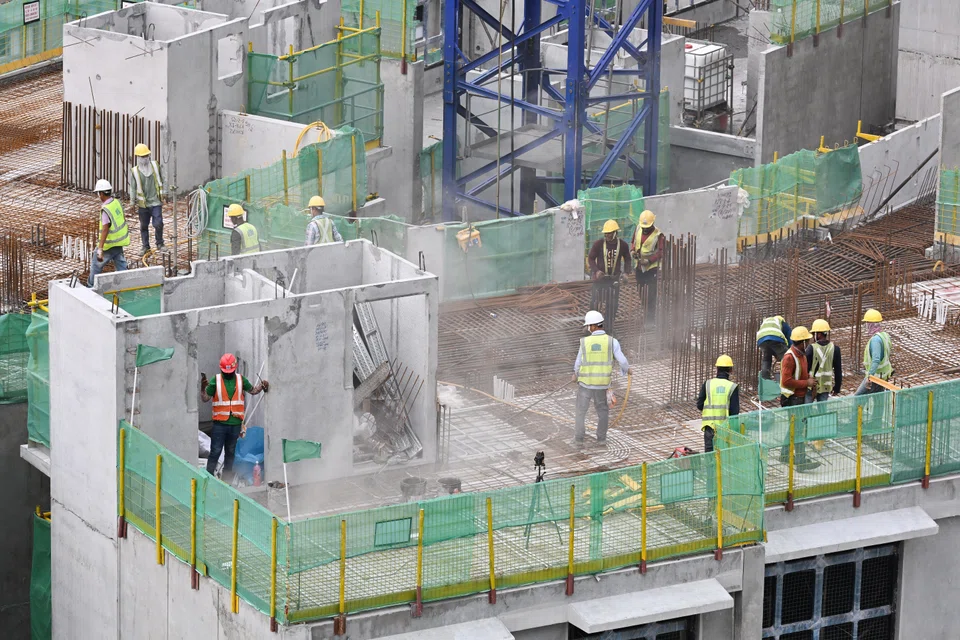
[SINGAPORE] The hiring process for construction firms bringing in foreign workers will be shortened by three months from 2027, in response to industry feedback on inefficiencies in the current system, said National Development Minister Chee Hong Tat.
From January 2027, new construction work-permit holders from China and Thailand will no longer have to undergo tests for a competency certification in their home countries before entering Singapore, Chee said on Apr 30.
This will shorten the hiring process from four months to one month, said Chee at the BuildSG Lead Summit held at Gardens by the Bay. The shorter hiring process will be extended to the remaining countries from which Singapore draws construction workers – such as India, Sri Lanka, Bangladesh and Myanmar – from January 2028.
Workers will instead be tested on their trade knowledge and practical skills in Singapore, and firms must reserve a test slot for them to obtain a skills evaluation certificate before they enter the country.
“Given the strong construction demand in the coming years, it is important that we find ways to facilitate a smoother and more expedient inflow of skilled new construction workers,” Chee said.
As at December 2025, there were 482,600 work-permit holders in the construction, marine shipyard and process sectors here.
This move is among the initial measures by a working group formed in February to improve productivity in the built environment sector.
The group, chaired by Chee, comprises representatives from government agencies and the industry, including developers, consultants, contractors, facility managers and academics.
Chee said the group held its first meeting earlier in April and identified several areas to work on, including improving industry practices to lift productivity and encourage investments in innovation, and addressing skill gaps and labour shortages.
SEE ALSO




The industry, he added, had given feedback that the overseas certification requirement prolongs the time needed to bring in new workers, and that workers’ skills and certification often do not match the needs of their deployment.
To incentivise firms to train and certify workers, the Building and Construction Authority (BCA) and the Ministry of Manpower will from January 2028 impose higher levy rates for new workers who are not certified within the first six months of getting their work permit.
They will not be allowed to renew their work permit if they are not certified after a year.
Turning to construction productivity, Chee said greater design standardisation across projects will improve efficiency.
This can be done through the Kit-of-Parts approach, where buildings’ precast components are standardised across projects of similar types, like Lego bricks, he said.
To encourage this, BCA will introduce a streamlined approval process on Apr 30, in which developers adopting this approach will need to submit only one design standardisation plan and a catalogue of components.
This proposal will cover other building projects in the pipeline, and the developer does not have to submit separate applications for each project. Chee said this could save consultants around 320 man-hours per project.
The Kit-of-Parts approach will also help reduce manufacturing costs for precast components by at least 10 per cent, and reduce manpower by at least 20 per cent, he noted.
In the same vein, the Housing & Development Board is developing a catalogue covering a range of standard precast components, which will be used across its projects, such as Build-To-Order (BTO) flats and multi-storey car parks, Chee said.
“This will enable greater supply resilience, reducing project delays due to supply disruptions,” he said. The design of the developments will still be flexible, so as to create distinct BTO projects and HDB towns.
Chee also provided an update on a two-way feedback channel between consultancy firms and government agencies.
He had previously said the rating system, in which public-sector agencies give built environment consultants a score based on their performance, should be a “two-way street”, for a fairer system.
He was referring to the Consultants’ Performance Appraisal System, where agencies evaluate the consultants’ performance every six months throughout a project.
Firms with better scores have an advantage in securing tenders, while those with low scores are delisted from the Public Sector Panels of Consultants for three months.
Chee said a feedback channel was rolled out on BCA’s website in March, allowing firms to raise issues about a project to BCA.
An annual survey, where consultancy firms can rate and provide feedback on public-sector agencies they are working with, will be launched in May.
“I encourage all consultancy firms to make good use of the new feedback platforms to help us identify areas for improvement,” said Chee. The 2026 BuildSG Lead Summit, attended by built environment professionals, focuses on how artificial intelligence is reshaping the sector. THE STRAITS TIMES
Decoding Asia newsletter: your guide to navigating Asia in a new global order. Sign up here to get Decoding Asia newsletter. Delivered to your inbox. Free.
Share with us your feedback on BT's products and services