

URA to review guidelines on floor space to give developers more design flexibility: Chee Hong Tat
The GFA relook comes in response to industry feedback

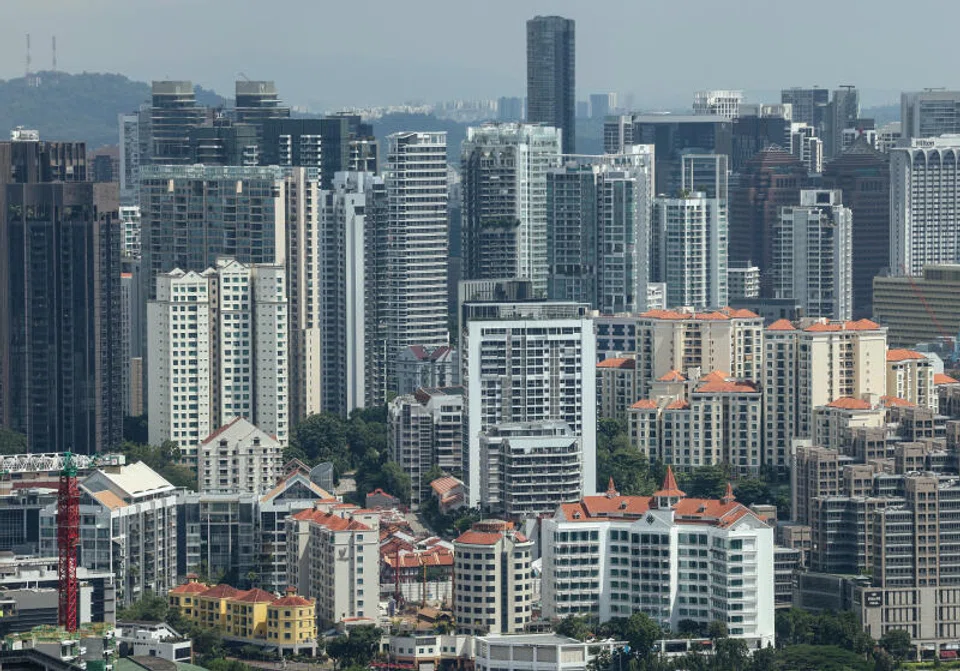
[SINGAPORE] The government is reviewing guidelines on building floor space to give developers greater flexibility in building design, a move which could improve development potential and project viability.
The review of guidelines on gross floor area (GFA), announced by Minister for National Development Chee Hong Tat on Monday (Sep 21), will also look at encouraging building features that support heat resilience and thermal comfort.
A higher volume of allowable GFA, or greater flexibility in the mix of use of GFA, can significantly improve development potential and the economics of a project. Recent discussions have also floated the award of extra GFA to encourage the renewal of conservation properties.
The ongoing review by the Urban Redevelopment Authority (URA) comes in response to industry feedback, said Chee, who is the deputy chairman of the Inter-Ministerial Committee on Pro-Enterprise Rules Review. He was speaking at the opening of the Singapore Corporate Awards 2026. Details on the review will be shared when ready.
Policy and regulation must keep up with the changing business environment, the minister said. At the same time, being pro-enterprise “does not mean having fewer rules”. It calls for a risk-proportionate approach to balance different trade-offs and objectives, he added.
“It means having better rules: rules that achieve the desired regulatory outcomes, while minimising unnecessary costs, time delays and friction for businesses.”
The volume of covered floor area that developers can generate on any piece of land is generally capped by plot ratios assigned to the land being developed, which vary with planned use. However, bonus GFA can be dished out via various existing incentive schemes.
For one, the CBD Incentive Scheme offers higher development intensity to encourage the conversion of older office buildings in parts of the Central Business District into mixed-use developments, including more residences and hotels.
Eligible developments in Anson and Cecil Street can get up to 30 per cent more GFA, while those in Robinson Road, Shenton Way and Tanjong Pagar can get up to 25 per cent more.

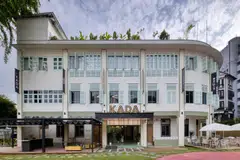
Another scheme, the Strategic Development Incentive (SDI) scheme, similarly encourages the rejuvenation of older buildings in areas such as Orchard Road and Marina Centre. The SDI allows greater flexibility in planning parameters, including plot ratio, GFA and land use.
The use of GFA as a planning incentive was among issues raised at an industry conference on Sep 15; Pontiac Land CEO David Tsang pointed to Sydney’s approach to encouraging the upkeep of heritage buildings.
At the Urban Land Institute Singapore Annual Conference, Tsang said owners who maintain heritage buildings in Sydney can be awarded additional floor space that can be used on another site or sold.
His remarks were recounted in a LinkedIn post on Sep 16 by panel moderator Jaelle Ang, founder and managing partner of The Possible Capital.
In Sydney, building owners are rewarded for continued investment in their properties against agreed targets, Tsang said. He contrasted the approach with that of Singapore, saying: “Here, there seems to be more incentive for a building that’s run down and needs redevelopment than for one that’s been cared for.”
Pontiac Land took on a major heritage project in Sydney, after securing a long-term lease from the New South Wales government in 2015 for two heritage-listed former government buildings.
Seven years of planning, conservation and renovation followed before the Department of Education building reopened in 2023 as the 192-room Capella Sydney. Pontiac also restored the adjoining Department of Lands building as The Lands by Capella, which includes retail, dining, workspace and event spaces.
In a LinkedIn post on the conference, Tsang said: “A resilient urban core isn’t just about office density or square footage; it’s defined by how people experience space beyond 6 pm.”
He added: “To stay relevant on the global stage, our CBDs must seamlessly blend economic performance with livability, intentional design, and authentic cultural character.”
In his speech at the SCA dinner on Monday, Chee also announced a new framework to reduce the testing required for reinforcement steel bars, or rebars, used in construction projects.
Currently, rebars can be subjected to repeated testing on a project-by-project basis, even when they come from the same certified source.
Under the new framework, testing can instead be carried out by accredited laboratories before the rebars are shipped, a process that could cut testing and associated costs by up to 90 per cent, Chee said.
The minister also announced a new initiative to help built-environment firms redesign jobs and equip workers with sustainability-related skills, to draw more people into the decarbonisation sector.
It will support firms in areas including sustainable construction and carbon accounting. Fifteen firms have joined the initiative so far.
Decoding Asia newsletter: your guide to navigating Asia in a new global order. Sign up here to get Decoding Asia newsletter. Delivered to your inbox. Free.
Copyright SPH Media. All rights reserved.
TRENDING NOW

Malaysian king buys stake in Singapore-listed mining firm expanding into rare earths

Grab CEO’s wife Chloe Tong on life with Anthony Tan and finding her purpose

Once staunchly pro-China, Malaysian Chinese businesses are now distancing themselves from Beijing
Longer wait times expected as S’pore healthcare institutions report system disruptions

