Wall Street dares to ask if China’s property turnaround is close
A steadier real estate industry is crucial to restoring household confidence
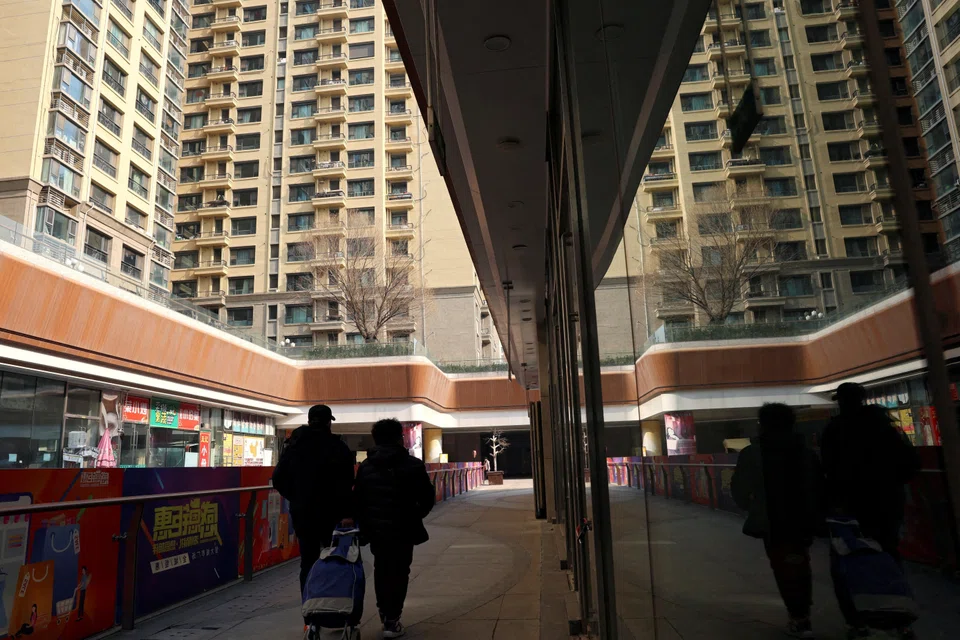
[SHANGHAI] Just months into China’s housing downturn, the nation’s second-biggest developer declared the worst is over. A year later, its chairman backtracked on the call, and by 2025, it was teetering on the brink of a default.
China Vanke’s miscalculation was just one of what would be many premature calls for an end to a crisis that has wiped out trillions of US dollars in household wealth since late 2021. Just last November, UBS Group scrapped its prediction that a turnaround was imminent.
Now, though, a small chorus of analysts, including those at Citigroup and Bank of America, are proclaiming once again that the battered industry is finally stabilising. The latest data offers some support: In March, nearly a fifth of the cities covered by official data saw higher used-home prices – the biggest proportion since 2023 – while the amount of completed but unsold housing fell for the first time in almost five years.
“It certainly looks like the shape is bottoming,” said Leonid Mironov, a portfolio manager at Gavekal Capital.
As China faces risks abroad from protectionism and geopolitical turmoil, a steadier real estate industry is crucial to restoring household confidence and encouraging spending with policymakers seeking to shift growth towards consumption and away from exports. In a market that has had false starts before, more evidence is now emerging of stabilisation and even recovery.
“It will not only play a crucial role for real estate companies, but also reflect an improvement in consumers’ willingness and ability to spend, which would be beneficial for the overall economy,” said Shen Meng, a director at Beijing-based investment bank Chanson & Co.
Home-price declines have slowed to their weakest pace in a year, while secondary transactions in Beijing and Shanghai have jumped to multimonth highs, even as smaller cities continue to struggle. The slump in existing home prices has narrowed every month this year, the longest such stretch since 2024.
Eurizon SLJ Capital, an asset manager led by Stephen Jen, said 2026 will likely be the year when the market bottoms as demand starts to recover. Citi’s analysts upgraded the property sector to positive from neutral, saying the market is “positioned for recovery”. They cited stronger data and improving sentiment, and see “a slow recovery in key cities as an optimal scenario for property names amid policy support”.
BofA Global Research also sees indications a recovery is taking hold. It favours developers with concentrated exposure to top cities and minimal legacy inventory, such as China Resources Land, China Overseas Land & Investment and C&D International Investment Group.
SEE ALSO




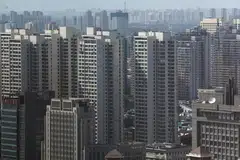
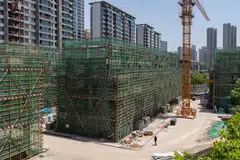
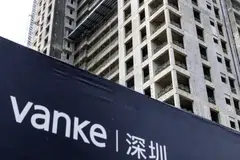
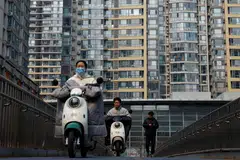

A few builders have made a comeback in the debt market. Wang Jianlin’s Dalian Wanda Commercial Management, and Seazen Group, one of the few major private developers to avoid a public default so far, both sold US dollar bonds this year.
But the story of China’s property distress is littered with premature optimism. Back in 2024, Goldman Sachs Group said an “inflection point” has arrived, and the more aggressive policy measures rolled out by Beijing showed “this time is different”.
It wasn’t. Government support hasn’t been enough to reverse the downturn, as officials could afford to act with less urgency with booming exports sustaining the economy. A record share of Chinese households at the end of last year expected housing prices to decrease in the quarter ahead, according to a survey by the central bank.
That lesson is not lost on the likes of Morgan Stanley, which believes the recent uptick may be flattered by base effects, one-off policy support and pent-up demand from last year.
“We remain sceptical about sustainability, and think the recovery spreading into more lower-tier cities is still elusive at this stage,” analyst Stephen Cheung wrote in a note dated Apr 26.
Even as China’s benchmark CSI 300 Index has advanced more than 5 per cent this year, a Bloomberg gauge of Chinese developers remains down by more than 1 per cent. If the property sector bottoms out, it could unlock a broader, more balanced equity revival beyond the narrow confines of tech, which had been driving most of the gains.
Recent signs of improvement have materialised mainly in the used-home segment, particularly in major cities such as Beijing and Shanghai, according to China Index Holdings, a real estate information provider. It remains unclear if such bright spots will remain isolated or even last long without stronger policy support.
In a sign of scarring in the economy after a downturn lasting for almost five years, the contribution of property-related industries has already fallen to near 18 per cent of gross domestic product in 2025, according to Bloomberg Economics, down from a peak of about 25 per cent during 2015-2018.
The large overhang of unsold homes will also take time to clear, and property investment remains in deep contraction. Over the longer term, structural challenges – including a soft job market, weak income expectations and a shrinking population – are likely to keep a lid on housing demand.
A longer timeline for recovery is likely, according to Michelle Kwok, HSBC Holdings’s regional head of real estate research, with any improvements starting in top-tier cities before gradually spreading. She expects 2026 to be a “critical year of inflection”.
“The decline in property investment required to bring supply into line with underlying residential housing demand is about 70 per cent complete, according to our estimates.” Bloomberg Economics analysts Eric Zhu and Chang Shu said. “It could take another one or two years to close the remaining 30 per cent gap.”
For many investors who have spent years bracing for worse, the mood is as upbeat as it’s been in a long time.
Mizuho Securities senior China economist Serena Zhou said housing sales and investment are unlikely to keep shrinking at double-digit rates, and could even end up close to flat from the second half of the year.
With expectations already low and much of the downturn priced in, the focus is less on how bad things can get and more on whether even early signs of stabilisation can begin to shore up sentiment.
“If this is another false dawn, the overall negative impact will be limited as the sector has shrunk substantially over the years and become a well-known factor for investors,” said Homin Lee, a strategist at Lombard Odier Singapore. “If we are seeing genuine green shoots, then it could at least change the market narrative for China’s domestic economy.” BLOOMBERG
Decoding Asia newsletter: your guide to navigating Asia in a new global order. Sign up here to get Decoding Asia newsletter. Delivered to your inbox. Free.
Share with us your feedback on BT's products and services