

What’s wrong with Orchard Road? Experts weigh in on the street’s cachet and its future
Top malls there are doing well, but observers ask if Singapore’s premier retail belt can still shine

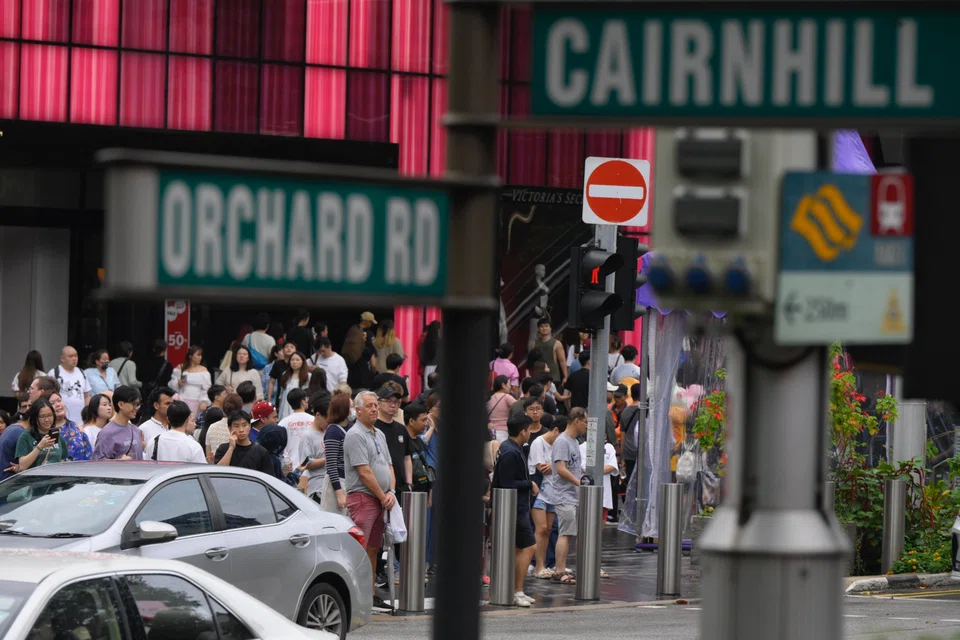
[SINGAPORE] At first glance, there is little to suggest that Singapore’s premier retail belt Orchard Road is losing its shine. Home to luxury-brand flagships and some of the city’s top-performing retail assets, the shopping street continues to attract high foot traffic and new store openings.
Major landlords report high occupancies and healthy tenant sales. Ion Orchard, 50 per cent owned by CapitaLand Integrated Commercial Trust (CICT), was about 98 per cent occupied in FY2025. The mall helped lift tenant sales across CICT’s retail portfolio; they rose 14.9 per cent on a per square foot basis and 29.1 per cent by quantum year on year.
Starhill Global Real Estate Investment Trust’s (Reit) Singapore retail portfolio, which consists of Wisma Atria and Ngee Ann City, was 99.5 per cent occupied as at end-December 2025, while tenant sales at Wisma Atria increased 2.9 per cent year on year.
At Lendlease Global Commercial Reit’s 313@somerset, occupancy stood at 98.8 per cent as at the end of 2025. Overall shopper traffic and tenant sales were up 6.2 per cent and 1.1 per cent on the year, respectively, in the first half of FY2026.
On paper, Orchard Road is holding up well. But some industry watchers question if it can hold its own next to competing retail destinations, both global and local, and if plans to rejuvenate the district will spark a much-talked-about revival that has yet to fully materialise.
And while Orchard Road is widely seen as the seat of luxury retail in the city, a recent survey of store opening activity also suggests that Singapore may be losing the edge it had among Asian destinations.
“The fundamental challenge is that Orchard Road was built, and is still largely operated, as a shopping street in an era when shopping is no longer a sufficient reason to visit a place,” said Ethan Hsu, chief executive officer of boutique retail consultancy and real estate firm Catbird Singapore.
Several Orchard area properties have changed hands in the last three years. Others remain on the market after having been put up for sale in the recent past, banking on the promise of a precinct-wide revival. A Strategic Development Incentive scheme is in place to encourage asset owners to rebuild or renew older buildings, offering bonus floor area for “transformative” proposals.
Redevelopment plans have been floated for older buildings including Forum The Shopping Mall, Delfi, and The Centrepoint. Eyes are now on the rebuilding of Tanglin Shopping Centre into a mixed-use development combining retail, office, wellness and cultural uses.
SEE ALSO

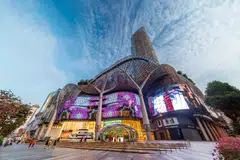

The word on the street is that Hong Kong’s Wharf group has put its Scotts Square mall back on the market for S$380 million, about 15 per cent below the S$450 million guide price sought in 2024. Some 10 parties are said to be interested, including fund-type investors.
To refresh the precinct’s appeal, the government is rolling out a fresh slate of initiatives announced in May.
These include the Singapore Tourism Board’s (STB) plans for large pop-up spaces along the Orchard Road pedestrian mall between Wisma Atria and Ngee Ann City.
Other plans include hotel developments at 37 Emerald Hill, the site of a former school, and Seton Close, a cluster of colonial era mansions.
However, questions remain over what Orchard Road needs to stay competitive, especially as a tourist destination.
Experts point to issues ranging from a retail landscape overcrowded with established brands to deeper challenges around entrepreneurship, placemaking and urban design.
Why now?
“Like any major lifestyle destination, Orchard Road continues to evolve in response to evolving consumer preferences – particularly the growing demand for experiential and distinctive offerings,” noted Ashlynn Loo, director of land and concept development at STB.
Mark Shaw, chairman of the Orchard Road Business Association (Orba), said: “Orchard Road has to be more than a destination to shop and eat. It has to turn from a traditional shopping belt into an iconic lifestyle destination in a city garden, combining retail with parks, events, culture and new hospitality concepts.”
The push comes as e-commerce reshapes buying habits, consumers increasingly prioritise quality of experience, and Orchard Road faces growing competition from both local and overseas retail precincts.
Dr Sing Tien Foo, provost’s chair professor at the National University of Singapore Business School’s department of real estate, said that the street’s physical infrastructure, shopping mix and concepts have remained largely unchanged for decades. This makes it timely to reassess whether they are suited to post-pandemic consumer behaviour and economic realities.
Shoppers – and tourists – today also have more alternatives, from lifestyle precincts such as Joo Chiat and Dempsey, to Jewel Changi Airport and Marina Bay Sands.
“Orchard Road loses its exclusive address for brands once they expand islandwide into suburban locations,” pointed out Joan Chen, CBRE Singapore’s head of retail.
“Local and international travellers can also find similar brands in the region or even in tourists’ home countries; in some instances, (these) even offer more exciting retail formats, product range and pricing, taking the shine off Orchard Road retail.”
“Category killers”
To some observers, Orchard Road’s retail mix has become predictable with established brands and proven concepts, leaving less room for experimentation.
In Hsu’s words, it is “not about snobbery, (but) more about economics”.
“Prime ground-floor rents on Orchard Road are set by what global luxury, large F&B chains and category killer concepts can pay, because those are the tenants competing for the space,” he said.
“Once that becomes the clearing rate, an independent operator with a genuinely interesting idea is structurally locked out unless someone subsidises them in.”
Most prime malls on Orchard Road are held by Reits, whose focus on occupancy and stable returns has helped create a retail landscape that is highly curated and operationally efficient. But it is also one where it is often difficult to distinguish one mall from the next.
“It is the natural output of a system where every leasing decision has to clear a yield hurdle, a covenant test and an institutional comfort threshold,” added Hsu.
“Interesting retail, almost by definition, is a bet. The Reit structure is built to minimise bets.”
In a LinkedIn post in May, Metro’s retail division CEO Erwin Wuysang-Oei argued that the Reit structure “prices out everything that cannot afford to stay” and has “produced a street of proven formats and deep pockets”. The department store operator occupies space on several floors in Paragon mall.
That said, CBRE’s Chen pointed out that landlords have been more open to offering pop-up space or short-term leases as a lower entry point.
If the concepts take off, the brands could take on permanent tenancy, reflecting “a broader shift towards curating more unique and engaging tenant mixes as part of rejuvenation efforts”, she noted.
OUE Reit, for instance, carved out a permanent pop-up space in Mandarin Gallery and hosted activations ranging from Pop Mart collaborations featuring Labubu and Twinkle Twinkle to events linked to singers Ed Sheeran and Blackpink’s Rose.
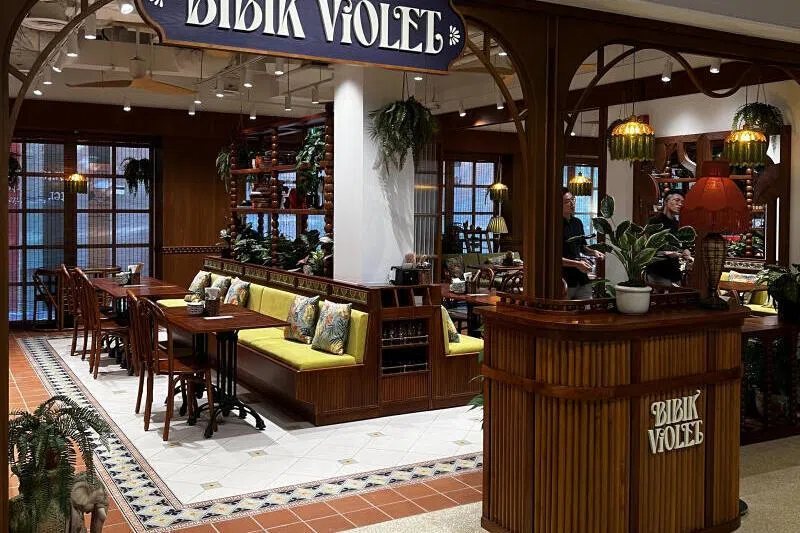
Orba’s Shaw also pointed to a string of local concepts that have set up shop in Orchard Road in the past year, including Cafe Nesuto at Ion Orchard, Violet Oon’s casual Peranakan concept Bibik Violet at Temasek Shophouse and Carousell Luxury at The Centrepoint.
The deeper challenge, said Dr Sing, lies in building a pipeline of businesses capable of creating new products, services and retail experiences that resonate with consumers. Such an ecosystem would need to “come from the ground up”, with greater entrepreneurship and risk-taking among start-ups and small and medium-sized enterprises.
Hsu also pointed to issues that the STB initiatives may not resolve, including rent structure that makes independent retail uneconomic on prime frontages, the strata ownership in older buildings that prevents coherent repositioning and the Reit mandate that systematically filters out tenant risk.
“The initiatives are a necessary improvement to the precinct’s surface. The structural work is a separate conversation, and it is one that will determine whether Orchard is interesting in 10 years.”
Parks and recreation
Yet others argue that Orchard Road’s challenges run deeper than tenant mix and retail concepts, extending to the design of the precinct itself.
Real estate consultancy Cistri’s regional director Jack Backen said: “The criticism of Orchard Road is often that it is a series of malls that don’t talk to each other. It’s very much ‘in one mall, out one mall’. Orchard Road’s scale and history is what drives its performance, less so the design or place. This is gradually changing, but (it) takes time.”
Orchard Road’s sub-precincts – Tanglin, Orchard, Somerset and Dhoby Ghaut – should have more distinct identities so that visitors know why they are going there, observed Hsu.
Backen noted: “Outside of the retail core between Somerset and Orchard, development is rightly being focused on leisure, hotels and residential uses, with less of a focus on shopping malls. This is the right approach: Allow the core to succeed as a retail heart, and make the surrounding areas more complementary. You can see the URA (Urban Redevelopment Authority) implementing this; it just takes time.”
Leonard Tay, head of research at Knight Frank Singapore, said that the proposed hospitality developments at Emerald Hill and Seton Close could “soften the corridor’s traditionally mall-centric character and create contrast between the grand and the intimate”.
Joshua Tay, JLL senior vice-president of advisory and asset management, hotels and hospitality group, noted: “Orchard Road’s hotel room supply stands at about 13,300 rooms as at 2025.
“Over the past decade, growth has been driven largely by the rebranding and repositioning of existing assets, rather than a meaningful expansion in net new room supply.”
He added: “The broader market has increasingly bifurcated, with Marina Bay dominating the corporate segment, while Orchard Road pivots toward high‑end leisure, boutique luxury and experiential hospitality.”
The government is also pedestrianising a 500 metre stretch from Buyong Road to Handy Road, expanding Istana Park to three times its current size.
“The acceptance and utilisation of this pedestrianised space might provide a model for the future pedestrianisation of other stretches of Orchard Road,” said Backen.
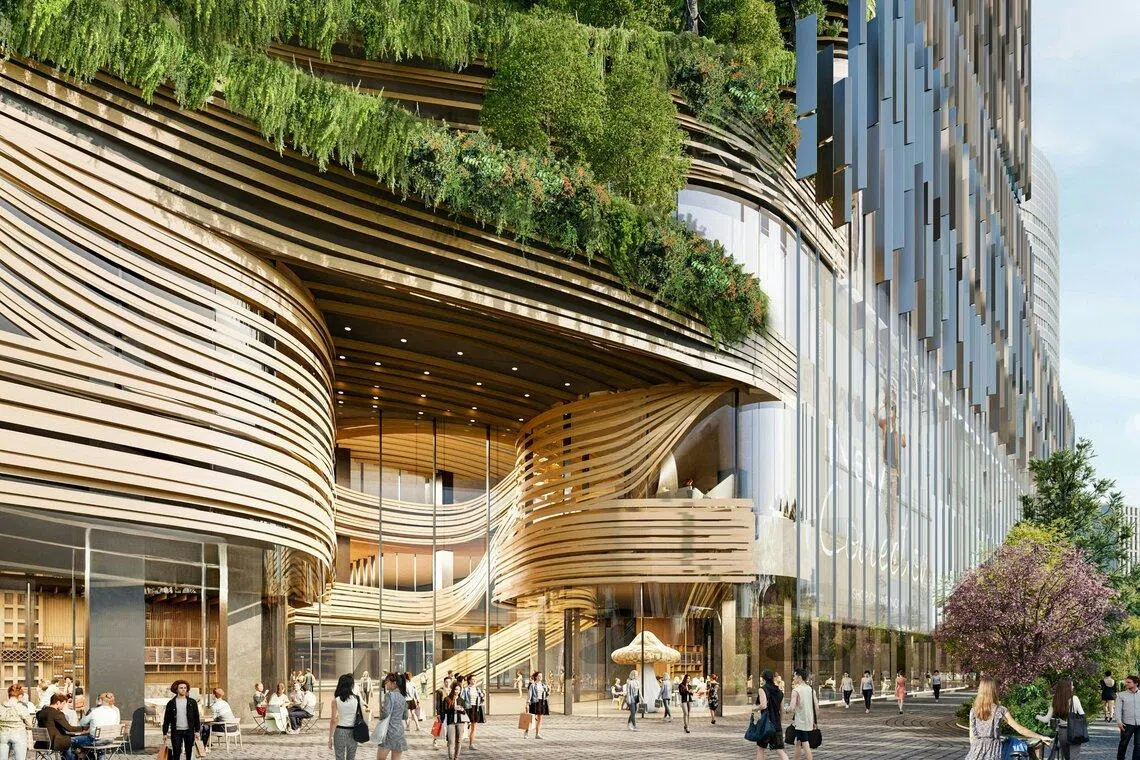
“Singapore has long been a pioneer of world-class integrated green developments – think Jewel and Gardens by the Bay. Perhaps Orchard Road could offer the opportunity to use a similar approach to transform the experience of shopping into a uniquely Singaporean lush green setting.”
Decoding Asia newsletter: your guide to navigating Asia in a new global order. Sign up here to get Decoding Asia newsletter. Delivered to your inbox. Free.
Copyright SPH Media. All rights reserved.
TRENDING NOW

DBS, OCBC, UOB rout lops billions off STI as inflation, rate concerns spook investors

Grab CEO’s wife Chloe Tong on life with Anthony Tan and finding her purpose

OCBC sheds S$8 billion in value as shares close nearly 6% down; analysts cautious on banks

Deal between tycoon friends sparks scrutiny of Philippine power sector

