

Why Hong Kong property giant New World faces a financial reckoning
The developer’s woes have continued even as the city’s real estate market starts to recover
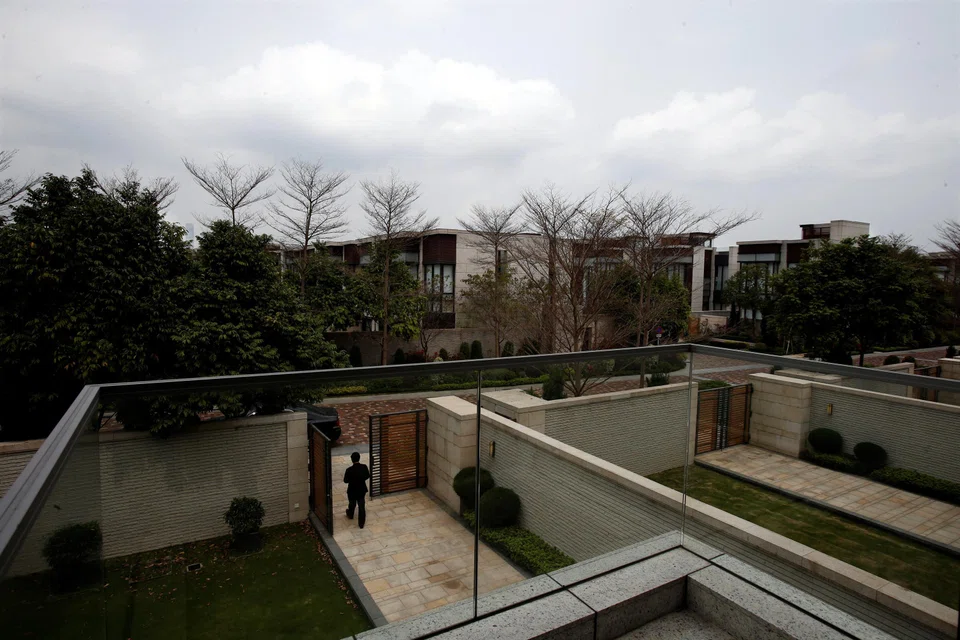
ONCE a symbol of Hong Kong’s property-fuelled prosperity, New World Development has become one of its most visible casualties.
After years of easy credit and aggressive expansion, the property giant – once among the most deep-pocketed in the city – is facing a financial reckoning.
The first major sign of the company’s troubles emerged in 2024, when the developer reported its first loss in two decades and liabilities of HK$210.9 billion (US$26.8 billion).
By mid-2025, its problems had deepened; net debt had reached about 98 per cent of shareholder equity, according to Bloomberg Intelligence, making it one of Hong Kong’s most leveraged major developers.
Around the same period, there was hope that a record HK$88.2 billion loan refinancing deal would buy New World time to repair its finances and help stave off a broader economic crisis in Hong Kong, which was then experiencing a years-long downturn.
But New World’s woes have continued even as the city’s property market has begun a slow recovery. The company reported a US$3.6 billion loss in the latest fiscal year.

What is New World?
Founded in 1970 by Cheng Yu-Tung, a former gold shop apprentice from mainland China’s Guangdong province, New World is one of Hong Kong’s “Big Four” property developers.
The family-owned company has built scores of apartment blocks across the city and owns landmark properties including Victoria Dockside, a sprawling commercial complex along Hong Kong’s famous harbour.
A decades-long property boom propelled the Cheng family into the financial hub’s wealthiest echelons. With a fortune of US$30.8 billion, they are one of the richest families in Asia, according to the Bloomberg Billionaires Index.
Management of New World was gradually handed over to the founder’s grandson, Adrian Cheng, during the 2010s.
He sought to distinguish the developer by incorporating art elements into New World’s residential towers and offices, as well as pursuing mega-projects such as Kai Tak Sports Park, the city’s largest stadium. Under his leadership, New World amassed a portfolio of landmark properties.
But in September 2024, after New World’s financial position had deteriorated, Cheng stepped down as CEO – an unusually abrupt departure in Hong Kong’s family-dominated property industry, where succession is typically carefully planned.
Adding to the turmoil, his replacement, Eric Ma, lasted just two months. Echo Huang was promoted to the top job in November 2024.
Why did things go south for New World?
The company’s strategy of debt-fuelled expansion worked while the property markets in both Hong Kong and mainland China were booming, but became much harder to sustain when both markets turned.
Hong Kong’s real estate market entered an unprecedented downturn in 2021. Anti-government protests that started in 2019, followed by a controversial national security law and strict Covid-19 restrictions, contributed to an exodus of residents and concerns about the city’s business environment, weighing on property demand.
Higher interest rates made matters worse. Hong Kong’s rates move broadly in step with the US because its currency is pegged to the dollar. As the Federal Reserve raised rates in 2022 and 2023, New World’s borrowing costs increased while property became less attractive to buyers and investors.
The rush to build more apartment blocks and skyscrapers during the height of the market also left a glut of properties, putting further pressure on prices as demand weakened.
New World’s large-scale projects – from the mixed-use development Victoria Dockside to 11 Skies, a huge retail and entertainment development next to Hong Kong’s airport – now face a very different market from the one in which they were planned.
The company has also been squeezed by its relatively high exposure to the property market in mainland China, which has experienced a steep decline in home values over the past few years. The mainland represented more than half of New World’s contracted sales for the 12 months through June 2024.
What has New World done to tackle its debt?
New World has taken a series of steps to buy itself time and reduce its debt burden.
Its big refinancing deal in 2025 pushed back HK$63.4 billion of loans that were originally due in 2025 and 2026, alleviating immediate liquidity concerns. It pledged around 40 properties as collateral, including its crown jewel, Victoria Dockside.
Since then, the developer has sold multiple commercial real estate assets and sought to shed costly financial commitments. In September, it announced it would exit its 11 Skies mega-mall project, handing it back to the Airport Authority. The move freed New World from rental obligations of at least HK$1.8 billion per year from 2028 through 2066.
Can New World recover?
Despite the efforts to shore up its finances, New World remains heavily indebted. Its net debt rose to 106.5 per cent of shareholder equity at the end of June, from 98 per cent a year earlier, according to Bloomberg Intelligence.
In November, New World announced a new plan to raise capital and cut debt.
It has proposed to raise HK$24.9 billion by selling new shares to existing shareholders at a heavy discount. Its controlling shareholder, a company owned by the founding Cheng family, has committed to buy up to three-quarters of the offering, potentially investing as much as HK$18.7 billion.
The company plans to use some of the proceeds to repay existing bank loans. But the plan still needs approval from independent shareholders at a vote in January 2027.
New World’s ability to recover also depends on Hong Kong’s property market.
Home sales and rental income from offices and shopping malls are major sources of revenue for developers like New World. But the residential recovery remains sluggish, while office rents have plunged more than 40 per cent from their 2019 peak.
Malls are also struggling with higher vacancies and lower rents, particularly as mainland China’s economic slowdown has weighed on spending by visitors to Hong Kong. BLOOMBERG
Decoding Asia newsletter: your guide to navigating Asia in a new global order. Sign up here to get Decoding Asia newsletter. Delivered to your inbox. Free.
Share with us your feedback on BT's products and services
TRENDING NOW

Who is Leo KoGuan, the Singapore-based billionaire backing Nvidia’s Jensen Huang?

Demand, tech capabilities position Apac and AI as Skyscanner’s next growth frontiers: CEO Bryan Batista

Higher rates, weaker spending: Is the Philippines entering stagflation?

South-east Asia has lost Nvidia’s best salesman

