


China’s economy falters as factory output, retail sales undershoot expectations
The country is still set to meet its 2026 growth target despite the October slowdown
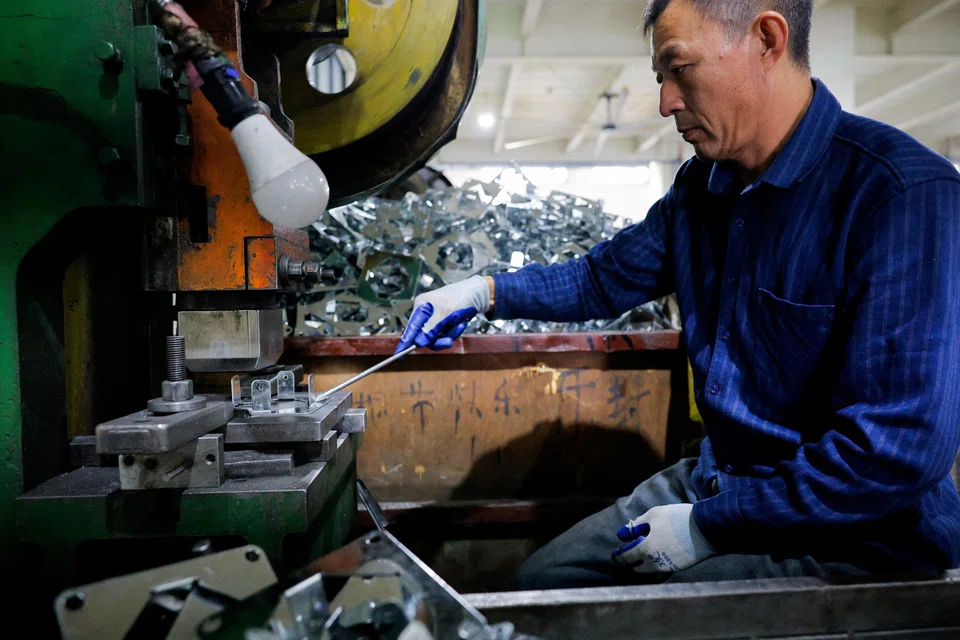
[BEIJING] China’s economy showed fresh signs of sluggishness in October as factory production slowed and consumption remained weak, calling into question how long the world’s second-largest economy can rely on exports to underpin growth.
An artificial intelligence-driven export boom has powered China’s economic growth this year and looks set to shelter overall growth from external and domestic headwinds into 2027, but slowing momentum in October laid bare the drag from soft demand at home.
Weaker-than-expected October data is “a worrying start” for the fourth quarter, said Lynn Song, ING’s chief economist for Greater China, adding that “the domestic economy at large would benefit from more policy support”.
Industrial output in October expanded 4.8 per cent from a year earlier, National Bureau of Statistics (NBS) data showed on Monday (Nov 16). The pace missed Reuters poll expectations for growth of 5.3 per cent and compared with a 5.5 per cent rise in September.
Robust external demand for AI-related products and cars helped pull the Chinese economy out of a Q2 slowdown. With Q3 gross domestic product growth running at 4.5 per cent year on year, analysts believe Beijing remains on target to reach 4.5 to 5 per cent without the need for significant additional stimulus.
“No new stimulus measures are expected to be introduced for the remainder of the year,” said Zhaopeng Xing, senior China strategist at ANZ. “Data for the single month of October (is) unlikely to alter the overall growth trajectory for the year; we continue to project that annual GDP growth will remain above 4.5 per cent.”

High-end and intelligent manufacturing contributed to more than half of industrial output growth in the first 10 months, NBS spokesperson Fu Linghui told a press briefing.
Strong demand for high-tech products masked the weaknesses in more traditional, domestically oriented industries, and may prolong or even deepen imbalances in China’s growth model as resilient manufacturing and exports lessen pressure on policymakers to shore up domestic consumption.
Trade data last week showed goods exports soared in October as the global AI infrastructure build-out continued to elevate sales of high-tech goods.
SEE ALSO


However, an official survey for factory activity indicated that sentiment faltered among manufacturers in October compared with the previous month as they reported worse conditions in new orders and new export orders.
Lacklustre domestic consumption
A soft labour market and a years-long property market slump that has diminished the value of homeowners’ assets continued to curb consumer spending.
Retail sales, a gauge that measures goods consumption and catering revenue, edged up 0.4 per cent year on year in October after growing 1.1 per cent the previous month. Economists polled by Reuters had expected a 0.8 per cent increase.
Services retail sales grew 4.9 per cent in the first 10 months compared with the same period last year, narrowing from 5 per cent growth in the first three quarters, NBS data showed.
The underwhelming figures are more worrying considering that October consumption should have received a boost from a seven-day holiday and the month-long Singles Day shopping festival spanning October and November.
“The persistently soft consumer confidence remains the main issue preventing a consumption recovery, and a more effective policy push must address this,” ING’s Song said.
China’s stocks were slightly lower by the midday break on Monday, dragged by AI hardware shares as worries over the durability of the AI rally soured sentiment, while the yuan held steady.
NBS spokesperson Wang Guanhua said exports would continue to underpin growth and expressed confidence that stronger policy support and improving conditions for high-quality development would help China meet its annual growth target despite lingering economic challenges.
Separate data on Monday underscored China’s prolonged property downturn, as new-home prices fell further in October from the previous month and property investment tumbled 21.6 per cent in the January-to-October from a year earlier.
The 8.1 per cent decline in fixed-asset investment in the January-to-October period widened from the 7.2 per cent drop in the first nine months despite government efforts to speed up funding for infrastructure projects. The drop was worse than a forecast 7 per cent decrease.
The surveyed urban unemployment rate dipped to 5.1 per cent, from 5.2 per cent in September.
Beijing has in recent months introduced fresh support, including measures for steering cheaper credit into a range of sectors including infrastructure and technology, as well as expanding support for homebuyers.
“In 2027, policymakers are likely to continue doing just enough to meet the growth target, with 4.5 per cent likely to remain the lower bound,” wrote Macquarie analysts Larry Hu and Yuxiao Zhang.
“As a result, the scale of stimulus, which determines China’s domestic demand, will depend on the extent of the export slowdown.” REUTERS
Decoding Asia newsletter: your guide to navigating Asia in a new global order. Sign up here to get Decoding Asia newsletter. Delivered to your inbox. Free.
Share with us your feedback on BT's products and services
TRENDING NOW

Jensen Huang discusses comeback as Nvidia CEO with allies: report

Ex-Nvidia CEO Jensen Huang carried a secret for more than a year. It led to his downfall

The start of Orchard Road’s rejuvenation? Scotts Square to commence revamp, repositioning in H1 2027

Singtel group CEO Yuen Kuan Moon sells S$8.1 million worth of shares

