

Outfoxing artificial intelligence: The great human-AI face-off
In an emerging economy underpinned by tech, the age-old pursuit of academic mastery is no longer enough
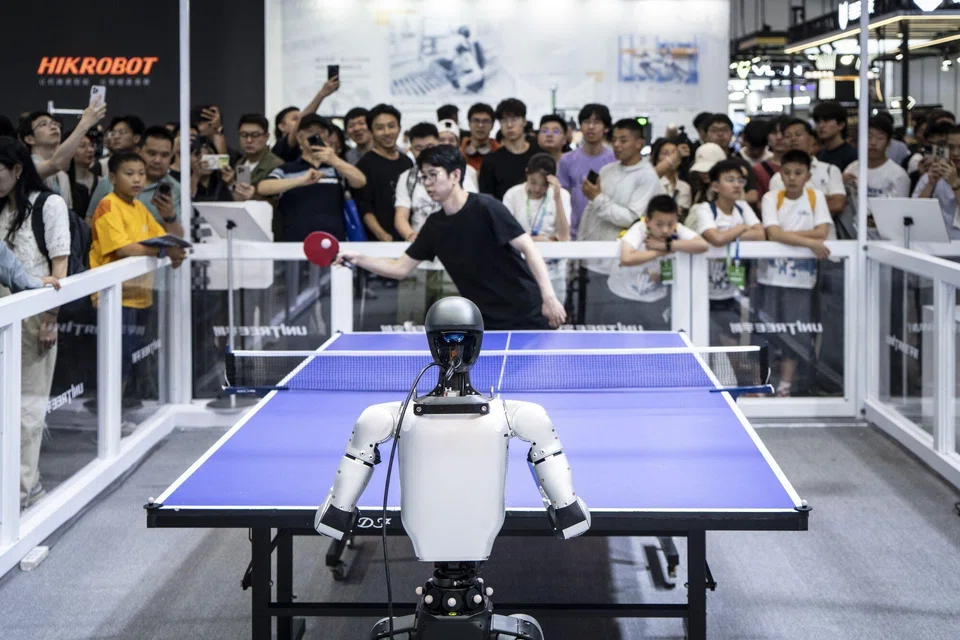
IT LOOMS over every conversation. In boardrooms. Around dinner tables.
It can feel impossible to keep up with the wily fox that is artificial intelligence, let alone beat it. It learns every moment. Changes direction without warning. Slips through industries once thought untouchable.
The instinct is to chase it – to become faster and smarter. That is exactly the wrong race to run. Especially for educators.
We cannot out-memorise AI. Nor can we hope to teach students everything they will need over a 50-year career. Entire industries now evolve faster than university curricula. By the time students graduate, some of what they learnt will already be obsolete.
A face-off is a false narrative. I used it to provoke more in-depth discussion. It is never between human and AI or another emerging technology. Human intelligence and behaviour always co-evolve with technology.
The challenge is to curate new structured and safe learning pathways for students – this refers to all of us, since continuous learning is now a necessity – to flourish in an emerging economy underpinned by technologies in which AI is currently the most prominent.
And herein lies the uncomfortable truth: The age-old pursuit of academic mastery is no longer enough. Universities must rethink the delivery of higher education and make the distinction between the mastery of knowledge, the mastery of skills and the mastery of creation.
They need to ask: Does the mastery of knowledge still hold the same weight now? Do students still need to be experts in any field to excel in a world where AI can easily provide detailed, well-researched information, quickly and succinctly?
How universities answer these questions will shape what and how they teach. Instead of trying to cover everything, courses may focus on how students use knowledge to create value.
SEE ALSO







To build “trilinguals”
At the Singapore University of Technology and Design (SUTD), students learn by doing.
A computer science major might spend less time on memorising syntax and more on building systems with AI tools, checking results, and fixing errors.
An engineering course might shift from routine problem sets to open-ended design work, where students define the problem, test ideas and deal with trade-offs.
In architecture and sustainable design, students might move beyond studying precedents to prototyping solutions, testing them in real contexts and refining them through feedback.
Knowledge is taught with a clear purpose and tied to use.
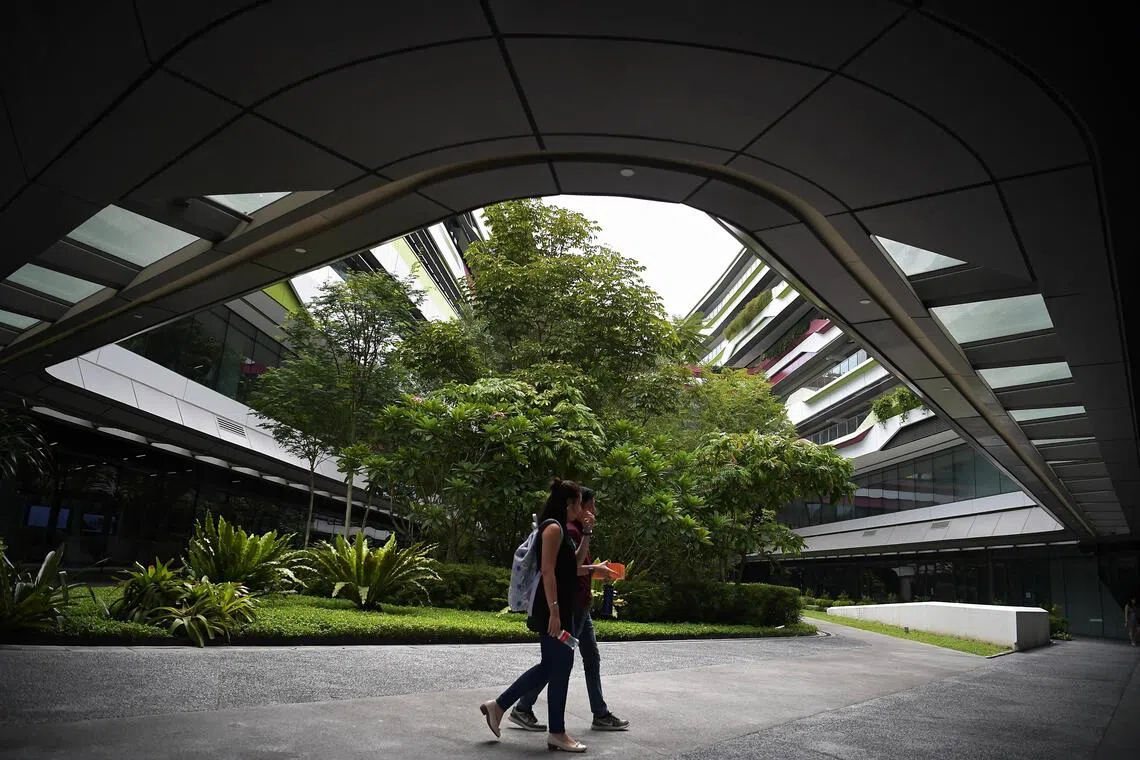
Ultimately, institutes of higher learning must determine how a traditional university education can still equip graduates with the necessary skills to excel in a world where intelligence for specific tasks is cheap and abundant.
One example is coding at the production level. In addition, AI agents such as personal assistant OpenClaw, and agentic workspaces, including Claude Cowork and more recently Grok Bot, are trying to do this for individuals and enterprises – autonomously.
Set against this backdrop, it is vital that students move away from the academic-heavy degrees of the past and accept that they won’t need to “know everything” before they can do anything useful in the real world. The barrier between ideation and prototyping is arguably lower than before.
Instead, they should focus on learning how to work with AI effectively to find solutions quickly to become “bilinguals” who can deploy AI in enterprises, or “trilinguals” who also bring a critical design perspective to deployment, including framing better human-centred questions, better integration through system thinking, and redesign workflows or even reimagine business models.
In architecture, a monolingual practitioner works linearly, iterating slowly with tools such as Revit and AutoCAD. A bilingual architect can work faster using AI mainly to refine output. A trilingual architect has a different organisation of work: deploying AI agents to explore options in parallel and shifting expertise from producing ideas to judging them.
In engineering, monolingual practitioners rely on deep but siloed knowledge. Bilingual engineers use AI for modest productivity gains, but core problem-solving stays the same. Trilingual engineers, however, become system builders, combining design, AI and domain to create tools and automations.
This shift goes beyond undergraduate education. Postgraduates should experience innovation beyond traditional research or coursework, and use their trilingual abilities to tackle real-world challenges with industry to create actual value for users.
This ability to validate and scale innovation takes place even before one graduates, and not only after receiving a master’s or doctoral qualifications.

The same applies for Continuing Education and Training (CET) learners.
Imagine bringing not just knowledge back to the workplace, but implementation-ready solutions tailored for your organisation’s needs. This can all be done as swiftly as within a week – not by attempting to beat the wily fox at its own game, but by partnering it.
It can be harder for those already in the workforce. We have spent years, decades even, honing our skills, perfecting our craft. An even bigger mindset shift is needed, especially for mature workers, to unlearn what has become second nature and accept a whole new way of thinking and doing.
However, contrary to widely held assumptions, SUTD’s research with the National Trades Union Congress found that mature workers were not inherently resistant to new technology. Instead, they became more receptive once they could see how it applied to their work.
This is crucial.
Building on this insight and other research funded via the then SkillsFuture Singapore (SSG) (now Skills and Workforce Development Agency) and the Institute for Adult Learning, a team from SUTD designed a series of interventions that later formed the basis of a workshop series piloted with Workforce Singapore.
Titled What’s Next: Reimagine Your Career Using Design AI, the programme is targeted at professionals aged 50 and above. Of the 500 participants so far, 98 per cent have said that AI enables them to use existing work and domain experience in a new way.
This, as well as other examples of SUTD’s approach – found in the SSG-SGTech-SUTD publication Designing a Human-AI Innovation Edge for Enterprises – show how humans can be empowered with an AI edge.
Organisations that adopt fastest start by empowering people closest to the work to identify pain points and build practical prototypes, instead of asking which tool to purchase, chasing the most powerful models or maximising token usage.
Experienced workers can become your biggest advocate if CET programmes and learning facilities are like those SUTD has in place: designed to guide participants from AI literacy to actual solution development and real-world deployment through hands-on learning, rapid prototyping and validation.
The biggest misconception is that AI adoption must be led only by technical experts. In practice, with the AI we have today, it can be led by anyone who is grounded in domain knowledge and has the imagination and agency to build and create.
Another noteworthy aspect is that AI is not about software alone.
Physical AI is likely to usher in the next wave of enterprise transformation. A fabrication laboratory like what we have at SUTD is needed besides compute to nurture bilinguals or trilinguals in physical AI.
Our students prototype on real hardware (printers, sensors, actuators, edge compute) paired with state-of-the-art AI, turning fabrication into training data and gaining hands-on exposure to both the hardware and intelligence layers of physical AI.
Along with joint enterprise R&D, campus test-bedding and capstones spanning domains such as robotics, healthcare and manufacturing, forward-deployed physical AI engineers are being nurtured, creating talent ready to embed directly with industry partners.
Next-generation communications are critical in creating intelligent physical environments that are seamlessly responsive.
SUTD is hosting the national Future Communications R&D Programme. One of its key initiatives is to advance capabilities and talent development in AI-native networks, where we focus on both the software and hardware of future AI edge platforms and connected computing for 6G.
The bottom line: No AI model removed from direct engagement with the physical world, no matter how powerful, can lead to physical AI. The edge that SUTD enjoys lies in our interdisciplinary education that combines AI with physical products, systems, services and built environments.
In the Ministry of Manpower’s inaugural report on AI adoption among companies, 71.5 per cent had yet to do so. Among the 28.5 per cent that had started, only 3.8 per cent were integrating AI into core processes, the report released in April showed.
Among companies using AI, 70.7 per cent reported improvements in worker productivity, alongside gains in decision-making (13.3 per cent) and innovation (11.9 per cent).
Productivity gains are already evident and are only just scratching the surface, as a trilingual workforce will reap far more.
The needed adaptation
Moving away from the traditional concept of a university education could well mean a shift away from lessons to a heavier weightage on out-of-class experiences, including internships and hands-on innovation.
Even this need not be experienced the conventional way. The lines between universities and enterprises are blurring.
Universities today can host anything from test beds to prototyping facilities for companies. A win-win situation would be where students and researchers get first-hand exposure working on actual industry cases across various sectors, while organisations gain access to technology, innovative minds and fresh perspectives.
At the end of the day, graduates must leave university as doers rather than purely thinkers because AI will far outclass them as the latter.
With this in mind, universities must now review their entire curriculum to ensure their students have sound AI foundations to remain strong economic contributors to society.
Courses must be based on human-centred design – finding solutions that link back directly to society, in the same way Apple introduced ideas such as the touchscreen iPhone, which catered to intuitive human behaviour and shifted mobile design away from physical keyboards towards a screen-centric and app-driven experience.
Professors will need to change their mindset of going “deep” into certain topics and accept that depth of knowledge isn’t the be-all and the end-all in this AI environment. They must learn to look beyond the theories that they have become accustomed to and focus on applying skills in a way that ensures human needs will always remain of central importance.
If learning by building is necessary, universities will need to provide fabrication laboratories as part of the educational infrastructure besides compute infrastructure.
Put simply, a complete sea change is needed – not only in how we work and live, but also how we organise ourselves, how we approach problems and how we think.
A complete reset is needed to ensure that human critical faculty and agency remain paramount in an age when machines can be infinitely more intelligent in automating specific tasks in enterprise workflows.
The writer is president of the Singapore University of Technology and Design
Decoding Asia newsletter: your guide to navigating Asia in a new global order. Sign up here to get Decoding Asia newsletter. Delivered to your inbox. Free.
Share with us your feedback on BT's products and services
TRENDING NOW

Once staunchly pro-China, Malaysian Chinese businesses are now distancing themselves from Beijing

Looking beyond looming CEO succession, should UOB potentially pursue a transformative merger?

Could stablecoins be the future of money?

Grab CEO’s wife Chloe Tong on life with Anthony Tan and finding her purpose

