COE review: The gap between luxury and mass-market cars isn’t the only one worth bridging
Commercial vehicles and motorcycles, whose prices vary significantly within their categories, merit a closer look

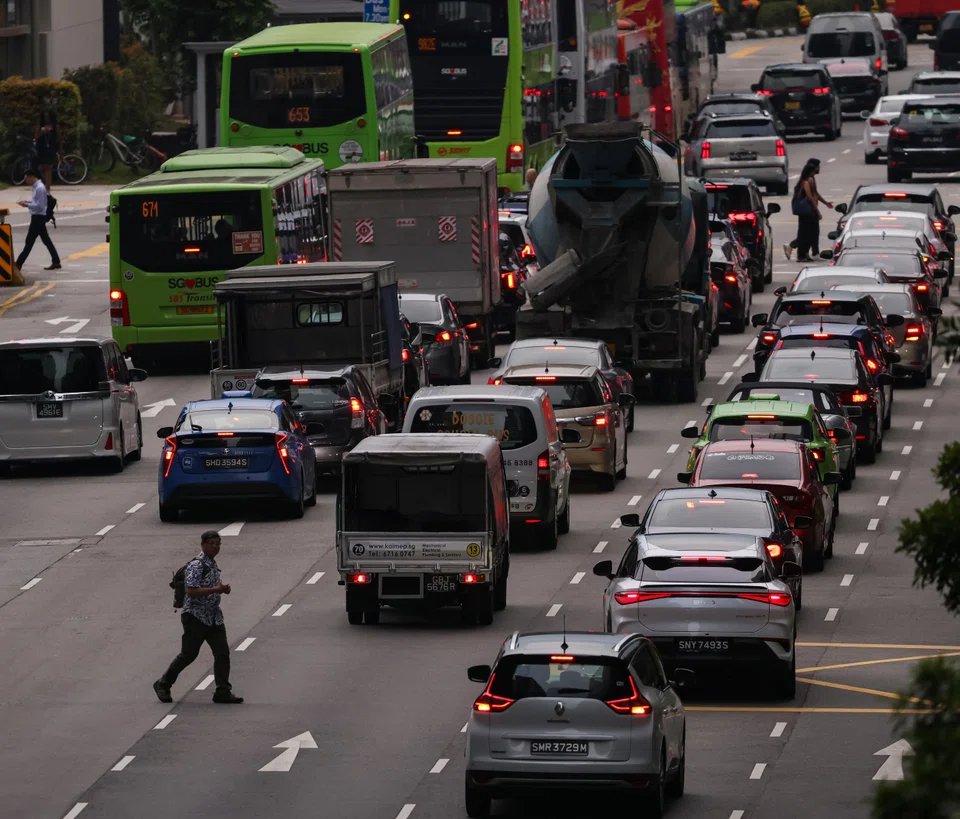
[SINGAPORE] The Republic is considering measures to preserve the Certificate of Entitlement (COE) differentiation between mainstream and luxury cars, maintaining one of the key principles of the system.
However, Singapore should also begin to seriously think about similar moves for commercial vehicles (CVs) and motorcycles – as vehicle prices within these respective categories can vary significantly.
Announced on Oct 8, the Land Transport Authority’s (LTA) possible changes include combining the current mainstream and luxury-car COE categories: A and B, respectively.
Cars would be ranked based on their open market value, with vehicles receiving up to S$15,000 in rebates or surcharges, depending on where they fall on the pricing scale.
In other words, value is now the determining factor in judging whether a car earns a rebate or surcharge. It supersedes using engine size or power as a proxy metric, both of which are less relevant as car technology evolves.
The aim of this is to “effectively distinguish between mass-market and higher-value cars in the COE system, while allowing COE prices to continue to be determined by market forces”, said LTA.
Categorically speaking
The separation between cheaper and more expensive passenger cars has been consistent since the inception of the COE system in 1990; yet, similar moves for CVs or motorcycles have never been seriously considered.
The COE system began with seven categories. Four categories were for cars alone, defined by engine capacity. This was reduced to two in 1999, with 1.6 litres as the boundary for mainstream cars. Horsepower guidelines were introduced in 2013, followed by specific power limits for electric vehicles in 2022.
In other words, cars have never been treated homogeneously, but CVs and motorcycles always have been.
Yet, the differences in prices between mainstream and higher-value vehicles in the CV and motorcycle world are comparable to that of cars. This can be illustrated by comparing the sales of more-expensive vehicle types to those of leading mainstream brands or segments.
The number of ultra-luxury cars – now typically costing S$1 million or more – registered in August 2026 was five.
Meanwhile, a mainstream EV costs around S$180,000 with COE now. Leading mainstream brand BYD registered 1,100 cars in August, against total registrations of 4,549.
Among CVs, it is lighter vehicles – defined as those with maximum laden weight below 3,500 kg – that are the most common, but heavier and more expensive vehicles are becoming dominant.
At the end of 2025, light CVs made up around 65 per cent of the CV population, and heavier vehicles the rest. The situation is a lot different now: In August, 455 heavier CVs and buses made up 80.1 per cent of CV registrations.
A small van costs around S$30,000 without a COE, while larger CVs, such as prime movers or lorry cranes, can cost S$500,000 to S$800,000.
Electric buses, increasingly popular in Singapore, can cost S$250,000 or more.
In the motorcycle world, a basic “kapcai” costs around S$4,500 without COE, while some of the most popular luxury-brand motorcycles now cost S$70,000 and more.
There were 37 luxury-brand motorcycles registered in August, out of a total 922 registrations for Category D vehicles, compared with 445 from leading mainstream brand Yamaha.
In other words, a lower-cost, higher-volume segment exists for CVs and motorbikes. But under the current review, people purchasing such vehicles, unlike car buyers, will not have the benefit of being separated from those bidding for higher-cost ones.
For this argument to hold, we can judge things only on vehicle costs, ignoring the fact that the purchasing of higher-value vehicles is done out of necessity rather than vanity. A concrete mixer is acquired because it is a must-have for the business.
Should not the owner of a small business who needs a van to transport goods receive help of some sort? How about the buyer of a small-capacity motorcycle who uses the vehicle for courier services or food delivery?
In fact, in 2017, Singapore introduced a tiered Additional Registration Fee for motorcycles – similar to that for cars – which taxes premium motorcycles more heavily, widening the gap between mainstream and luxury vehicles further.
Premium drive
With premiums for both categories C and D near record levels, the cost of COEs for CVs and motorcycles form a much larger proportion of vehicle prices than before.
In October 2006, the COE premium for a motorcycle and CV were S$1,001 and S$11,203 respectively, compared with S$11,012 and S$91,889 now – roughly 10 times more.
A small van may have cost S$50,000 with a COE two decades ago; now it would cost around S$160,000.
The buyers of less-expensive, lighter CVs also face another challenge: As The Business Times has reported, construction and big infrastructure projects are driving the demand for heavier CVs, which as mentioned, are much more expensive than light CVs.
This also drives up Category C premiums since a large business with a strong need for those projects will bid accordingly.
If a luxury-car buyer who can afford to pay more has to foot a surcharge, by extension, should not the owner of a prime mover be similarly charged?
Also, since the COE is meant to control congestion, the bidder for a much larger, heavier vehicle that occupies space on the road should pay a higher premium.
Rebate debate
But the solution may not lie in more categories or more rebates.
In the long run, it is preferable to move away from influencing buying behaviour through rebates and move towards usage controls.
In my interaction with industry observers, many of them ascribed the current high COE levels for cars and CVs to rebates, specifically those for EVs.
For example, the S$40,000 rebate for electric heavy vehicles was a factor in driving Category C premiums higher in recent times, although that has since been slashed to S$15,000.
In a market where the demand for vehicles always exceeds supply, rebates encourage adoption of advantageous vehicle types, or vice versa, but they also distort the market by adding to bidding power.
As one car dealer put it: “If you give a S$15,000 rebate, you’re basically handing out ammunition for higher bids.”
This is among the reasons cited by observers who said that the proposed changes to the COE car categories would likely raise premiums.
Deciding what vehicles receive a financial advantage through usage-based fees may be a fairer option, and that will be made possible in the near future with ERP 2.0.
A larger, more polluting heavy vehicle? Pay more per kilometre. A small motorbike that does not add to congestion and comes with the price tag of a “mainstream” vehicle? Pay less.
But it will be some years before those things can become a reality. Meanwhile, we could see how the system can be tweaked to bring about a more level playing field for buyers of CVs and motorcycles.