CPF keeps ‘A’ grade in global ranking of pension systems for second year; overall score goes up
The Netherlands, Denmark, Iceland and Israel have also received the top rating
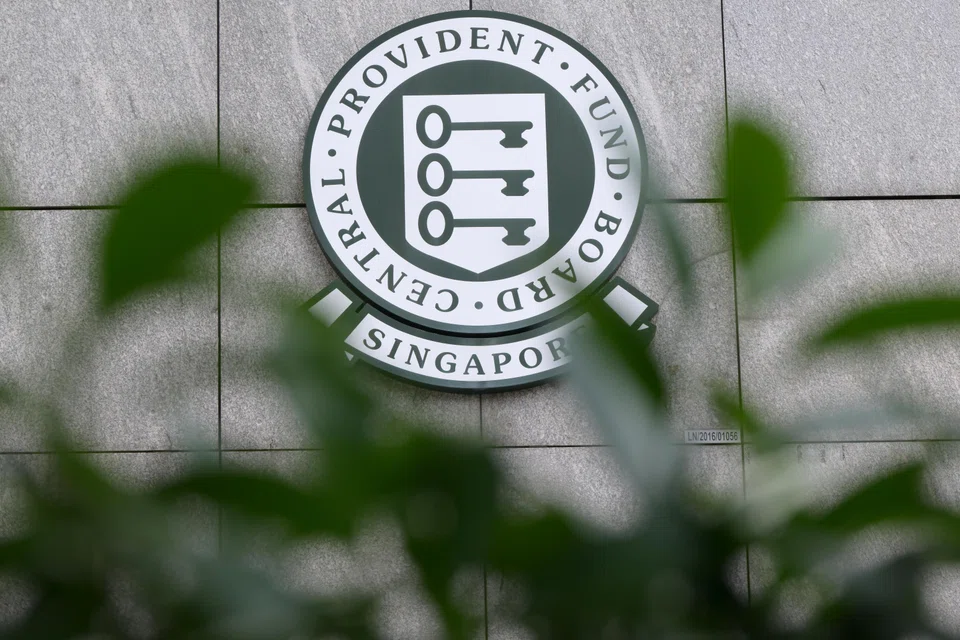
[SINGAPORE] Singapore’s Central Provident Fund (CPF) has retained its “A” rating for a second consecutive year in an annual global ranking of pension systems.
The CPF, which was the first pension system in Asia to secure this grade, had its overall score rise from 80.8 to 82 on the Marsh CFA Institute Global Pension Index. It was given a “B+” in 2024.
In 2026, Australia’s social security system also achieved an “A” rating, meaning the Asia-Pacific region now has two top-tier retirement systems.
Other countries that earned the top rating for their pension systems are the Netherlands, which obtained the highest score of 85.8, as well as Denmark, Iceland and Israel.
“First-class” retirement income systems that are robust, sustainable, deliver good benefits and have a high level of integrity get an “A” from Marsh.
The professional services firm has collaborated with the CFA Institute, the global association of investment professionals, on the annual index since 2008.
Previously called the Mercer CFA Institute Global Pension Index, it was renamed in 2026 after Mercer adopted the Marsh brand in September as part of a corporate rebrand by its parent company, Marsh McLennan.
In 2026, the index examined the impact of falling birth rates and rising life expectancies on 55 retirement income systems worldwide, up from 52 in the 2025 index.
The study covered pension systems in 66 per cent of the world’s population, including the US, Britain, China, India, South Korea and Japan.
SEE ALSO




Three sub-indices make up a pension system’s overall index score.
Reflecting the focus on the ageing population globally, the adequacy sub-index was adjusted to consider the levels of income available at retirement and at age 80. This recognises the fact that more people will live past 80 and into their 90s, needing financial support throughout their long retirement years.
The adequacy sub-index measures whether a pension system provides a sufficient level of income for retirees to maintain a decent standard of living. Singapore’s score here jumped to 82.8 in 2026, from 79.4 in 2025.
However, the Republic’s sustainability sub-index score dipped from 75.5 to 75.3. The sustainability sub-index assesses a pension system’s long-term viability and its ability to meet future pension obligations.
Meanwhile, the integrity sub-index rounds out the overall score by measuring the level of public trust and assessing whether the pension system earns the confidence of those who depend on it. On this front, Singapore held its 90.4 score.
Rising life expectancies strain government budgets
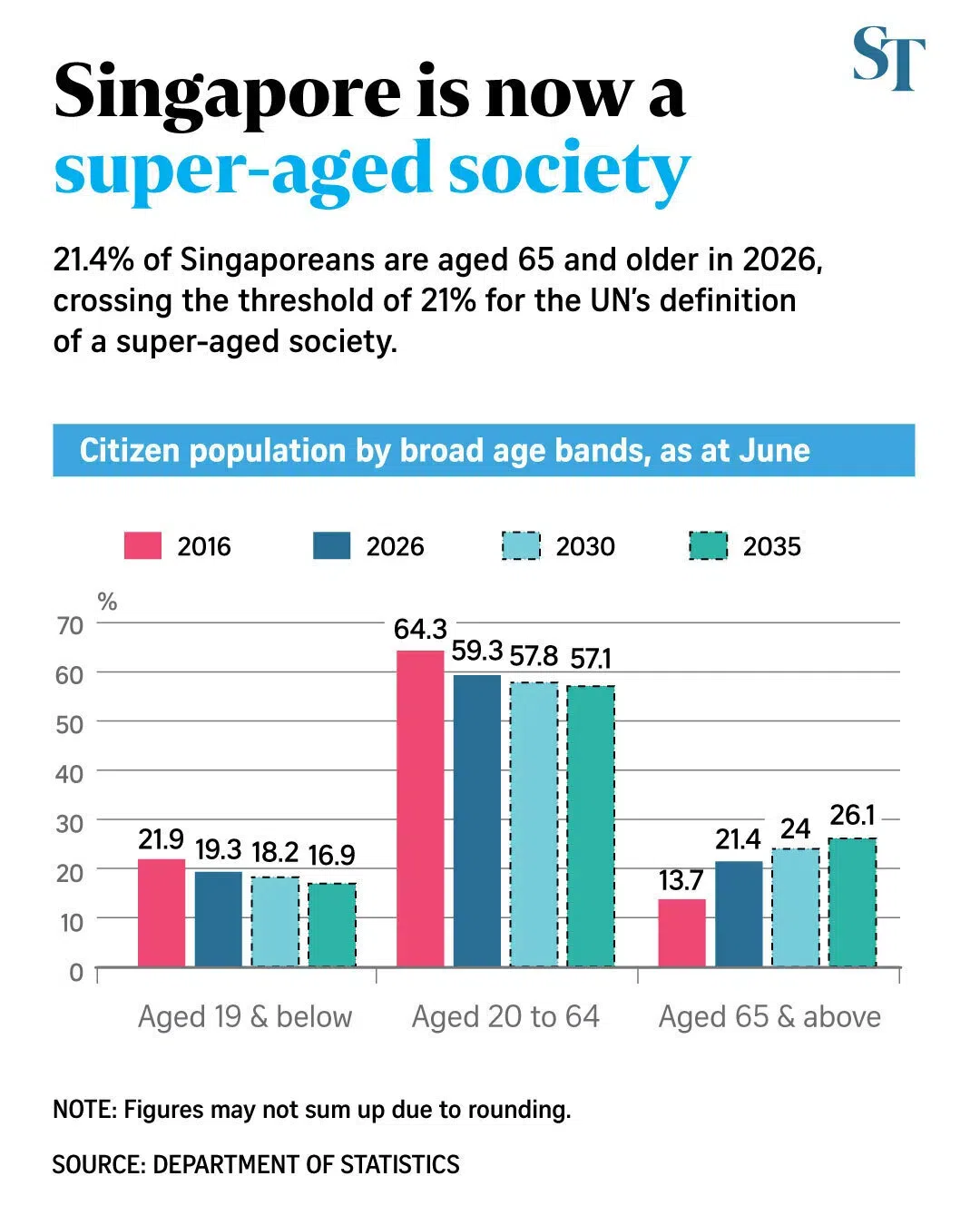
Mirroring the global trend of population ageing, Singapore became a super-aged society in June 2026, when 21.4 per cent of its citizens were 65 or older.
The United Nations classifies any nation with 21 per cent of its population aged 65 and above as super-aged.
Marsh highlighted in its report that ageing populations are placing increasing strain on government budgets.
Public pensions, especially those that operate on a pay-as-you-go basis, will not be sustainable because they rely on taxes from the current working population to fund the retirement payouts of today’s retirees.
As the population ages, there will be a smaller workforce to pay for the retirement benefits of a growing pool of retirees.
Marsh noted that growing financial strain will prompt many countries to review the funding of their pension systems. Governments will either have to cut retirement benefits or encourage their population to save for their future payouts in advance.
CPF is funded by contributions
Marsh noted that Singapore’s CPF, unlike other pension systems, is “fully funded with contributions from both employers and employees”.
CPF contributions are invested primarily in special Singapore Government Securities, which allow the CPF Board to pay interest of at least 2.5 per cent on Ordinary Account savings and at least 4 per cent on Special Account and Retirement Account (RA) savings.
Walter Theseira, associate professor of economics at the Singapore University of Social Sciences, added that because CPF payouts are based solely on one’s own retirement savings, they will not be affected by government tax constraints or public finance challenges.
CPF Life, the national longevity insurance annuity scheme, pays out income from each member’s CPF personal retirement savings pot for as long as they live.
More savings in their RA when they join the scheme means they receive a higher monthly payout. CPF members have the flexibility to start their lifelong monthly payouts anytime between the ages of 65 and 70.
Those who choose to wait can expect their monthly payouts to grow by up to 7 per cent a year for each year of deferment. A CPF member can therefore receive up to a 35 per cent increase in payouts by waiting until the age of 70.
Prof Theseira pointed out that retirees must carefully evaluate the trade-offs of taking their payouts earlier or later.
If they defer their payouts, they run the risk of not being able to enjoy their retirement if they have a shorter healthy lifespan than expected. However, starting payouts early results in smaller monthly sums and a potentially lower standard of living, he noted.
Adapting to longer, flexible retirements
There is no one-size-fits-all solution, highlighting the need for flexibility in the pension system.
Tim Jenkins, lead author of the report and partner at Marsh Investments and Retirement, noted that such flexibility is no longer optional.
People should be allowed to choose when they take their retirement income, how their retirement plans are designed and how they transition from full-time work to retirement, he said.
For example, not everyone will want to stop working at age 65. Some may want or have to continue working full-time. Others may opt to go part-time or do freelance work, and some may retire.
This option to work beyond the traditional retirement ages of 60 or 65 is becoming more crucial as life expectancies rise. Longer working lives directly strengthen one’s retirement adequacy as individuals continue earning and growing their retirement savings.
Marsh noted in its report that the largest increase in the average labour force participation rate for those aged 65 and above was observed for Singapore, which saw a 19 per cent jump from 2003 to 2023.
In comparison, the average participation rate for this age cohort across more than 30 pension systems covered in the index grew by a more modest 4 per cent.
The Republic has progressively raised its retirement and re-employment ages since January 1999 to enable senior workers to continue working if they are able and wish to.
By 2030, it will fully realise its goal of establishing a statutory retirement age of 65 and a re-employment age of 70.
Joelle Fong, an associate professor at the Lee Kuan Yew School of Public Policy, said Singapore’s clear and transparent retirement and re-employment policies serve to change corporate behaviour by ensuring legal compliance.
However, her January 2026 study in the International Journal of Manpower showed that employers’ mindsets have been slow to catch up.
In her survey of 509 employers from about 20 major industries in Singapore, Prof Fong found that “employers exhibited distinct hiring preference for mature workers (aged 50 to 59) as compared to senior workers (60 and above)”.
Furthermore, employers also showed more supportive attitudes towards providing development and training opportunities for workers in their 50s than for those in their 60s, she said.
Ultimately, changing long-held mindsets and updating corporate practices take time.
Jenkins added that even the best-performing systems need to keep evolving. “No pension system can afford to stand still in the face of demographic shifts.” THE STRAITS TIMES
Decoding Asia newsletter: your guide to navigating Asia in a new global order. Sign up here to get Decoding Asia newsletter. Delivered to your inbox. Free.
Share with us your feedback on BT's products and services