

Budget 2026: AI-focused One Pass to lure top tech talent; airlines can hire cabin crew from more countries
One Pass (AI and Tech) applicants may qualify using a mix of cash and stock-based compensation

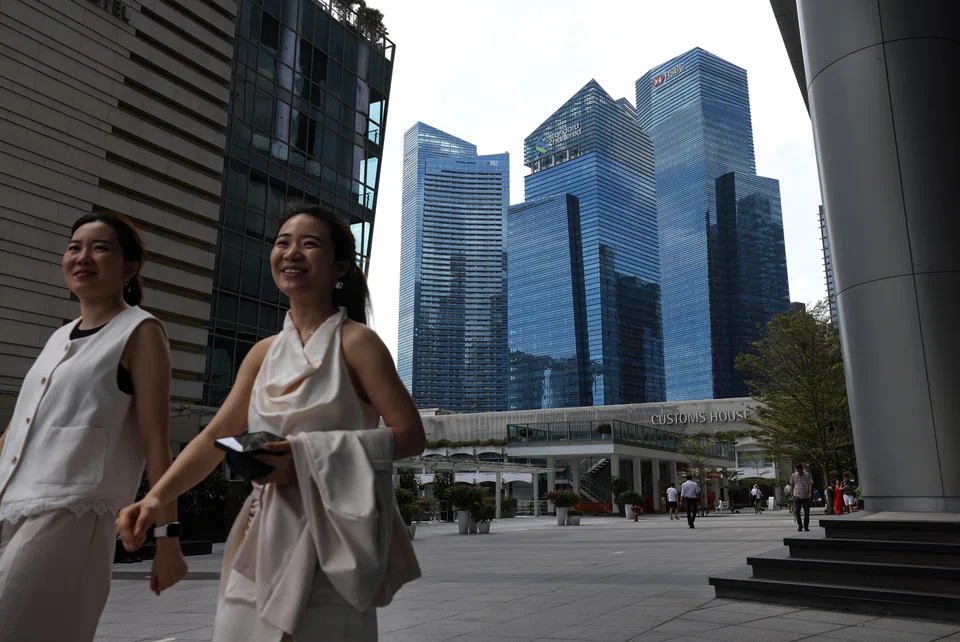
[SINGAPORE] The Republic will introduce a new artificial intelligence (AI) and technology track under the Overseas Networks and Expertise (One) Pass in January 2027, replacing the existing Tech.Pass scheme, as it seeks to sharpen its appeal to leading global digital and AI professionals.
Manpower Minister Tan See Leng said during his ministry’s Committee of Supply debate on Tuesday (Mar 3) that the One Pass (AI and Tech) track will offer more attractive terms to top-tier technology talent.
This comes after Prime Minister and Finance Minister Lawrence Wong said in his Budget speech on Feb 12 that accelerating AI adoption across the economy – a key recommendation by the Economic Strategy Review committees – will be central to securing growth.
Introduced in 2021, the Tech.Pass scheme targeted top-tier technology professionals, allowing holders to move seamlessly across activities that contribute to Singapore’s tech ecosystem – from running a business and investing, to mentoring or leading companies, as well as lecturing in institutes of higher learning.
Pass holders could undertake any combination of these activities without applying for separate work passes.
The One Pass, introduced in 2023, similarly allows talent across all sectors the flexibility to concurrently start, operate and work for multiple companies at any one time.

Dr Tan said take-up has seen healthy growth, with more than 8,000 individuals currently on the One Pass, many of whom are contributing to sectors critical to Singapore’s future economy.
To qualify, applicants must earn a monthly salary of at least S$30,000 either during the 12 consecutive months leading up to the date of application or under a prospective employer based in Singapore.
Recognising that leading professionals in AI and technology are often compensated through non-cash components – such as employee stock option plans and share ownership – the Ministry of Manpower said applicants under the new One Pass (AI and Tech) track will be allowed to meet the fixed monthly salary criterion through a mix of cash and equity-based remuneration.
SEE ALSO



Beyond pay, eligibility is tied to the scale of the applicant’s current or last employer – typically a sizeable tech company or venture capital firm – as well as at least five years of recent experience in senior leadership or specialised technical roles.
The ministry added that it does not expect a large number of applicants, given the high qualifying threshold.
Asked by labour Member of Parliament Patrick Tay how the new track differs from Tech.Pass, Dr Tan did not elaborate on specific structural differences, but said it is intended to attract “movers and shakers, rainmakers and network brokers”.
He added that such individuals could spawn multiple enterprises and uplift the calibre of Singapore’s ecosystem by transferring cutting-edge technology, thought processes and expertise to the local workforce.
Explaining why these individuals would choose Singapore, Dr Tan cited the Republic’s reputation for trust, stability and transparency, as well as its established position as a global hub.
In today’s uncertain world, he said these traits “put us in a very good position to attract global talent”.
Eight new occupations added to non-traditional list
Separately, Dr Tan announced that the government will add eight new occupations “for specific roles with not enough locals” to the Non-Traditional Source (NTS) Occupation List across the air transportation, food services and social services sectors from September 2026.
Among the eight new roles are cabin attendants, food preparers and service staff, as well as childcare and education support roles.
The NTS markets are Bangladesh, Bhutan, Cambodia, India, Laos, Myanmar, the Philippines, Sri Lanka and Thailand.
In his speech, Dr Tan acknowledged concerns raised by Nominated Member of Parliament and vice-chairman of the Singapore Business Federation Mark Lee about the challenges faced by domestic-oriented sectors that operate on thin margins and rely on S Pass holders for frontline roles, such as in the food and beverage industry.
The expansion of the NTS Occupation List, he said, will allow businesses to retain workers who may not meet the higher S Pass qualifying salary.
PM Wong announced in his Budget speech that the minimum qualifying salaries for new Employment Pass (EP) and S Pass applicants will be raised from January 2027.
The EP qualifying salary will increase from S$5,600 to S$6,000, while the S Pass qualifying salary will rise from S$3,300 to S$3,600.
He also announced that the government will raise work permit levies for basic-skilled workers in the marine shipyard sector by S$100, and in the process sector by S$150 from 2028.
Decoding Asia newsletter: your guide to navigating Asia in a new global order. Sign up here to get Decoding Asia newsletter. Delivered to your inbox. Free.
Copyright SPH Media. All rights reserved.






