

Budget 2026: Calibrated manpower tweaks likely, not sweeping changes
Calls from business groups must be balanced against longer-term manpower challenges and fiscal constraints, a labour academic says

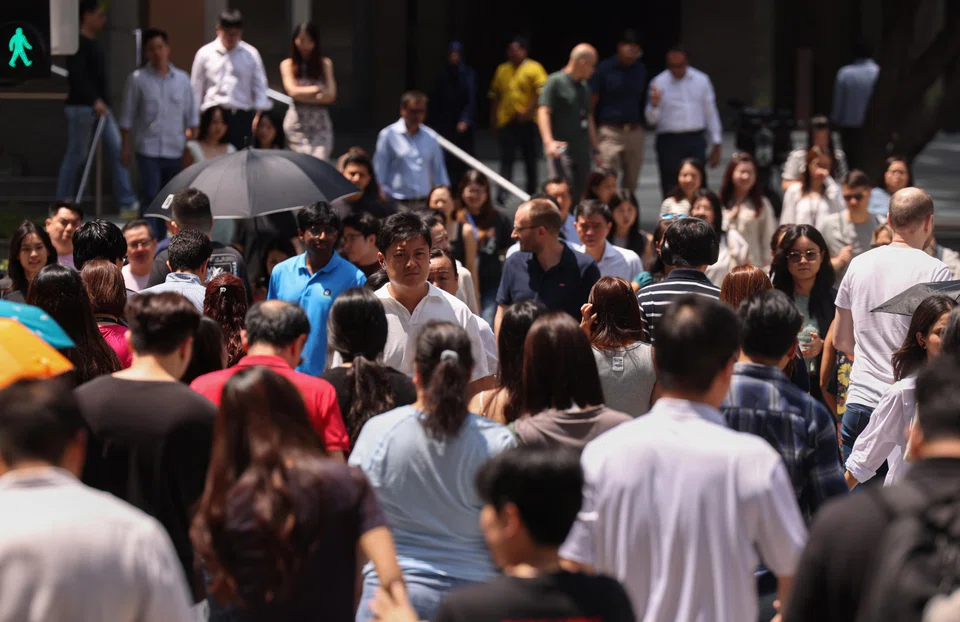
[SINGAPORE] The Republic’s upcoming Budget is unlikely to bring sweeping manpower changes, with economists and industry experts expecting targeted adjustments focused on migrant labour access, workforce transformation and support for different worker segments.
Ahead of the Feb 12 Budget statement to be delivered in Parliament, the Ministry of Finance had called for public feedback on priorities such as advancing the economy, securing good jobs and strengthening social support, with business groups flagging manpower-related cost pressures among their key concerns.
Prime Minister Lawrence Wong said in a video released on Tuesday (Jan 27) that his team has heard Singaporeans’ aspirations and concerns about an “uncertain external environment”, including the impact of technology and artificial intelligence (AI) on jobs, as well as rising cost pressures.
“We will take in your feedback and views as we put together this year’s Budget,” said PM Wong, who is also minister for finance.
The calls by the business groups, however, are likely to be weighed against longer-term manpower challenges and fiscal constraints, said Dr Faizal Yahya, a senior research fellow in the governance and economy department at the Institute of Policy Studies, citing pressures from a rapidly ageing workforce and AI-driven job transformation.
“Granting every business request, such as tax cuts or expanded subsidies, may not be feasible due to resource limitations and the need to fund other essential public services like healthcare, infrastructure and education,” said Dr Faizal, whose research interests include human capital.
Deloitte Singapore’s global employer services partner Sandip Kaur Bhandal said that instead, this year’s Budget is likely to “bring modest but meaningful refinements to manpower policy, rather than any broad or radical shifts”.
She added that Singapore’s manpower framework has remained consistent in recent years, facilitating access to foreign talent where it supports productivity, innovation and national competitiveness, while ensuring that Singaporeans remain at the core of the workforce.
Tweaking foreign manpower
On foreign manpower policies, the government has so far only signalled refinements to the Local Qualifying Salary, with Manpower Minister Tan See Leng recently saying that details would be announced in the Budget statement.
Beyond this, OCBC chief economist Selena Ling noted that proposals such as expanding the Non-Traditional Sources Occupation List to include more roles in manufacturing and logistics have been raised by business groups.
However, any such moves are likely to be selective, undertaken alongside technology adoption and potentially tied to productivity milestones, she said.
“This means that the foreign manpower tap will be selectively calibrated but only to the extent that it does not destabilise socio-economic stability,” she added.
Both Dr Faizal and Ling also noted that qualifying salary thresholds for work passes have been raised in recent years, shaping business hopes that there would be no further near-term tightening, or at least a moderation in the pace of future increases.
Greater flexibility could nonetheless be extended to firms that demonstrate a stronger commitment to local workforce development, Dr Faizal added, noting that this could help ease hiring “bottlenecks” in sectors facing acute labour shortages.
Beyond access and qualifying salary thresholds, Deloitte’s Bhandal said the Complementarity Assessment Framework could also be another “likely area for refinement”.
Such refinements, she said, could include clearer recognition of productivity investments, firm-level transformation efforts, or nuanced weightings that better capture innovation contribution.
“These incremental changes can help firms that are genuinely upgrading their capabilities,” she said.
Youth employment
Over the past year, fresh graduate employment has come under greater scrutiny amid anecdotal reports of younger Singaporeans finding it harder to secure permanent roles, even as data released by the Ministry of Manpower in November found “no sustained shift towards shorter-term roles among younger workers”.
Still, ManpowerGroup Singapore’s country manager Linda Teo said younger workers face a distinct challenge entering today’s labour market, as hiring has become increasingly skills-based and selective.
“Employers often expect immediate contributions, prioritising experience over academic credentials,” she said.
“This shift underscores the need for practical pathways that help young jobseekers gain real-world experience, not just certifications.”
Policy responses are already under way. At the National Day Rally last August, PM Wong announced the government-funded Graduate Industry Traineeships scheme.
Bhandal said that Budget 2026 therefore was unlikely to introduce major new initiatives, with any moves more likely to involve adjustments to existing schemes such as traineeships, apprenticeships and career conversion programmes.
One hiring policy that could be introduced, Teo said, is support for employers that recognise the potential and transferable skills of young jobseekers, rather than rely solely on prior experience.
Mid-career transitions
Attention is also expected to remain on mid-career workers, particularly as firms restructure roles and adopt new technologies.
Despite global volatility, domestic labour market conditions have remained relatively stable, said OCBC’s Ling, adding that the Budget is therefore likely to stay focused on reskilling, upskilling and continual skills training of the existing workforce.
Beyond entry-level roles, workforce measures are likely to prioritise mid-career transitions, alongside support for displaced and returning workers, as part of a broader effort to sustain a dynamic and adaptable workforce, she noted.
There is also scope to tweak existing workforce schemes, said Lee Chew Chiat, government and public services leader at Deloitte Southeast Asia.
This could include stronger support for mid-career workers to integrate AI into their roles, alongside measures to help employers deepen industry expertise among early-career talent – benefiting both groups as firms adapt to technology-driven change.
Lee added that global exposure could also play a bigger role.
He noted that additional backing to encourage Singaporeans to gain overseas work experience, particularly in Asia given the region’s growing economic significance, would be welcomed by both companies and workers.
Ageing workforce
Beyond youth and mid-career workers, the observers said policymakers are also grappling with mounting labour constraints as Singapore’s population ages.
ManpowerGroup’s Teo noted that an ageing workforce means older workers are likely to remain in employment for longer, even as overall labour supply tightens. However, she cautioned that “brain drain due to retirement could still occur”.
As a result, she expects the upcoming Budget to introduce further measures to promote age-friendly workplaces and programmes that enable older workers to contribute meaningfully, including through mentorship and fractional roles.
That said, Chua Han Teng, senior economist at DBS, noted that while past Budgets have extended schemes such as the Senior Employment Credit and Central Provident Fund Transition Offset to encourage the continued employment of experienced workers, they remain vulnerable to displacement as AI-driven change accelerates.
“Consequently, proposals to assist older workers in reskilling and adapting or transitioning into evolving areas such as AI and sustainability – for example, through targeted and specialised grants or programmes – are likely to be considered,” he said.
AI in focus
Looking ahead, observers said skills development initiatives and measures to support AI adoption are likely to feature prominently in this year’s manpower announcements.
KPMG in Singapore partners Ajay Kumar Sanganeria, head of tax, and Murray Sarelius, head of personal tax and global mobility services, said that while existing upskilling initiatives such as SkillsFuture provide a strong foundation, AI-driven disruption varies widely across sectors, underscoring the need for more targeted approaches.
Sector-specific job transformation road maps, supported by co-funded training and certification initiatives, are therefore likely to play a key role in preparing workers for what KPMG described as the “intelligent economy”, while strengthening the local talent core.
Such road maps could also help firms develop new roles such as AI trainers, prompt engineers and integration specialists, the KPMG partners added.
Beyond technical capabilities, they said it will also be essential to equip workers with intangible skills such as change management, problem-solving and design thinking, as businesses grapple with how AI reshapes work and workflows.
“These skills would help Singapore’s talent to be globally relevant, and they should be a key part of not only professional career development pathways, but also early education and skills development.”
For more of BT’s Budget 2026 coverage, go to bt.sg/budget26
TRENDING NOW

Once staunchly pro-China, Malaysian Chinese businesses are now distancing themselves from Beijing

Britain’s mansion tax shows the difficulty of targeting wealth

Three hats, one goal: How Ng Kian Swan runs sustainability at NUHS

COE review: The gap between luxury and mass-market cars isn’t the only one worth bridging

