

Singapore’s inaugural RIE2025 report card shows business R&D spending up 64% at S$9 billion
Private-sector participation in ecosystem has grown, but gaps remain in turning research into commercial successes
 Add BT as a preferred source
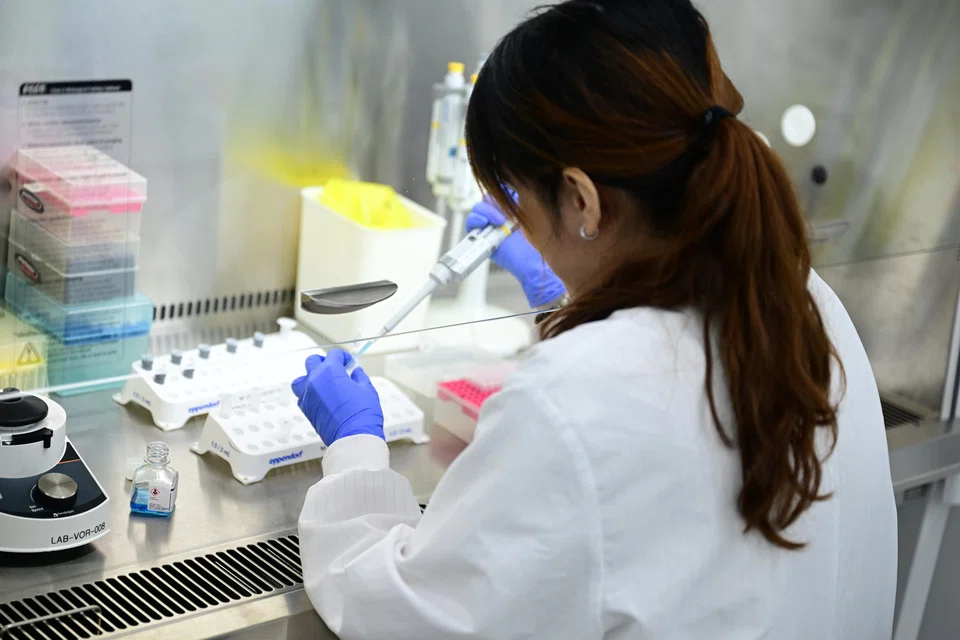
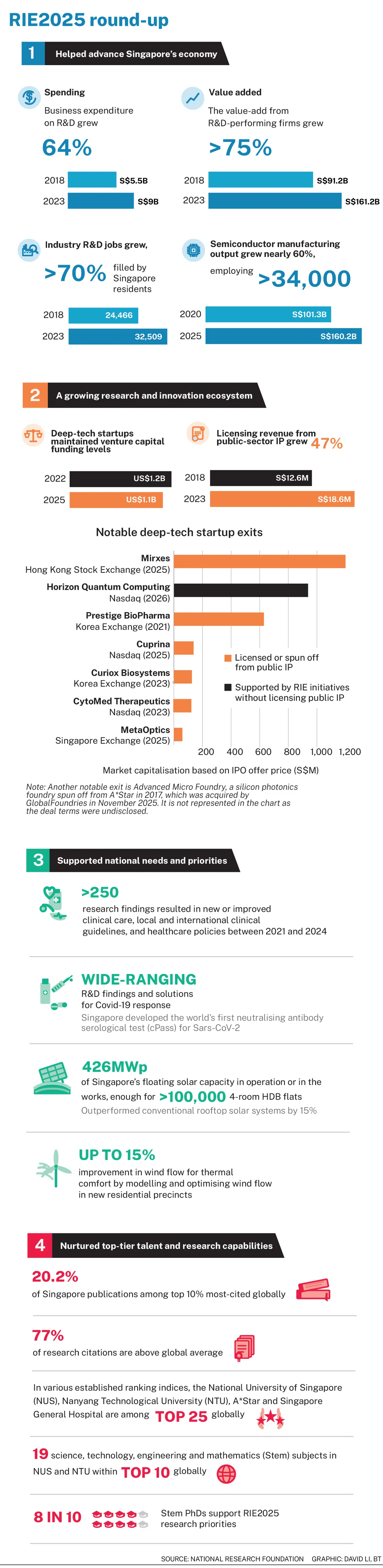
[SINGAPORE] Businesses are committing more resources to R&D in Singapore, with their spending rising 64 per cent to S$9 billion between 2018 and 2023, according to the inaugural report on the recently concluded Research, Innovation and Enterprise 2025 (RIE2025) plan.
The 68-page report, released on Monday (Aug 31) alongside the RIE2030 plan, takes stock of the Republic’s research and innovation outcomes during RIE2025, which ran from April 2021 to March 2026 with a S$28 billion budget.
RIE funding is usually about 1 per cent of gross domestic product.
In December last year, Singapore announced it was setting aside S$37 billion for research and innovation in key economic sectors such as semiconductors, as well as national priorities such as healthy ageing, for RIE2030. Monday’s release provides fuller details of the five-year road map.
Referencing the two RIE documents in his speech at the 2026 President’s Science and Technology Awards ceremony on Friday, National Research Foundation chairman Heng Swee Keat said that they mark an important milestone for Singapore.
“They take stock of the progress our vibrant research community has achieved, and they chart a clear path forward as we continue to invest in science and technology as a cornerstone of Singapore’s growth and resilience,” he noted.
Against this backdrop, the RIE2025 report highlighted several other indicators of growing private-sector participation in Singapore’s R&D ecosystem.
For instance, for every S$1 in public R&D expenditure in 2023, businesses spent S$1.87, up from S$1.48 in 2018.
The number of R&D-performing firms also rose by around 20 per cent to 1,030 in 2023 from 855 in 2018, while their value-add increased more than 75 per cent to S$161.2 billion in 2023.
SEE ALSO
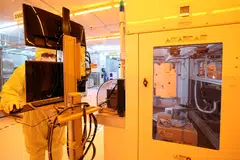


Industry R&D jobs grew 33 per cent to 32,509 in 2023, with more than seven in 10 of these jobs filled by Singapore residents.
The report used 2023 as the latest available year for these indicators due to reporting lags, with comparisons made against a reference point five years earlier where applicable.
It also noted that these outcomes reflected the combined contributions of RIE2025 and earlier RIE tranches, as well as broader government policies and initiatives.
Beyond the economic contributions, the report also highlighted how RIE investments helped Singapore address national challenges, including through the development of diagnostic tools and research that informed its response to the Covid-19 pandemic.
Other examples include research that paved the way for the large-scale deployment of floating solar farms, as well as modelling and simulation studies that improved wind flow in new residential precincts by up to 15 per cent.
Building a deep-tech ecosystem
Singapore’s research ecosystem has also produced a growing crop of deep-tech companies, including several that have gone public or been acquired.
Among them is Horizon Quantum Computing, founded by researchers from the Singapore University of Technology and Design. It listed on Nasdaq in March 2026 at a market capitalisation of US$567 million.
Advanced Micro Foundry, a silicon photonics spin-off from the Agency for Science, Technology and Research (A*Star), was acquired by GlobalFoundries in November 2025.
Other companies highlighted in the report include cancer diagnostics company Mirxes, which listed in Hong Kong in 2025. The company continues to base its integrated R&D hub and manufacturing operations in Singapore, with around 60 per cent of its global workforce located here.
Still, the report pointed to room for Singapore to extract more commercial value from its research.
Licensing revenue generated from public-sector intellectual property stood at S$18.6 million in 2023, down from S$24.2 million the year before.
The report noted the 2023 figure is significantly below that of top US research institutions such as the Massachusetts Institute of Technology, Harvard and Stanford.
It attributed the gap partly to the deeper innovation ecosystems in places such as Boston and San Francisco, where large communities of venture capital firms and industry players drive demand for university intellectual property.
Funding has also become more challenging for deep-tech startups.
While such companies attracted at least S$1 billion in venture funding annually from 2022 to 2025, the number of deals fell to 91 in 2025 from 134 in 2023.
The report said this mirrored broader global trends amid macroeconomic uncertainty, higher borrowing costs and tighter financial conditions.
Closing commercialisation gaps
To address the funding gap, RIE2030 will tap an additional S$1 billion for the Startup SG Equity scheme to expand support for growth-stage deep-tech startups. The top-up was first announced by Enterprise Singapore in March.
Separately, a new S$300 million Research Translation Grant will seek to address the commercialisation gap by helping develop early-stage technologies from the public research ecosystem to a point where private-sector investors are willing to come in.
The RIE2030 plan also provides a breakdown of the S$3 billion previously set aside for its Flagships and Grand Challenges, comprising two programmes aimed at economic priorities and two tackling national strategic needs.
This will include S$800 million each for the semiconductor and transport and connectivity Flagships, and S$800 million and S$350 million, respectively, for the decarbonisation and healthy and successful longevity Grand Challenges.
The two Flagships will respectively support semiconductor research in areas such as advanced packaging and photonics, and improve the movement of goods and passengers across Singapore’s land, sea and air networks.
The Grand Challenges will advance low-carbon technologies for the power and industrial sectors, and develop interventions to support brain health and physical function as Singaporeans age.
The remaining S$250 million will serve as a buffer for additional funding needs that may emerge.
In his speech, Heng said that while science offers exciting opportunities to pursue, there is also a need to consider “difficult questions” about how the development and deployment of new technologies should be governed.
Such governance would need to balance reaping the benefits of new technologies with mitigating the risks of harm to individuals and societies.
“Adopting a responsible approach is critical to realising wider-spread benefits from research, while preserving and growing public trust,” he noted.
Decoding Asia newsletter: your guide to navigating Asia in a new global order. Sign up here to get Decoding Asia newsletter. Delivered to your inbox. Free.
Copyright SPH Media. All rights reserved.
TRENDING NOW

Beyond data centre Reits: The AI potential that Singapore investors are still missing
Self-claimed wealth gurus who drove Lamborghinis now made bankrupt; investors worry about their S$5m

Fed chair Warsh’s hawkish Jackson Hole turn favours soaring banks over struggling S-Reits

BYD profit rises for first time in 5 quarters on overseas growth, pointing the way out of China car slump

