

En bloc sale framework recalibrated as urban renewal ‘not merely desirable, but really imperative’: Edwin Tong
Developments aged 40 to 59 will need 70% consent for collective sale; those aged 60 and up will need 65%

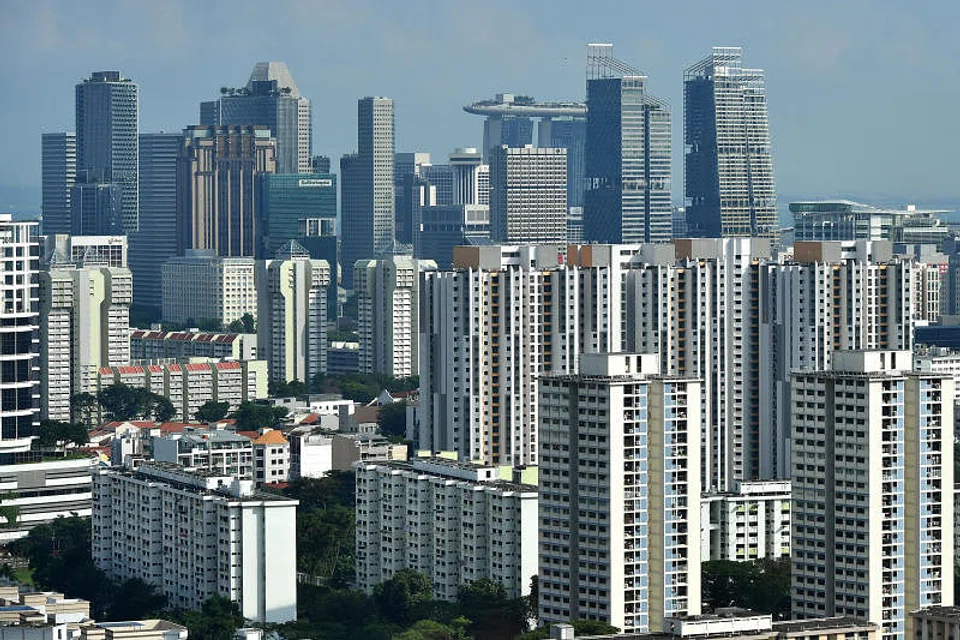
[SINGAPORE] Owners of older developments will face lower consent thresholds for en bloc sales to encourage rebuilds of ageing estates, among a raft of changes to Singapore’s collective sale regime under a Bill read in Parliament on Tuesday (Sep 8).
The amendments are designed with the aim of “making renewal more accessible where there is genuine majority support, while ensuring that owners are protected from repeated and disruptive attempts where there is not”, Minister for Law Edwin Tong told Parliament.
“The fundamental policy impetus at the heart of this Bill is the same one that Parliament endorsed when it introduced the collective sale regime in 1999 – that Singapore’s land scarcity makes urban renewal not merely desirable, but really imperative,” he said.
Developments aged 40 to 59 years will require 70 per cent consent for a collective sale, while those aged 60 years and up will need 65 per cent.
The thresholds will remain at 90 per cent for developments less than 10 years old, and 80 per cent for those aged 10 to 39 years.
Notably, developments aged 40 years and above that are currently gathering signatures will be allowed to terminate their existing collective sale agreement, and opt into a fresh attempt under the new framework.
Those that opt in will have seven months from the commencement date of the amendments to reach the applicable consent threshold.
Safeguards are being added to ensure non-consenting owners are not pressured, such as a much shorter window for signature collection – from 12 months to six – and a longer restriction period after a failed bid.
During the debate, several MPs raised concerns over whether the six-month signature collection period would be sufficient for larger or more complex developments, with some suggesting that more time be given in such cases.


Tong, in response, said that the government had considered having different timelines, based on factors such as the size of a development, but decided against it because size was “not necessarily the only indicator of complexity”.
Referring to MPs’ suggestions to account for the number of units in a development, and the age of a development and its owners, he said: “Where do you draw the line on complexity?
“So if you start recognising each of these different characteristics, you will find that the general rule of six months, which or any time frame that we want to enforce, will then get whittled away.
“And having a differentiated approach with different criteria itself then leads to even more complexity, and inherently more uncertainty for the collective sale scheme.”
He added that data from recent successful collective sales showed that a significant majority of signatures were typically gathered within the first four months, with several large developments reaching the 70 per cent threshold within six months.
Tong also noted that preparations begin before the formal signature collection period, with general meetings held and terms, such as sale proceeds, pricing and conditions, discussed beforehand.
Collective sale committees could use this period to gather and share information with owners, including those based overseas, he added.
The Bill also proposes that objectors could receive slightly higher sale proceeds, with the limit on court-ordered increases raised from 0.25 to 0.5 per cent of the sale proceeds for each unit, or S$2,000 for a unit, whichever is higher.
This provision was first introduced in 2007 as a protection for objectors, and applies where the High Court is satisfied that it would be “just and equitable to order an increase in the proceeds of sale to be received by the objectors”.
It would apply in cases such as the objecting owner having invested significantly in renovation works just prior to the collective sale exercise.
MP of Potong Pasir single-member constituency Alex Yeo asked whether homeowners who object to an en bloc sale can be exempted from Seller’s Stamp Duty (SSD) if the sale takes place within four years of their property purchase, particularly if they had bought their homes before the lower consent thresholds were announced.
Tong said that SSD serves a different policy purpose from the collective sale regime, as it is intended to discourage short-term holding of residential properties and curb speculative activity.
“Owners who participate in a collective sale may incur SSD if the sale occurs within the applicable SSD holding period, which ranges from three to four years, depending on when the property was acquired.”
He added: “For a collective sale to succeed, the collective sale agreement will have to account for any such stamp duties or any other deductibles, for that matter, payable by non-consenting owners when determining the apportionment of sale proceeds.”
Stock of private developments has aged
Speaking during the second reading of the Bill, Tong said that Singapore’s stock of private developments has aged since the collective sale regime was introduced in 1999, and maintenance costs have risen significantly.
Around one in 20 non-landed private residential units are now aged 40 years or older, amounting to some 20,000 units in close to 250 developments.
Since 2023, the government has engaged a broad range of stakeholders to better understand the issues with the current framework, he added.
Two clear threads emerged from views shared.
“The first was a call to update the consent thresholds to facilitate the renewal of older developments,” he said.
Reading out feedback from an owner, which he noted “sums up the issue quite succinctly”, Tong said: “While the existing two-tiered consent thresholds were novel, innovative and necessary in 1999, conditions have changed since then. It cannot be right that a 10-year-old development and a 44-year-old development continue to face the same threshold.”
Owners were also worried about “being subjected to repeated and protracted collective sale attempts that disrupt the community that is in the condominium, and create prolonged uncertainty”.
“The lower consent thresholds make broad-based renewal more accessible for genuinely ageing developments where there is support among the owners,” he said.
“At the same time, the higher initiation threshold, shorter signature window and extended restriction period ensure that the framework cannot be used to mount repeated, disruptive attempts in developments where there is insufficient majority support.”
The collective sale regime will also be extended to non-strata-titled private residential developments, where flat owners hold a leasehold tenure of less than 850 years in their units, but do not own the underlying land.
These include developments such as Neptune Court, One Tree Hill Mansions, Paterson Court, Orchard Court and Townhouse Apartments, all of which are more than 40 years old and sit on land owned by the Minister for Finance (MOF).
MOF (Inc) is prepared to divest its interest in these developments at fair market value, said Tong.
The Bill, an amendment to the Land Titles (Strata) Act, was first tabled on Aug 4, about a week after changes to the additional buyer’s stamp duty (ABSD) regime for buyers of large en bloc sites.
Those changes give developers of such plots more time to complete construction and sell all units, before having to pay ABSD on the land cost.
Decoding Asia newsletter: your guide to navigating Asia in a new global order. Sign up here to get Decoding Asia newsletter. Delivered to your inbox. Free.
Copyright SPH Media. All rights reserved.






