

Nearly S$100 million to be pumped into municipal, industrial water solutions: Gan Kim Yong
Climate change brings extreme weather with a third of Singapore at risk of coastal flooding, DPM Gan says

[SINGAPORE] Close to S$100 million will be channelled into the research and development of water solutions for towns and industries, including setting up a research facility for used water treatment.
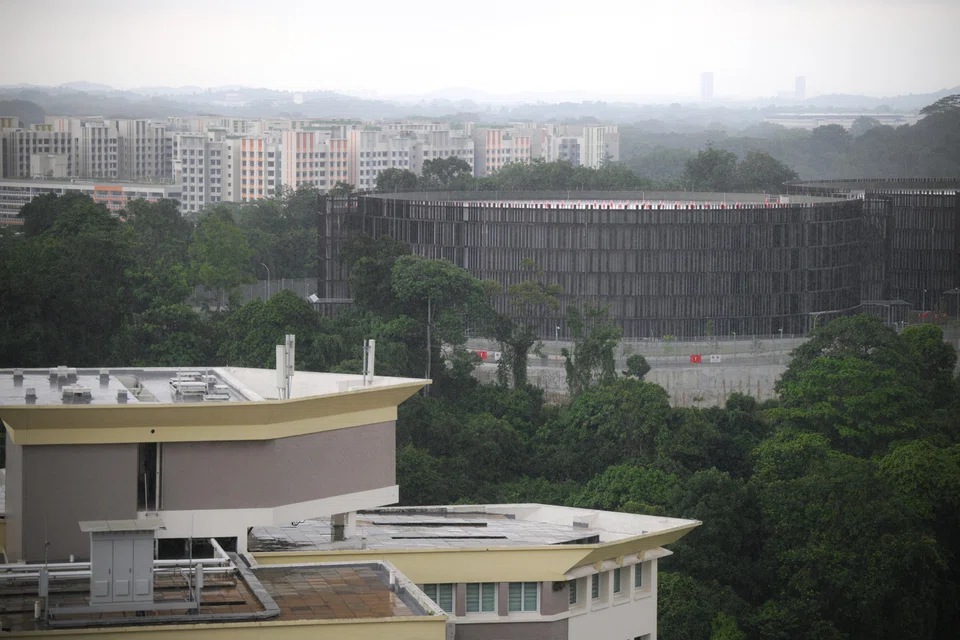
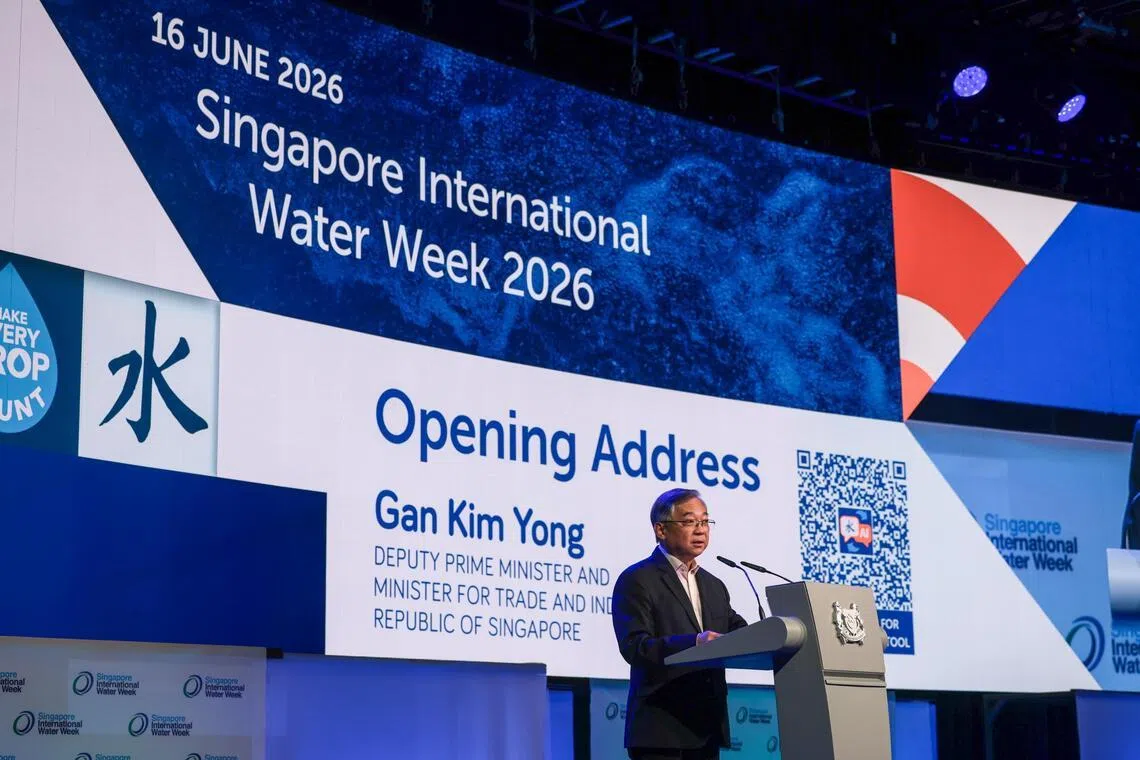
Deputy Prime Minister Gan Kim Yong revealed this on Tuesday (Jun 16) at the opening of Singapore International Water Week, where he also announced that the Republic’s latest service reservoir in Tengah had been completed, even before the town itself was fully developed.
The 11th edition of the mega water solutions event brings together some 2,000 delegates, including 700 global leaders and 500 exhibiting firms.
Stressing how water challenges are by no means theoretical in Singapore, Gan said that climate change would bring more dry and wet extremes, while in the longer term – if nothing is done – nearly a third of Singapore would be at risk of coastal flooding as sea levels rise.
At the same time, the economy would need increasing amounts of water to feed water intensive industries.
“So we must act with urgency. But we must also plan with foresight,” he said.
Singapore’s approach to water challenges has been through long-term investment, harnessing innovation and international cooperation.
Under the Research, Innovation and Enterprise 2030 plan, S$85 million will be awarded to national water agency PUB to strengthen Singapore’s water security and sustainability, by advancing R&D in areas such as desalination and the management of contaminants of emerging concern.
“Our aim is not only to meet Singapore’s own needs. We also want to develop solutions that can be applied in cities and industries around the world,” said Gan, who is also Minister for Trade and Industry.
SEE ALSO


“If we can help industrial users reduce, reuse and recycle water more effectively, this will support both economic growth and environmental sustainability.”
PUB said in a statement that part of the funding will go to a new research facility that harnesses used water to generate more energy than it uses, so that it can generate electricity.
Due for development in 2027, the plant will provide opportunities for research institutes and industry partners to develop solutions on used water treatment with the agency.
Another S$12 million given to PUB is allocated to developing solutions that boost water efficiency and facilitate water recycling for wafer fabrication and data centre sectors.
The two sectors were selected as they are critical to Singapore’s economy and among the most water-intensive, noted Gan.
PUB said it will bring together universities, trade associations and other stakeholders to develop and validate technologies that support these sectors.
It added: “Successful projects will be consolidated into a portfolio of water recycling and cooling technologies for local deployment and commercialisation opportunities.
“These projects will also be considered for deployment overseas, reinforcing our position as a global hydrohub for advanced water technologies, and generating longer-term economic and technological value for Singapore.”
Two agreements will be signed at the Singapore International Water Week to kickstart alliances that develop solutions for the wafer fabrication and data centre sectors.
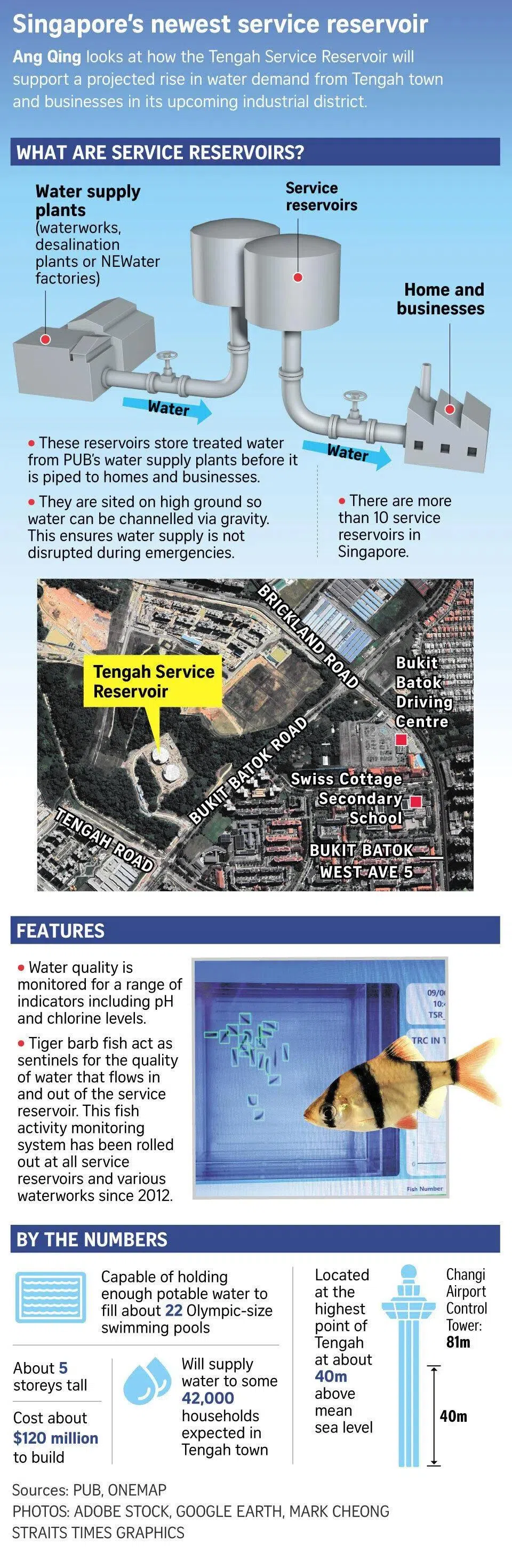
Separately, PUB said the construction of the Tengah Service Reservoir, which cost about S$120 million, was completed in November 2025.
Service reservoirs are critical infrastructure in Singapore’s water supply network, storing treated drinking water from PUB’s treated plants before it is piped to homes and businesses.
Gan cited the reservoir as an example of how Singapore invests in water infrastructure to support a growing population and economy.
“The planning for the service reservoir, in fact, started 10 years ago, back in 2016,” he said.
“This is what long-term planning and investment means in practice. It is not only about expanding capacity. It is about building resilience ahead of demand, integrating water planning with urban and economic planning, and ensuring that future generations inherit systems that are robust and reliable.”
Located at the highest point of Tengah Town, the reservoir was built to support the projected rise in water demand of upcoming residential developments and businesses in Tengah.
The building has the capacity to hold about 22 Olympic-sized swimming pools worth of potable water, according to PUB.
The agency said the service reservoir’s construction was the first time it had used the slipform construction method.
Its senior deputy director for network construction David Loh said the method enabled each tank wall to be completed over seven days, while eliminating the need for horizontal construction joints in these walls.
“This minimises potential leakage and enhances the watertightness and performance of the reservoir over its service lifetime,” he said.
When operational by the end of 2026, the Tengah Service Reservoir will join more than 10 service reservoirs that are operated remotely and monitored round the clock at PUB’s joint operations centre.
PUB said it had implemented measures to minimise impact on the surrounding habitat, as the service reservoir was developed in a patch of Tengah forest.
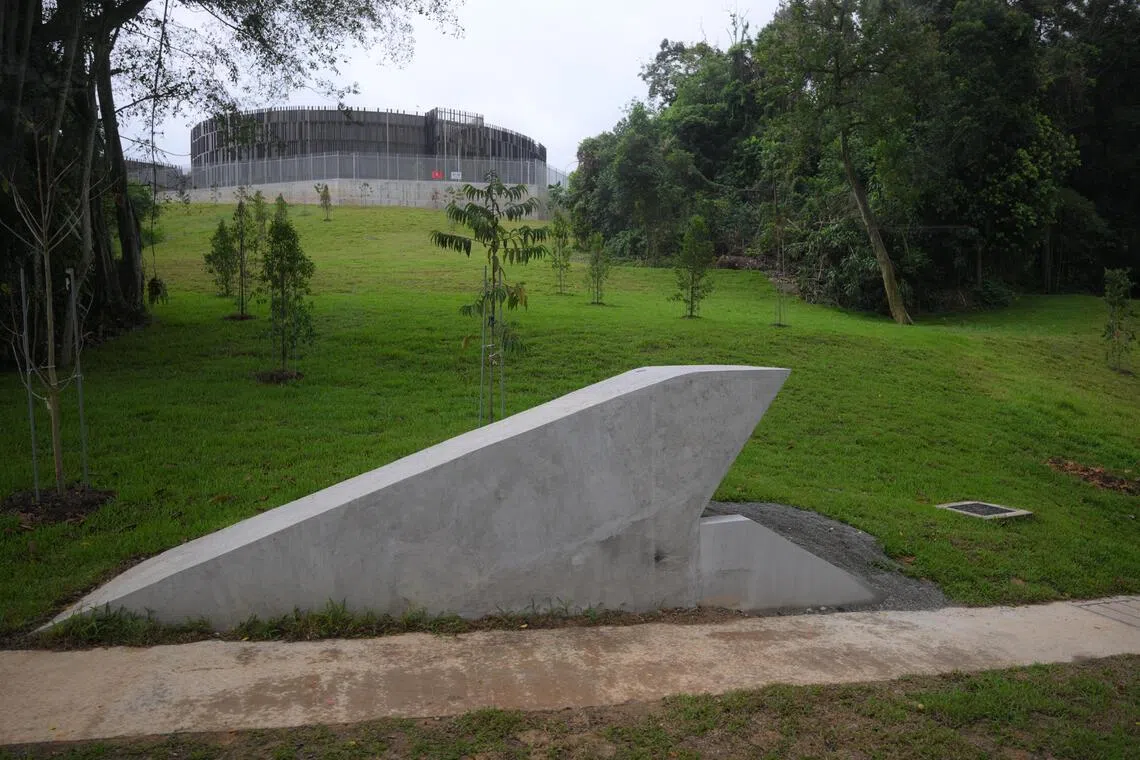
This was based on an environmental impact study for the service reservoir that was completed in November 2019, before mandatory disclosure was required for most projects.
Loh said several species of flora and fauna of conservation importance were identified. This included the locally vulnerable grey-headed fish eagle and the globally critically endangered straw-headed bulbul.
Implemented measures included a wildlife shepherding plan, inspections for active bird’s nests prior to vegetation clearance, and adjustments to the service reservoir design to reduce its footprint and affected forested area.
The Singapore International Water Week at Marina Bay Sands runs from Jun 16 to Jun 18. THE STRAITS TIMES
Decoding Asia newsletter: your guide to navigating Asia in a new global order. Sign up here to get Decoding Asia newsletter. Delivered to your inbox. Free.
Copyright SPH Media. All rights reserved.
TRENDING NOW

Once staunchly pro-China, Malaysian Chinese businesses are now distancing themselves from Beijing

Looking beyond looming CEO succession, should UOB potentially pursue a transformative merger?

Could stablecoins be the future of money?

Grab CEO’s wife Chloe Tong on life with Anthony Tan and finding her purpose

